


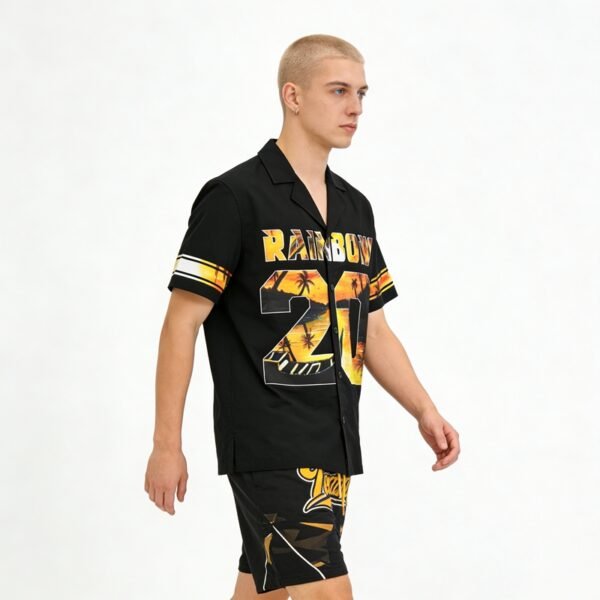
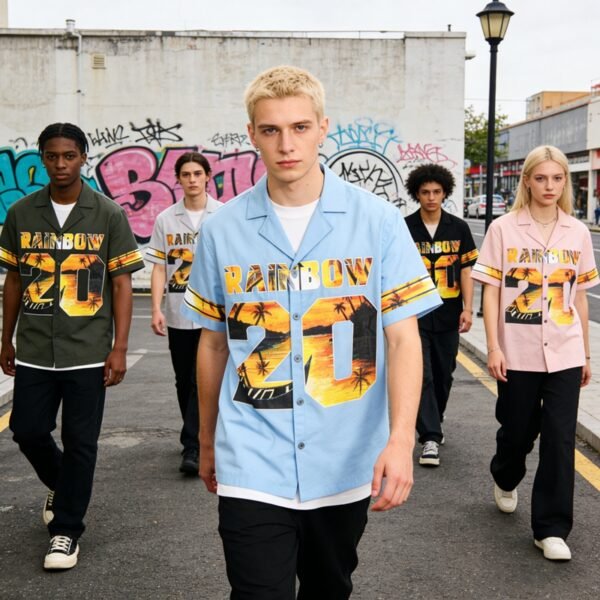



This camp collar shirt is a color-coordination problem as much as a graphic garment, because contrast edging turns ordinary seams into visible design lines. VeeWen's development focus is aligning thread, trim, collar geometry, and heat-transfer placement so every colorway reads deliberately.
Why Thread Choice Changes the Seam Image
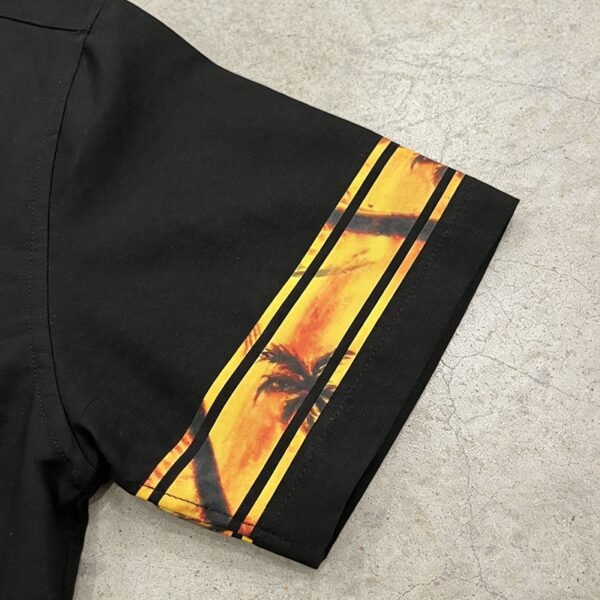
On a camp collar shirt, the collar edge and sleeve hem sit in open view, so thread is read as part of the design. A mismatched shade can make a clean seam look accidental, while excessive contrast can overpower the graphic and alter the garment's visual hierarchy.
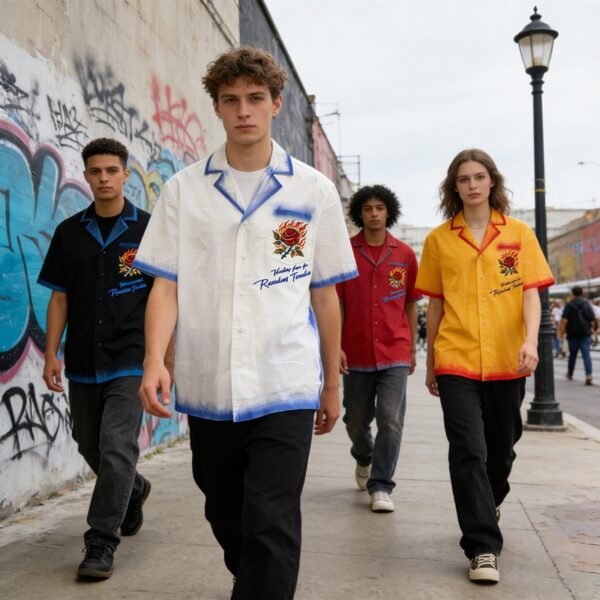
The supplied image shows blue edging against a light body and stronger warm accents on other colorways. That evidence suggests a planned contrast system. Thread selection should therefore be evaluated beside fabric, trim, transfer color, and lighting instead of being approved from a thread card alone.
Camp Collar Geometry Needs Visual Continuity
A camp collar has an open neckline and broad lapel-like edges, leaving little visual separation between collar stitching and the front body. Small alignment errors at the center front can make both sides appear uneven, even when individual stitch lines are technically secure.
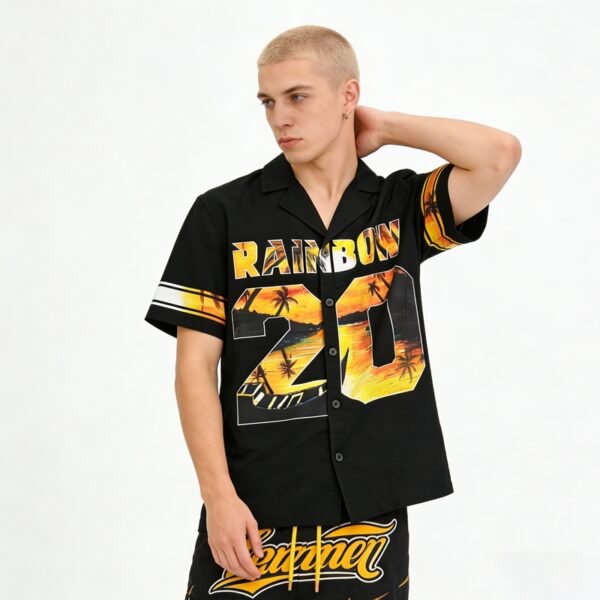
The image presents a relaxed collar opening framed by contrasting lines. VeeWen should convert that appearance into controlled collar points, seam allowances, edge distances, and center-front matching. The goal is continuity from collar through placket, not merely a correctly assembled shirt.
Heat Transfer Meets Stitch Planning
Heat-transfer artwork introduces a bonded surface that may react differently from the surrounding fabric during pressing, folding, and sewing. If a transfer approaches a seam or is pressed across a shaping area, the edge can compete with topstitching or reveal unwanted distortion.
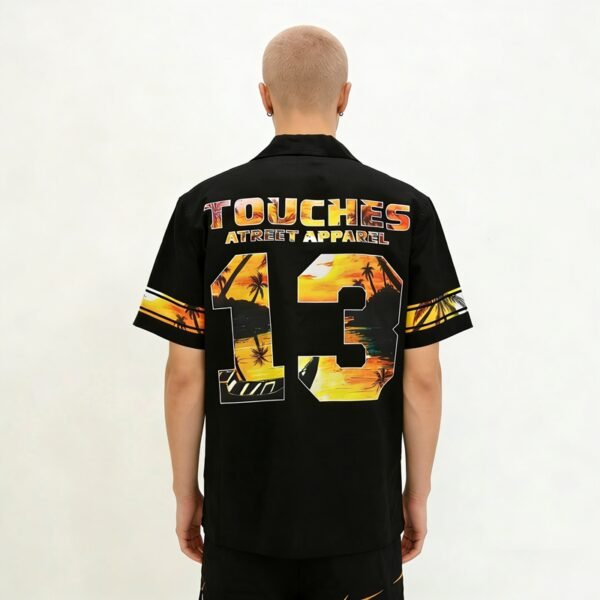
The visible chest artwork sits within a shirt carrying several contrast details, so placement must be measured against the collar, placket, and pocket area if included. A development sample should verify transfer clearance, pressing sequence, edge adhesion, and seam visibility together.
Colorway Consistency Is the Real Test
A thread decision that works on white may become too weak on black, too harsh on yellow, or visually confused on red. The supplied image includes multiple body colors, making cross-color validation essential rather than treating each shade as an isolated approval.
The buyer should request a colorway matrix identifying body fabric, collar edging, sleeve edging, thread, transfer artwork, and button references. Review those combinations under consistent lighting, because the same nominal thread can change apparent contrast across different fabric grounds.
VeeWen Development Checkpoint
VeeWen's product-development workflow should place thread selection immediately beside the trim and artwork callouts in the technical package. This keeps seam appearance connected to the visual system and gives the sample room a clear order for collar joining, edge stitching, pressing, and transfer application.
At sample review, inspect the collar center, collar-to-front transitions, sleeve hems, and transfer boundaries at close range. The buyer should sign off each planned colorway separately, because a successful white prototype does not automatically validate darker or warmer bodies.
Trade-Offs and Final Buyer Decision
Higher contrast can make the shirt more recognizable but also exposes skipped stitches, waviness, and uneven seam margins. Lower contrast hides construction variation more effectively, yet may reduce the graphic clarity suggested by the supplied image's outlined collar and sleeve details.
The final decision is a visual tolerance choice: define how much seam character is intentional and how much reads as error. Approve production only after thread, trim, transfer placement, pressing, and colorway alignment meet the signed standard at MOQ: 100 pieces per style.
Buyer Questions
Why is thread selection important on this shirt?
Contrast thread sits along the open collar and sleeve edges, making color mismatch, uneven tension, or waviness immediately visible as a design inconsistency rather than a hidden construction detail.
Are all shown colorways included in one order?
The supplied image shows several colorways, but assortment, color splits, size ratios, and production quantities must be confirmed separately during the buyer's development and order-planning review.
What should be checked around the heat transfer?
Check artwork position, edge clarity, pressing marks, seam clearance, bonding appearance, and interaction with collar or placket construction before approving the final decoration specification.
What quantity applies to this style?
VeeWen's stated commercial minimum is MOQ: 100 pieces per style. The buyer should confirm whether each colorway counts within one style or requires separate production planning.
Align Every Visible Detail
Share the artwork, collar reference, colorway plan, and target measurements with VeeWen. Approve thread, trim, transfer placement, and seam tolerances across every body color before releasing MOQ: 100 pieces per style.


Reviews
There are no reviews yet.