
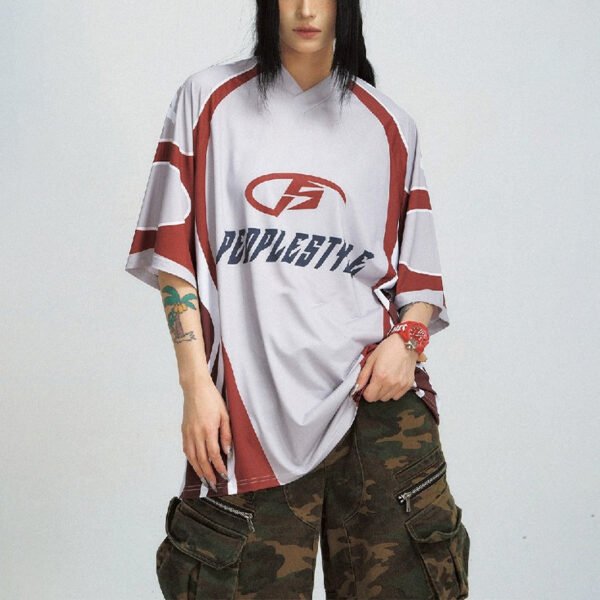
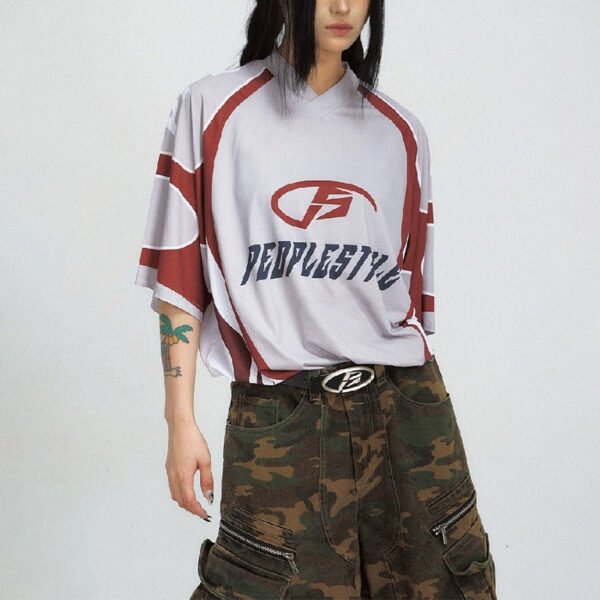
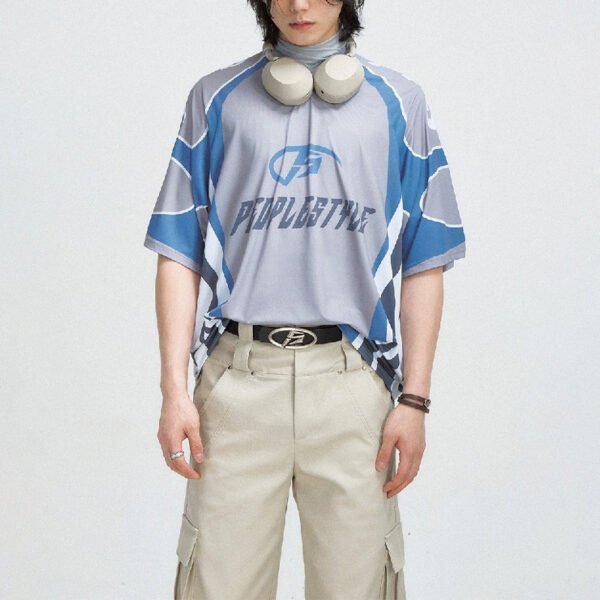
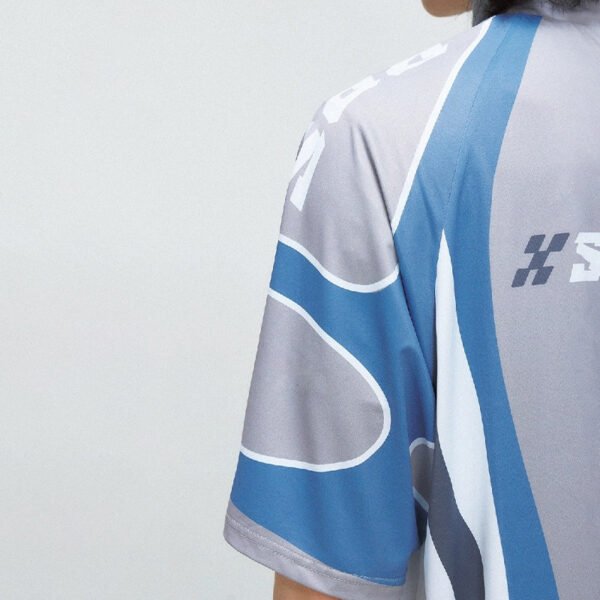
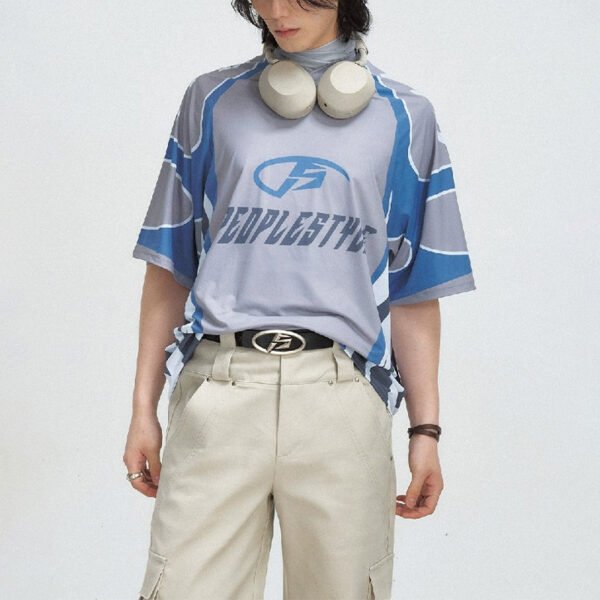

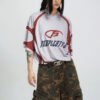



This custom unisex jersey develops a comfortable athletic silhouette by treating label placement as a contact-point decision. The visible V-neck, curved contrast panels, relaxed sleeves, and smooth-looking surface provide a clear starting specification for a private-label sportswear program requiring identity without neck irritation during extended wear.
Neckline Contact and Label Placement
The first image shows a shallow V-neck framed by a broad, uninterrupted front panel, while the shoulder and sleeve zones carry red-and-white curved inserts. That layout leaves the collar area visually calm, making a woven or printed label less likely to compete with the garment's primary graphic.
For development, VeeWen should map the label against the neckline seam, V point, and back-neck turn before approving artwork. A soft printed transfer may reduce bulk, while a woven label can create stronger identity but demands careful edge finishing and placement testing for abrasion.
How the Panel Geometry Supports Comfort
The contrast lines follow the shoulder and upper sleeve before bending down the body, creating visual movement without requiring a tight torso fit. Because the image shows generous sleeve volume, the pattern can preserve arm mobility while keeping the label decision concentrated around the neckline.
This construction direction should be checked through graded patterns, since a placement comfortable in the base size may shift toward the neck seam or shoulder on larger sizes. VeeWen's pattern review should therefore lock label coordinates by measurement, not by artwork position alone.
Graphic Scale and Identity Hierarchy
A large front graphic sits below the V-neck, leaving the upper chest relatively open. That hierarchy gives the label a supporting role: it can identify the private label at the neck or side seam without creating a crowded cluster of marks around the wearer's face.
The trade-off is that moving branding away from the neck may reduce immediate visibility when the jersey is worn under layers. Buyers should decide whether comfort, clean presentation, or visible brand recognition leads, then reserve secondary placement for hem, sleeve, or side seam execution.
Material Reference and Wearer Experience
The source wording references polyester, but the supplied evidence does not verify composition percentage, knit weight, stretch, or moisture behavior. The image suggests a smooth jersey surface, yet those performance assumptions remain development questions rather than approved specifications.
VeeWen should confirm the intended fiber route, surface hand, recovery, and label compatibility through material swatches before bulk approval. A smoother face may sharpen graphics and reduce friction, while a softer hand may improve comfort but alter print definition or dimensional stability.
VeeWen Development Workflow Checkpoint
At VeeWen, this exact argument belongs in the first technical package: mark the neckline contact zone, label boundary, panel seam paths, and graphic exclusion area on the annotated pattern. That map gives sampling a measurable comfort target instead of leaving placement to visual approximation.
The approval gate should compare a physical sample on the intended size range, checking neck pressure, label edge feel, seam ridges, and movement through the shoulders. Record the accepted coordinates and construction method before grading, because later repositioning can disturb panel balance.
Trade-Offs Before Production Approval
A neck label offers familiar brand recognition and straightforward retail handling, but it occupies the most sensitive contact region. A lower-impact transfer or alternative label location can improve comfort, although it may change the garment's perceived value, durability expectations, and care-label organization.
Before release, buyers should approve one complete specification combining label method, neckline construction, panel tolerances, graphic position, and size grading. The correct decision is the version that protects comfort while keeping the jersey's athletic identity legible from the front.
Buyer Questions
Can the label be moved from the back neck?
Yes, VeeWen can evaluate side-seam, hem, or transfer alternatives, but the final position should follow neckline comfort testing and care-label requirements.
Is polyester composition verified for this jersey?
No. Polyester appears in the source wording, while the supplied evidence does not verify percentage, blend, GSM, stretch, or performance claims.
What should the first sample prove?
The first sample should confirm neckline pressure, label edge feel, shoulder mobility, panel alignment, graphic position, and comfort across the intended size range.
What is the minimum order quantity?
The commercial minimum is MOQ: 100 pieces per style, subject to final specifications, approved materials, artwork, and production documentation.
Approve the Comfort Mapping Brief
Send the intended label artwork, size range, and wear context to VeeWen for a measured neckline map, sample checkpoint, and production-ready panel specification.


Reviews
There are no reviews yet.