

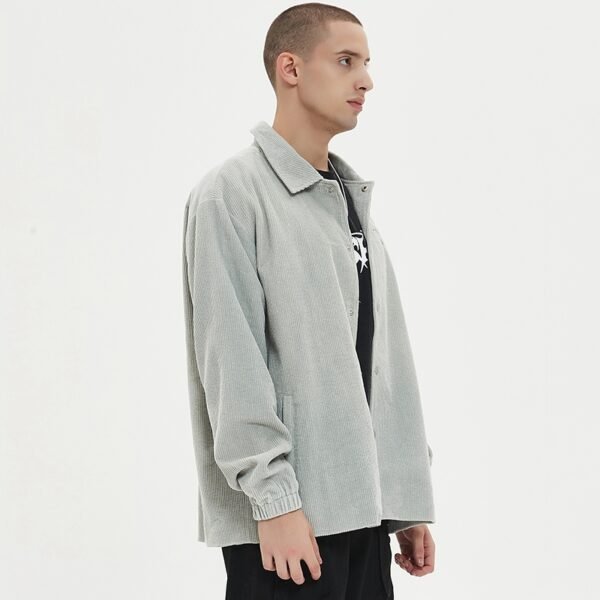
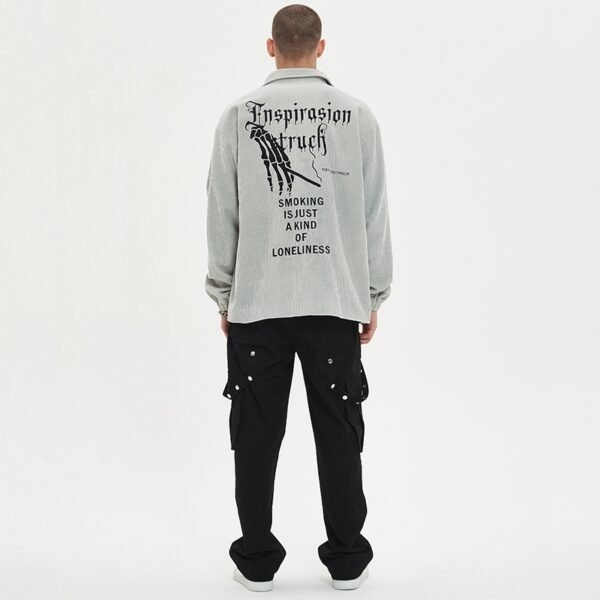


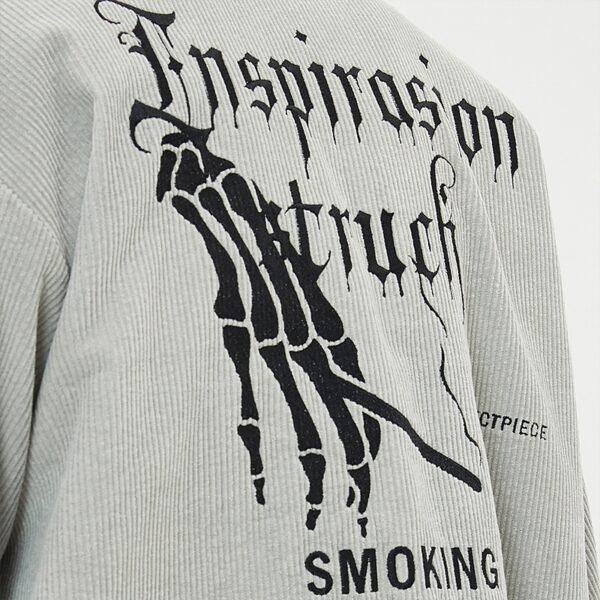






This coach jacket should be developed as a presentation-sensitive outer layer, not simply a folded commodity. The supplied image shows ribbed texture, chest embroidery, snaps, and elasticized cuffs; each can be distorted or obscured when packed. VeeWen should therefore approve folding alongside final appearance.
Why the Fold Changes the Product
Ribbed fabrics present directional ridges that can flatten unevenly under pressure. On this jacket, the visible vertical texture is part of the product identity, so a compressed fold may create temporary shading, crushed channels, or irregular reflections across the front panel.
The chest embroidery adds a raised, localized area near the snap line. If folded directly over that decoration, pressure can leave an imprint or make the detail sit visually off-center. Packaging must preserve the embroidery area while keeping the collar and cuffs orderly.
Presentation Geometry at the Front
The front closure creates a clear vertical axis, with multiple snaps visibly spaced from collar to hem. Folding across that axis can cause opposing plackets to shift, making the jacket appear skewed when opened. The approval sample should check snap alignment before and after packing.
The shirt-style collar also functions as a presentation frame around the upper chest. A fold that buries or twists the collar reduces immediate clarity, especially when buyers inspect packed samples. Fold dimensions should keep the collar face and embroidered zone separated from hard pressure points.
Texture, Compression, and Handling
The sleeves and lower body show a soft, gathered transition at the elasticized cuffs. During packing, those cuffs may compress into sharper ridges than the body fabric, producing inconsistent unpacked proportions. A controlled fold should avoid placing cuff bulk across the chest or snap placket.
This is a trade-off between compact cartons and a faster visual reset after opening. More compact folding can reduce package volume, while a gentler fold may require more space. VeeWen should evaluate the actual fabric response because composition and recovery behavior are not supplied.
VeeWen Development Workflow
VeeWen can convert this argument into a development checkpoint by reviewing the first approved garment in both hanging and folded states. The team should mark the embroidery, collar, snaps, and cuffs as protected presentation zones during sample comments and packing instructions.
The workflow should then compare a packed sample with the reference image, checking whether rib direction remains legible and the front axis reopens cleanly. Any change to fabric, embroidery size, snap placement, or fold dimensions should trigger another presentation review before bulk approval.
Trade-Offs for Wholesale Programs
A presentation-led fold may slow individual packing or use an insert, but it can reduce buyer-visible correction work when samples arrive. The benefit is strongest where embroidery and rib texture carry the garment story, rather than where the jacket is sold purely on basic utility.
A compact fold remains commercially attractive, yet it should not be accepted solely from carton efficiency. Buyers should request a packed reference unit, inspect the garment after opening, and document the acceptable tolerance for collar twist, snap offset, and temporary rib compression.
Approval Checkpoint
The practical approval question is whether the jacket returns to a clean, balanced appearance after its intended package journey. Inspect the collar, front snaps, chest embroidery, sleeve ribs, and cuffs immediately after opening, then again after brief hanging.
Approve the folding instruction when the visual identity remains consistent with the supplied image and no protected area shows avoidable distortion. If the result is inconsistent, adjust the fold sequence or protection method before confirming the production package standard.
Buyer Questions
Is the jacket definitely made from corduroy?
The source wording identifies corduroy, while the supplied image shows a ribbed surface. Fiber composition, wale specification, GSM, and backing remain To Confirm.
Why does folding deserve a separate approval?
Because rib texture, chest embroidery, snap alignment, collar shape, and cuff bulk can change visibly under compression, affecting the garment presentation when opened.
Can VeeWen use a compact folding method?
Yes, subject to a packed-sample review. Compactness must be balanced against rib compression, embroidery pressure, collar distortion, and front-placket misalignment.
What should buyers approve before bulk production?
Approve the garment sample together with its folded reference, protected presentation zones, reopening appearance, acceptable alignment tolerance, and final packaging instruction.
Approve the Garment and Fold Together
Send the intended artwork, measurements, fabric reference, and packaging requirements to VeeWen. Request a development review that treats the folded sample and reopened jacket as one approval checkpoint.



Reviews
There are no reviews yet.