
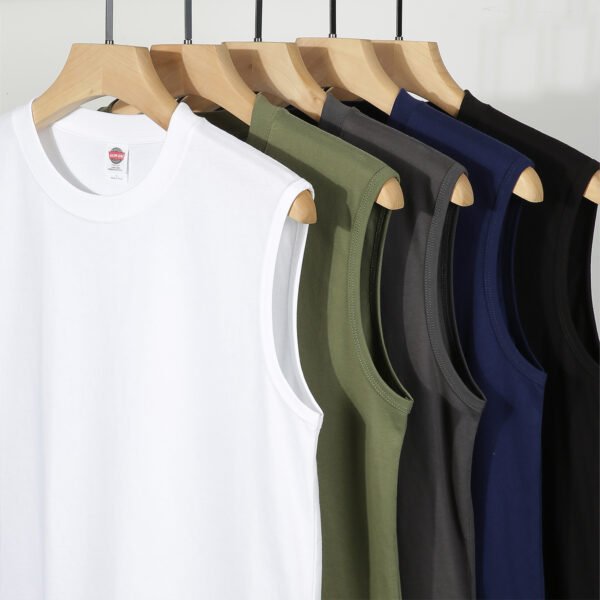
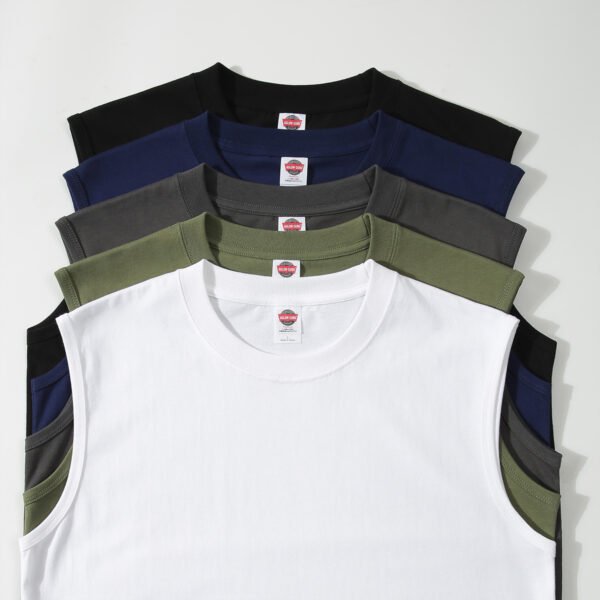

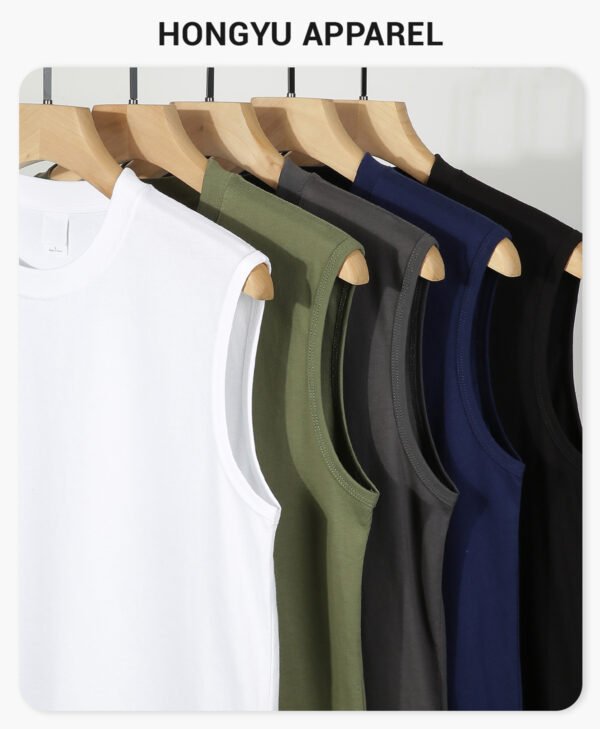



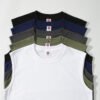
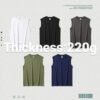





This NY21213 development record focuses on artwork scale as a production system, not merely a graphic choice. The supplied image shows clean blank fronts, repeated tank construction, and a five-color hanger lineup, creating a clear opportunity to standardize placement, contrast, and approval tolerances.
Start With The Blank Garment Zone
The supplied image shows a largely uninterrupted front panel, which is valuable for graphic development because the artwork zone can be defined without navigating visible seams or pockets. That clarity also makes inconsistent scale or placement immediately noticeable across repeated production units.
VeeWen should map the usable front area from neckline binding, armhole edges, and hem reference points. The buyer's first approval should establish a measured bounding box, vertical centerline, and placement tolerance before artwork files are prepared for decoration testing.
Set Artwork Scale Against Tank Proportions
A graphic that looks balanced on a broad tank can appear oversized when the body narrows or the armholes open further. The simple silhouette shown here gives scale strong visual influence, especially because the front carries few competing design elements.
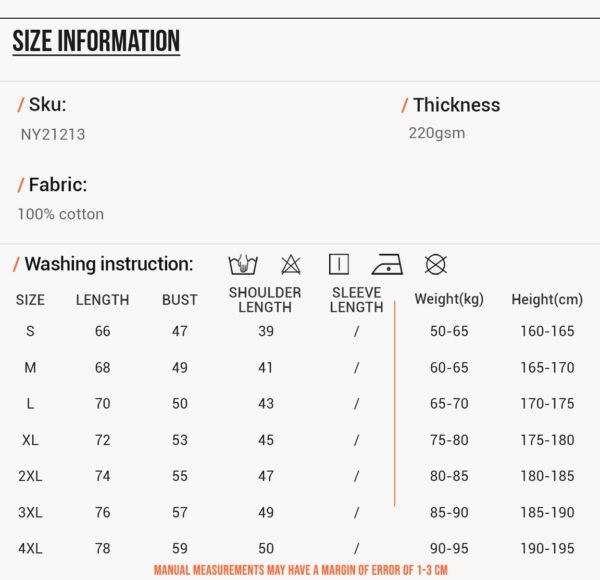
During product development, compare artwork dimensions with chest width, body length, neckline depth, and armhole shape across the approved size range. VeeWen can then document whether the graphic remains fixed, graded, or proportionally adjusted for larger and smaller sizes.
Use Bindings As Measurement Anchors
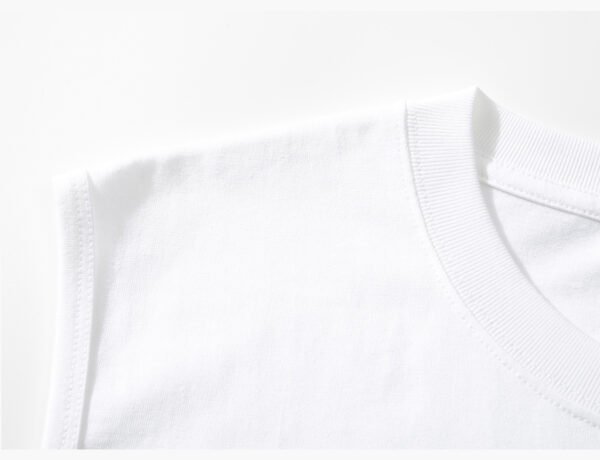
The neckline and armhole bindings are prominent construction boundaries in the image. They create reliable visual anchors for artwork placement, but any change in binding width or curve can reduce the apparent clearance around a graphic and alter the intended composition.
Technical comments should therefore record binding width, edge position, and seam allowance before decoration approval. If the buyer changes the neckline or armhole shape, the artwork placement must be rechecked rather than carried forward automatically from the earlier sample.
Build Contrast Rules Across Colorways
White, olive, charcoal, navy, and black are visibly arranged as a repeatable color assortment. Because the same blank tank appears across contrasting grounds, artwork scale alone will not guarantee consistency; ink, thread, or transfer contrast may change the visual weight.
VeeWen should review the selected artwork on every approved base color, recording which treatments remain legible and balanced. The buyer should approve color-specific artwork versions when necessary, while preserving the same measured placement and intended proportional relationship.
Separate Artwork Approval From Decoration Assumptions
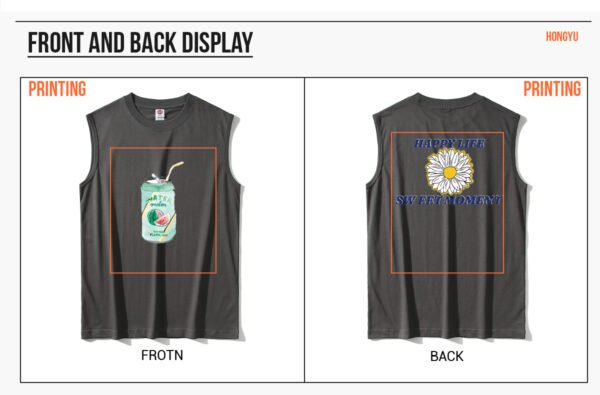
No artwork is visible in the supplied image, so the visual evidence confirms a clean decoration base rather than a finished graphic treatment. This distinction matters because print method, embroidery density, transfer hand, and wash behavior can affect perceived scale.
At the development checkpoint, VeeWen should keep garment fit approval separate from decoration approval while checking both on the same sample. The buyer should confirm the selected technique, artwork dimensions, placement tolerance, and acceptable appearance after the intended care process.
Release A Repeatable Decoration Specification
The strongest outcome is a tank program where a buyer can inspect any colorway or size and recognize the same artwork logic immediately. That requires coordinates, dimensions, tolerance, binding references, color rules, and approved visual standards recorded together.
VeeWen's workflow should consolidate those controls into the production package before release, alongside the final pattern and measurement chart. Approve the repeatability standard first, then confirm MOQ: 100 pieces per style for the chosen artwork and color configuration.
Buyer Questions
Does the image verify an artwork treatment?
No. The supplied image shows blank tank fronts. It supports analysis of available placement space, while decoration method, graphic dimensions, and finished appearance require separate development approval.
How should artwork scale be approved?
Approve a measured bounding box, centerline, edge clearances, and size-range treatment on the intended tank pattern. Review the result across every selected base color before production release.
Will one artwork file suit every color?
Not necessarily. The same dimensions may work across several colors, but contrast and perceived visual weight can require color-specific treatment while keeping placement coordinates consistent.
What is the commercial minimum?
The exact commercial minimum for this development is MOQ: 100 pieces per style. Artwork versions, color assortment, size breakdown, and final decoration specifications should be confirmed before planning.
Approve The Artwork Control System
Share the artwork file, target dimensions, placement references, and selected tank colors to begin a repeatability review. VeeWen will organize approvals around the blank garment zones and MOQ: 100 pieces per style.


Reviews
There are no reviews yet.