
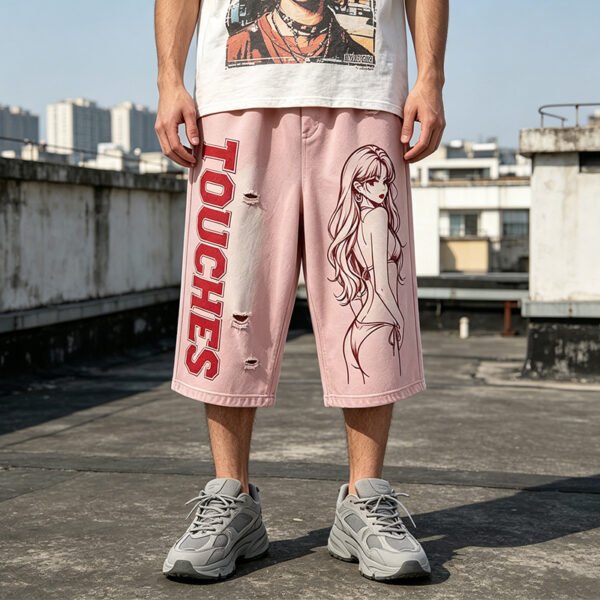
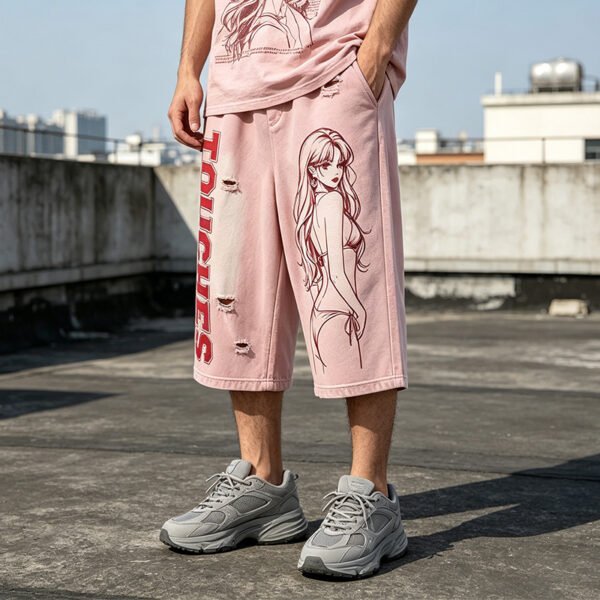
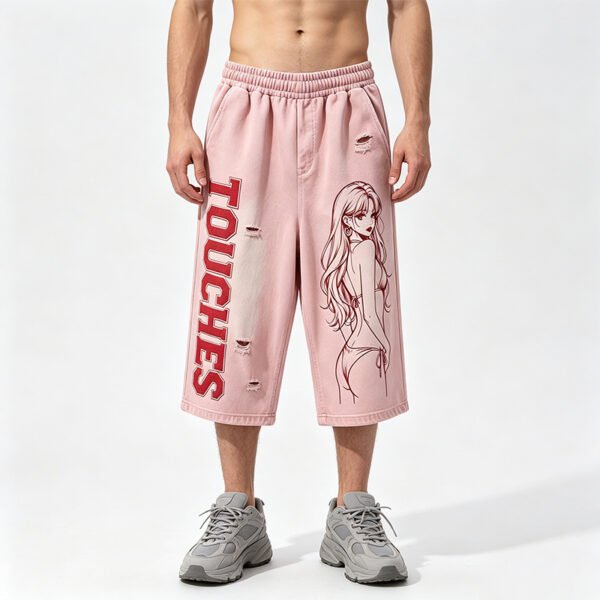
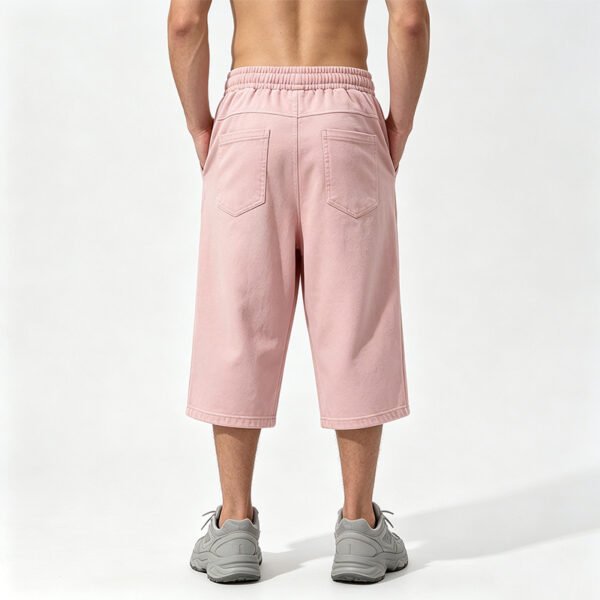
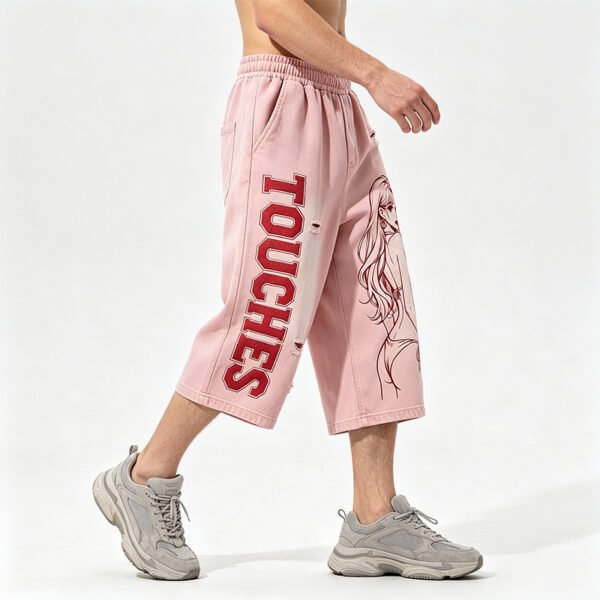
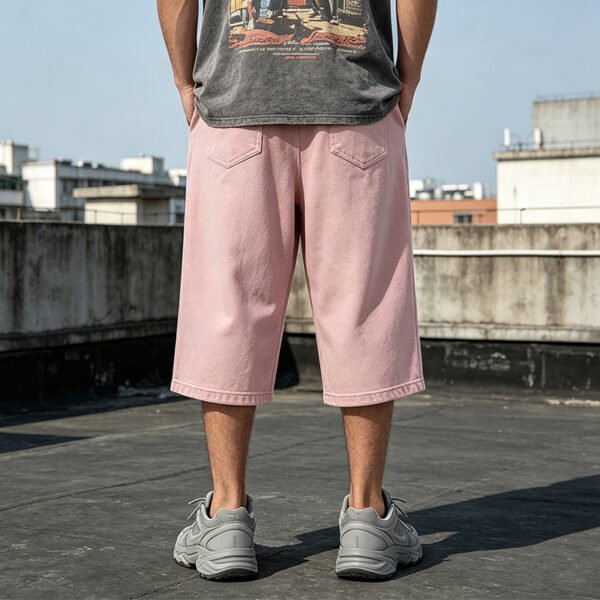
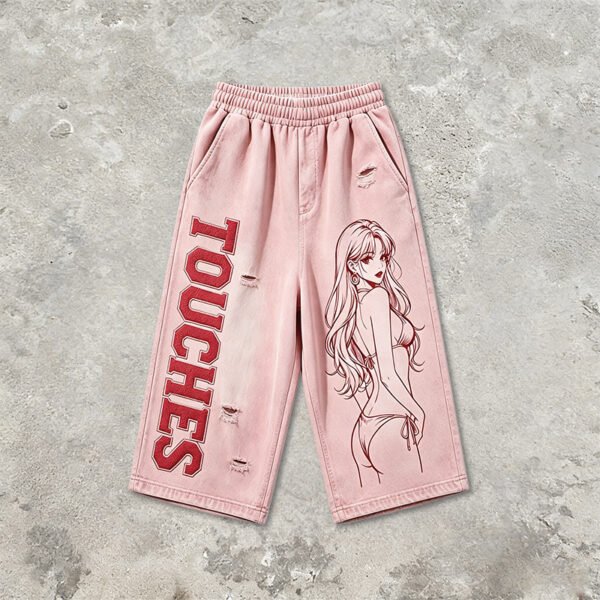

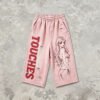
These cropped pants turn a delicate leg illustration into a grading problem: the graphic must stay proportionate to the wearer, hem, and side seam at every size. VeeWen can develop the artwork as a measurable placement system, then validate visual balance through graded samples before bulk approval.
The Placement Problem Begins With the Pattern
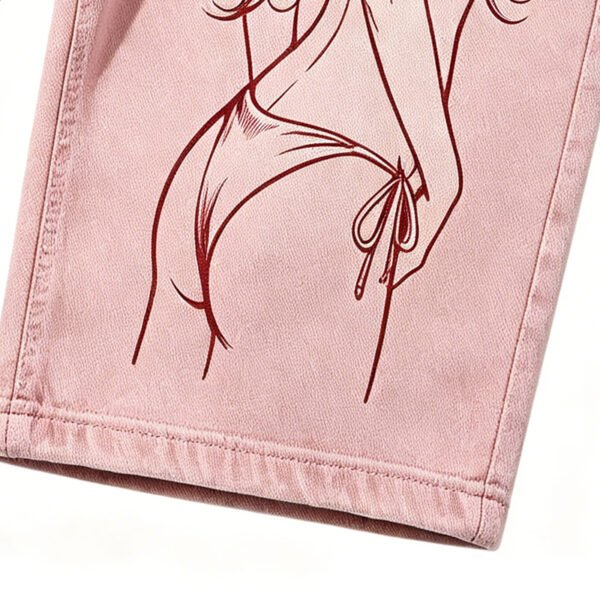
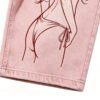
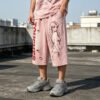
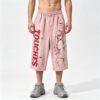
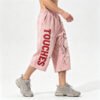
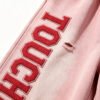
The supplied close-up shows the illustration occupying one leg panel, with the figure extending vertically toward the lower section. That relationship is visually deliberate, but a fixed print file can drift toward seams or hems when the panel dimensions change across a graded size range.
For development, VeeWen should define placement from pattern landmarks rather than image edges alone. Reference points can include the side seam, inseam, knee line, and finished hem, allowing artwork position and clearance to be reviewed consistently on every approved size.
Artwork Scale Must Protect the Illustration
Fine-line graphics expose grading errors quickly. The supplied image contains narrow dark contours, small internal details, and open negative space against a pale ground. Enlarging the artwork indiscriminately may overpower a smaller wearer, while keeping one scale can make larger sizes appear visually empty.
A size-set review should therefore compare artwork scale, line weight, and figure position together. VeeWen can separate the placement map from the print file, making controlled adjustments possible while preserving the intended drawing character and avoiding accidental distortion.
Seams and Hemlines Create Hard Boundaries
The visible side seam runs close to the artwork's field, while the lower hem forms a strong horizontal boundary beneath it. These details matter because a few centimeters of movement can make the illustration appear cut off, trapped against stitching, or unintentionally wrapped around the garment.
The technical package should record minimum seam and hem clearances for each size, with a placement tolerance agreed before sampling. The approval review should inspect both flat panels and finished garments, since sewing can alter the apparent relationship between artwork and construction lines.
Washed Character Changes Perceived Placement
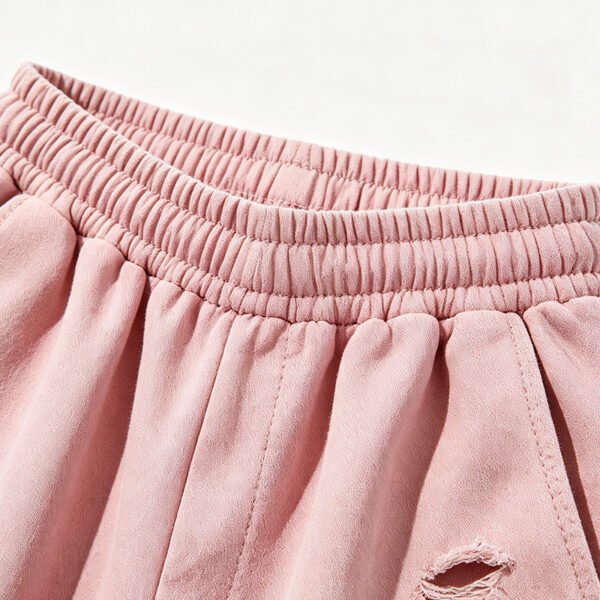
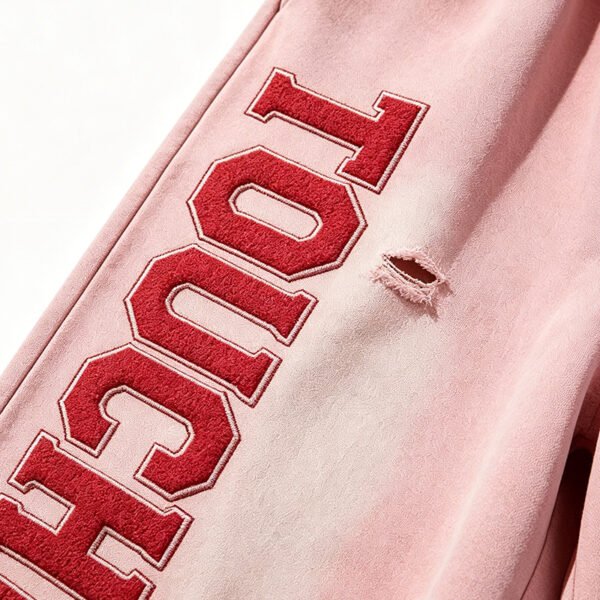
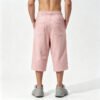
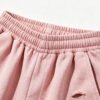
The pink fabric surface has a soft, uneven washed character that affects how the dark linework is perceived. Color variation can make one region appear more prominent than another, even when the print coordinates are technically identical. The finish is therefore part of the placement decision.
VeeWen's workflow should develop wash and print sequencing together, using the intended fabric and finish reference during sampling. The buyer should review whether the graphic remains legible after treatment, especially near the hem, seam, and areas of visible surface variation.
Translate the Axis Into VeeWen Development
VeeWen can begin with the supplied image evidence, convert the leg illustration into an annotated placement sheet, and overlay it onto the approved trouser block. Each size should receive coordinates tied to construction landmarks, creating a clear bridge between design intent, pattern grading, printing, and sewing.
The next checkpoint is a graded size set containing the smallest, middle, and largest requested sizes, with the same graphic and finish sequence. The buyer should approve proportion, clearance, and legibility together, because correcting only the artwork file cannot solve pattern-driven drift.
Commercial Approval Should Be Visual and Measurable
This product is suitable for a collection that wants a recognizable statement on one leg without relying on oversized all-over coverage. Its trade-off is development sensitivity: more detailed placement control requires disciplined pattern references, sample review, and documented tolerances before production can move forward.
Approve the style only after the buyer confirms the final size chart, cropped hem position, artwork scale rules, finish sequence, and tolerance sheet. Once those decisions are locked, the style can proceed under MOQ: 100 pieces per style, subject to final specifications.
Buyer Questions
Can the leg graphic be changed for a private-label collection?
Yes. VeeWen can develop buyer-supplied or newly commissioned artwork, provided final dimensions, permissions, placement coordinates, and print method are approved before sampling.
How should placement be checked across sizes?
Review a graded size set against seam, knee, and hem landmarks. Compare artwork scale, clearance, and visual balance on finished garments rather than panels alone.
Does the supplied image verify cotton composition?
No. Cotton appears in the source wording, but composition, fabric weight, wash behavior, and handfeel require confirmation through the approved material specification.
What is the commercial minimum for this style?
MOQ: 100 pieces per style. Final production feasibility remains subject to approved artwork, graded measurements, material selection, construction details, and confirmed order specifications.
Approve the Placement Map
Send the artwork, size chart, target finish, and preferred material reference for review. VeeWen will organize the placement logic and graded approval checkpoints for MOQ: 100 pieces per style.


Reviews
There are no reviews yet.