
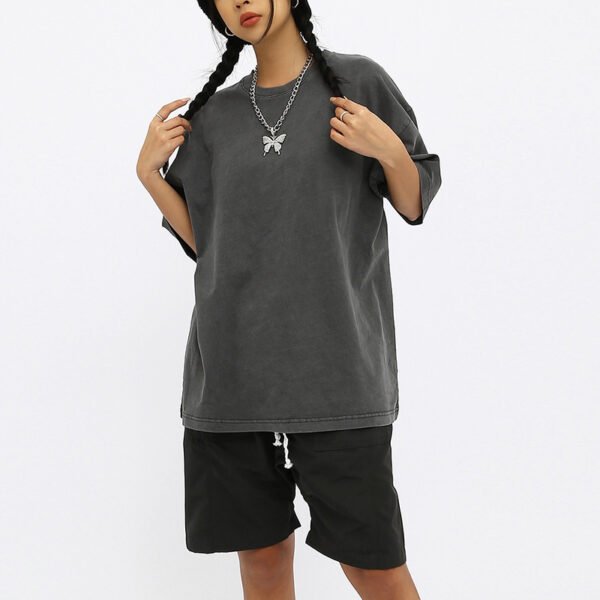
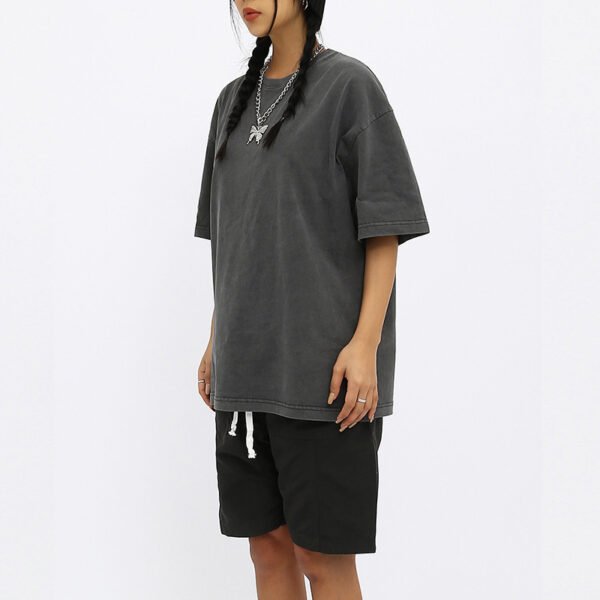

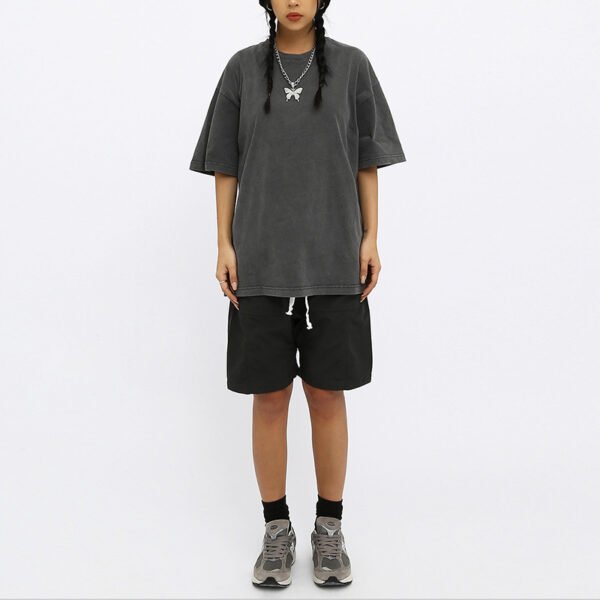

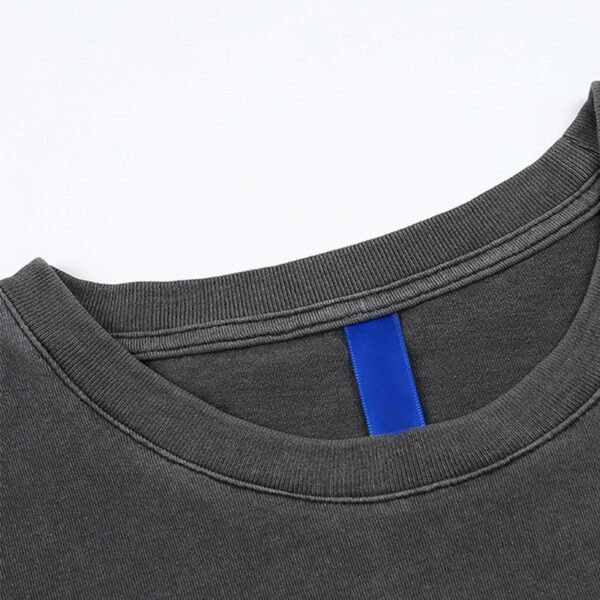

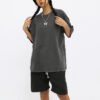
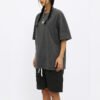
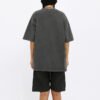
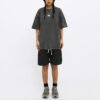

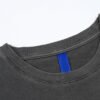
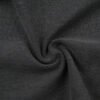
This custom dark washed T-shirt is developed around a deliberate tension: the surface must look lived-in without appearing weak, uneven, or prematurely worn. The supplied image shows a charcoal body, relaxed proportions, and darker seam definition, creating a finish-led product that requires measurable wash control.
Why Surface Character Controls the Product
The image presents a charcoal T-shirt whose value comes from surface depth rather than graphic decoration. Subtle light and dark movement across the front gives the garment a worn-in attitude, while the uninterrupted body keeps attention on shade, handfeel, and wash execution.
That visual strategy creates a narrow development window. Excessive abrasion can weaken fibers, enlarge surface fuzz, and blur seam definition; insufficient abrasion can make the garment look flat. VeeWen should therefore treat the wash as a controlled finish with visual and durability checkpoints.
Reading Abrasion Risk From the Silhouette
The relaxed body and dropped shoulder shown in the image increase fabric exposure around the upper arm, side seam, and lower hem. Those areas can experience repeated contact during wear, folding, transport, and laundering, so abrasion planning must follow the garment's actual stress map.
A heavier fabric may support a substantial hand, but weight alone does not establish abrasion performance. The development sample should compare surface appearance before and after controlled handling, while inspecting seam ridges, hem edges, sleeve openings, and any future decoration zones.
Wash Mapping Across Garment Panels
The supplied front view shows tonal variation across a broad uninterrupted body, making panel-to-panel shade consistency especially important. Small differences may become conspicuous because there is no large graphic or color-block element to break the visual field.
VeeWen's pattern and wash review should identify whether the front, back, sleeves, and ribless hems receive comparable exposure. A wash map can record target darkness, acceptable contrast, and protected areas, giving production teams a shared reference for repeatable appearance.
Construction Details That Preserve Definition
The lower hem and sleeve edges appear darker and more legible than the surrounding washed surface. That contrast helps the oversized shape remain visually structured, particularly when the garment is styled with loose shorts or layered streetwear pieces.
To preserve this effect, development should examine thread shade, stitch density, seam allowance, and edge exposure together. If abrasion softens every boundary equally, the garment may lose shape clarity; if edges remain too dark, the wash can look disconnected from the body.
Translating the Argument Into VeeWen Workflow
VeeWen's product-development workflow should begin with a reference garment, fabric confirmation, and a wash brief that defines the desired charcoal range. The first approval checkpoint is visual: front, back, sleeve, and hem tone must read as one intentional finish.
The second checkpoint is physical handling. Reviewers should examine seam definition, surface change, and edge stability after agreed laundering or abrasion simulations. Once the tolerance is approved, the technical pack can lock wash sequence, measurement points, decoration timing, and inspection notes.
Buyer Approval Checkpoint
Buyers should approve this style when the washed character remains visibly dimensional while the garment still presents clean edges and stable proportions. The image supports a finish-led direction, but it cannot establish durability, fiber identity, or repeatability without development evidence.
Before confirming bulk production, request approval samples that show the intended shade under consistent lighting and document the accepted variation. Confirm the fabric basis, decoration plan, care labeling, and abrasion limits, then release the style against those agreed references.
Buyer Questions
Can this T-shirt be developed in other washed colors?
Yes, VeeWen can develop additional color directions, but each shade requires its own wash target, tolerance range, and approval sample before bulk production.
Is the 270g fabric weight guaranteed?
The source wording identifies 270g heavyweight construction. VeeWen should verify finished fabric weight, tolerance, fiber composition, and shrinkage during material approval.
How should abrasion resistance be evaluated?
Evaluate exposed seams, hems, sleeve openings, and decorated areas after agreed handling or laundering simulations, comparing surface character, edge definition, and dimensional stability.
What is the minimum order quantity?
The commercial minimum is MOQ: 100 pieces per style. Final development should still confirm color count, size ratio, labeling, and packaging requirements.
Approve the Wash Direction
Send your target shade, measurement sheet, and decoration requirements to VeeWen for a focused development review covering wash character, abrasion exposure, and production approval checkpoints.


Reviews
There are no reviews yet.