








This custom digital print mesh jersey T-shirt is built around fabric weight and drape: an open mesh can create visual lightness, yet too little body may weaken graphic clarity, collar balance, and the relaxed silhouette shown in the supplied image.
Weight Determines the Drape Language
Mesh weight directly affects how this jersey communicates on the body. A lighter construction may produce a fluid fall and stronger ventilation impression, while additional body can support cleaner graphic placement, more stable seams, and a silhouette that feels intentionally relaxed.
The approval target is not maximum lightness. It is the weight that lets the shirt hang away from the torso without becoming limp, transparent, or visually unbalanced. Collar behavior, sleeve opening, and hem fall should be judged together rather than in isolation.
What the Supplied Image Establishes
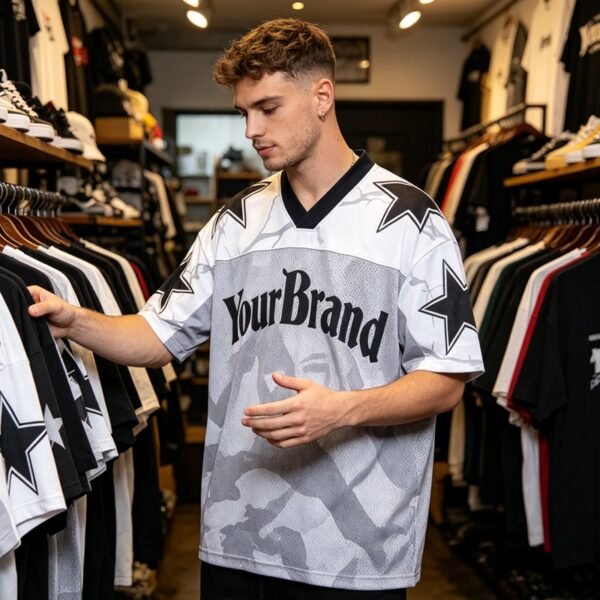
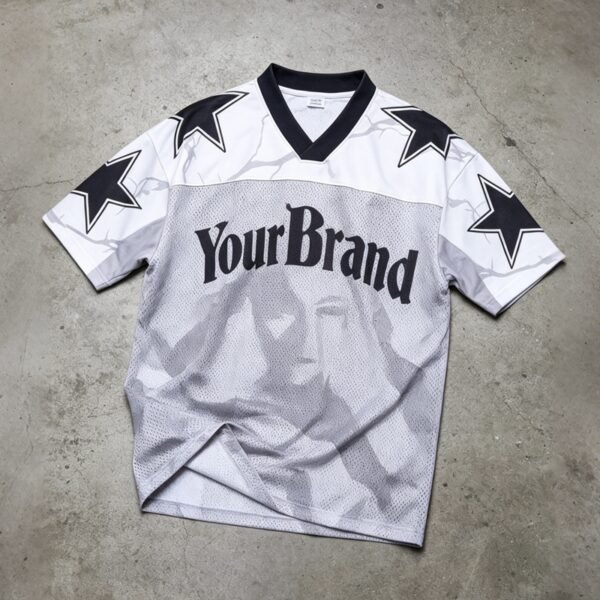
The supplied image shows a pale body with a visibly perforated central mesh panel, short sleeves, and a dark rib collar. The back hangs in a straight, easy line, suggesting relaxed movement rather than a close athletic fit or compressed performance block.
Black star graphics appear across the shoulders and sleeves, while lighter gray camouflage-like forms occupy the mesh area. These contrasts make surface readability part of the drape decision: excessive translucency or collapsing fabric could soften the intended graphic hierarchy.
Graphic Placement Meets Open Structure
Digital graphics on mesh require evaluation against the openness of the ground, especially where perforations interrupt solid color. The production review should inspect edge definition, repeat consistency, and how the design reads when the fabric curves across shoulders, sleeves, and the upper back.
The source wording identifies digital print and mesh but does not verify ink system, opacity, colorfastness, or finished weight. Those details should remain controlled specification questions until confirmed through the selected material, artwork file, and approved development sample.
VeeWen Workflow for Intended Drape
VeeWen can develop this style by establishing the graphic map and relaxed block first, then sampling multiple material weights while keeping collar dimensions, sleeve length, and artwork placement constant for useful comparison.
The key workflow checkpoint is a side-by-side drape review on a model and hanger. VeeWen's product team should document opacity, recovery, hem behavior, and graphic readability, then select the lightest option that still supports the approved visual structure.
Trade-Offs Beyond Breathability
A more open or lighter mesh may strengthen the desired airy appearance, but it can also reveal more of the underlayer and reduce perceived substance. A heavier option may improve coverage and graphic presence, yet could lose the fluid movement suggested by the image.
Buyers should therefore define the commercial styling context before finalizing weight. Review the shirt over a base layer, in motion, and flat on a table, checking whether the chosen drape supports casual streetwear positioning without becoming see-through or overly rigid.
Production Gate and Commercial Scope
After weight, drape, opacity, artwork, and measurements are approved, the technical file should specify the selected mesh reference, collar construction, print placement, seam tolerances, care direction, and inspection points. Unverified composition and GSM should be added only after confirmation.
The commercial checkpoint is MOQ: 100 pieces per style, supported by an approved sample and complete production documentation. Buyers should release the style only when fabric weight is explicitly tied to the intended drape across the full size range.
Buyer Questions
What material information is currently verified?
Mesh fabric is referenced by the source wording and visible texture supports that direction. Fiber composition, GSM, stretch, opacity, and final performance remain To Confirm.
Why is fabric weight central to this product?
Weight controls whether the open mesh hangs fluidly, supports the graphics, maintains collar balance, and provides acceptable coverage across the relaxed jersey silhouette.
Which sampling views are most useful?
Review the shirt flat, on a model, in motion, and over a base layer, checking drape, transparency, graphic clarity, sleeve fall, collar balance, and hem behavior.
What is the minimum order quantity?
The exact commercial minimum is MOQ: 100 pieces per style. Production remains subject to approved fabric, artwork, measurements, sample acceptance, and documented requirements.
Approve the Weight and Drape Together
Share the intended layering context, artwork, size chart, and coverage expectations so VeeWen can compare mesh weights and confirm the most suitable drape for production.


Reviews
There are no reviews yet.