

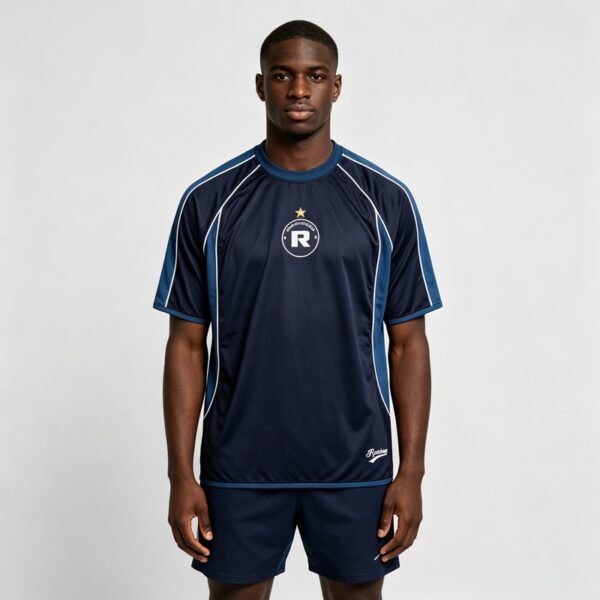
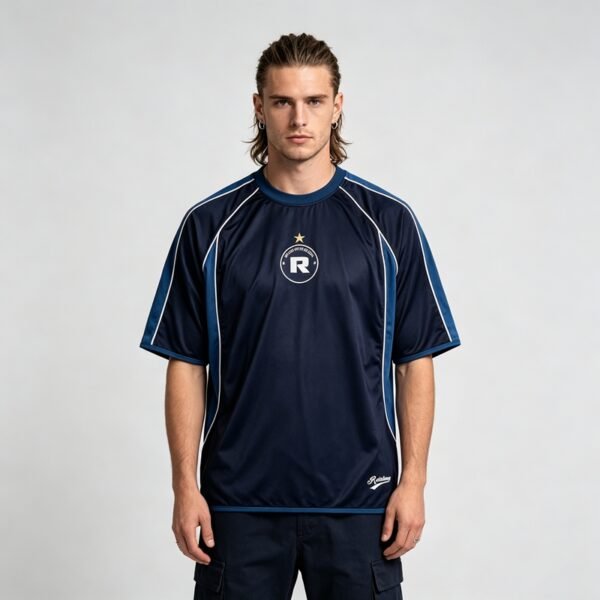

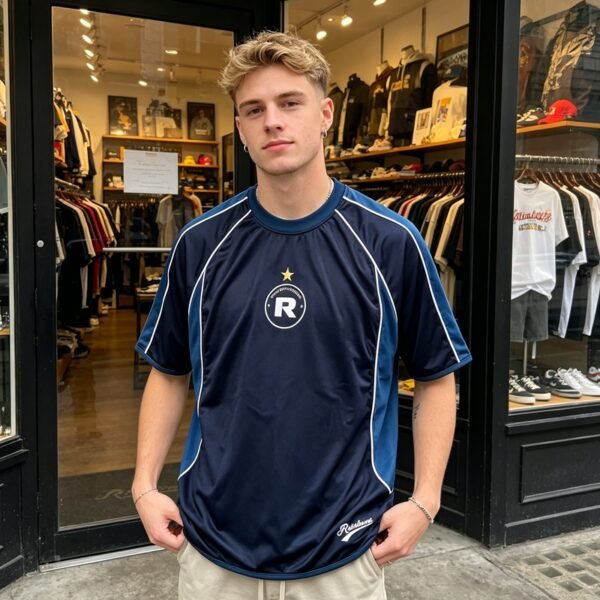


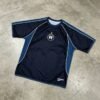







This jersey should be developed around stitch containment: the central chest emblem must remain secure and visually centered without invading the curved piping, side-panel seams, or stretch-sensitive areas that define the garment's athletic identity.
Design Read: The Panel Lines Set The Rules
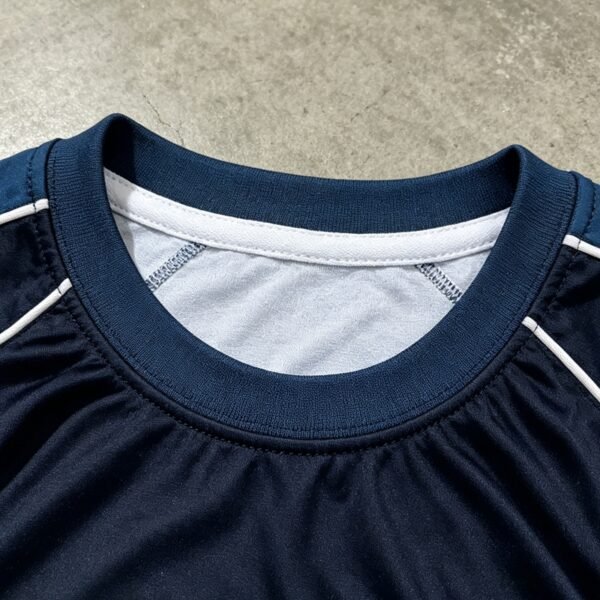
The supplied image shows a dark navy short-sleeve jersey laid flat, with blue side panels and white curved piping framing the front. The central chest emblem sits below the crew neckline, while a smaller lower-front mark occupies its own visual zone.
Because the piping creates a strong contour, the front cannot be treated as one uninterrupted decoration field. Patch size, stitch travel, and registration must respect the panel boundaries so the emblem reads as intentional rather than crowded or mechanically displaced.
Define A Stitch Containment Boundary
VeeWen should establish a keep-in zone around the chest emblem before selecting an attachment method. The boundary should remain clear of the neckline seam, shoulder direction, curved piping, and any panel join that could complicate needle access or create visible distortion.
Containment does not mean minimizing the emblem automatically. It means assigning every stitch, backing edge, and attachment margin to the stable central panel, then checking that the finished perimeter stays inside that area after the garment is handled and worn.
Patch Choice Changes The Front Balance
The image provides a visible circular chest motif, but it does not verify whether the detail is embroidered, printed, appliqued, or otherwise attached. Each route changes thickness, flexibility, stitch density, edge definition, and the amount of support required beneath the front panel.
A heavier patch may improve tactile identity but can pull the jersey surface during movement. A flatter decoration may preserve drape but require tighter registration and cleaner edge control. The buyer should compare attachment samples at the approved emblem diameter before locking construction.
Containment Must Survive Movement
Sportswear fronts flex across the chest, side body, and underarm regions, so an attachment that looks centered while flat may shift or pucker in motion. The curved piping makes this risk easier to see because any distortion changes the surrounding visual geometry.
The development review should include arm elevation, torso rotation, and gentle stretching across the emblem area. Inspectors should look for stitch breakthrough, rippling, backing visibility, and migration toward the piping, recording acceptable limits before the size range is approved.
VeeWen Workflow: Register Decoration Against The Pattern
VeeWen should first convert the reference into a front-panel map showing neckline, shoulder, side-panel, piping, and emblem coordinates. This map gives the pattern and decoration teams one shared registration target instead of relying on visual placement during sewing.
After the first sample, the workflow should separate three approvals: artwork scale, attachment method, and stitch containment. The buyer can then identify whether a problem comes from decoration weight, panel geometry, or sewing tolerance before the sample proceeds toward grading.
Approval Checkpoint: Protect The Visual Architecture
The buyer should approve the chest detail only when its position remains centered relative to the neckline and stable between the curved piping lines. The lower-front mark should also receive a separate coordinate, since two small placements can compete if treated as one system.
Before production release, confirm emblem diameter, edge finish, backing, thread or ink route, stitch boundary, and tolerance from every seam. Also verify the polyester reference and performance expectations, because unconfirmed material behavior can change attachment stability and wearer comfort.
Buyer Questions
Is the chest emblem confirmed as a sewn patch?
No. The image confirms a circular chest detail, but not its attachment method. Compare embroidery, applique, print, or other construction samples before approving the specification.
Why must stitching stay away from piping?
Curved piping defines the panel architecture and can restrict needle access. Keeping attachment stitches inside the central panel helps preserve cleaner registration and reduces visible distortion.
Is the jersey fabric confirmed as polyester?
Polyester is referenced in the source wording, but the percentage, knit structure, weight, and performance claims are not verified and require technical confirmation.
What is the commercial minimum?
The exact commercial minimum is MOQ: 100 pieces per style. Confirm decoration, size, color, and panel combinations before final order planning and production release.
Approve The Contained Emblem System
Share the emblem artwork, target diameter, and panel measurements with VeeWen for a focused review of stitch boundaries, movement behavior, piping clearance, and production approval.


Reviews
There are no reviews yet.