
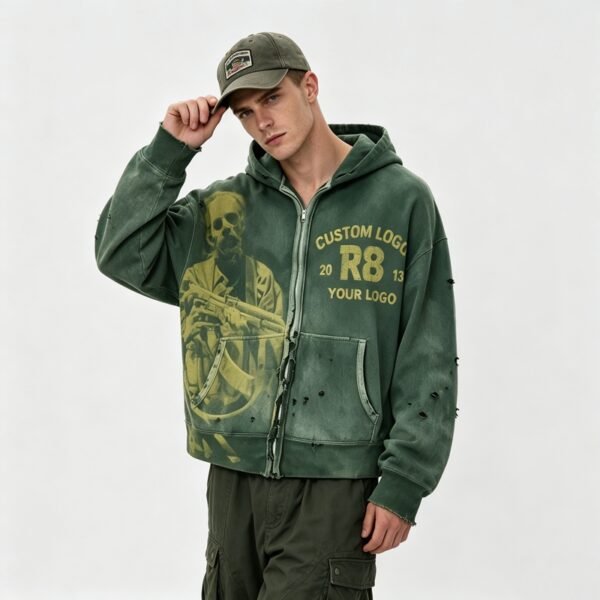
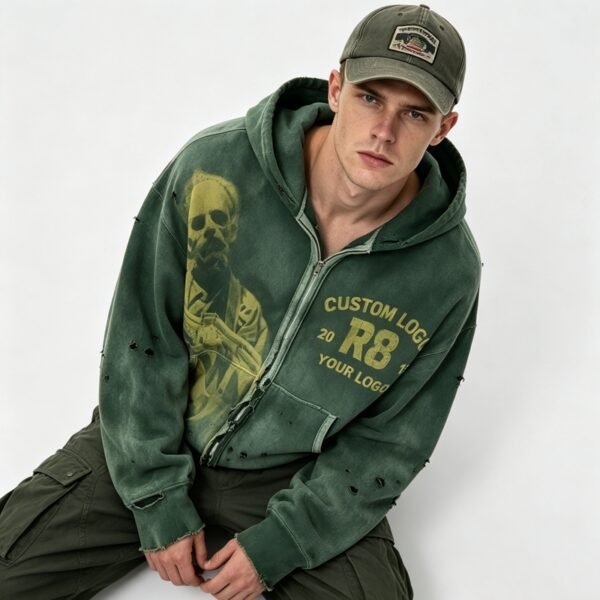
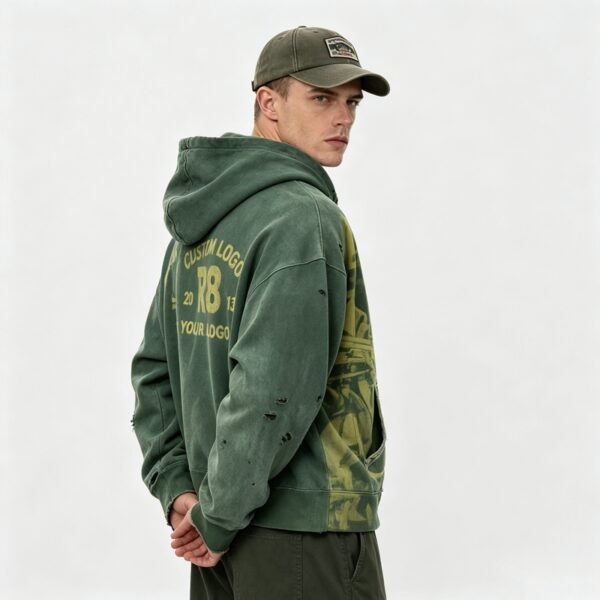
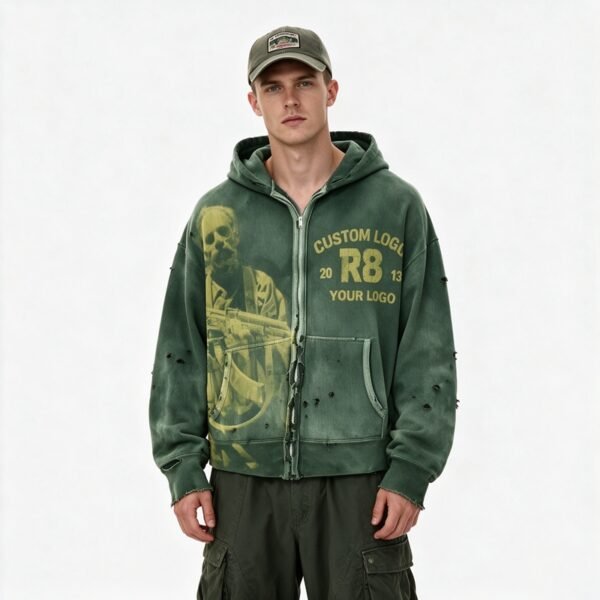
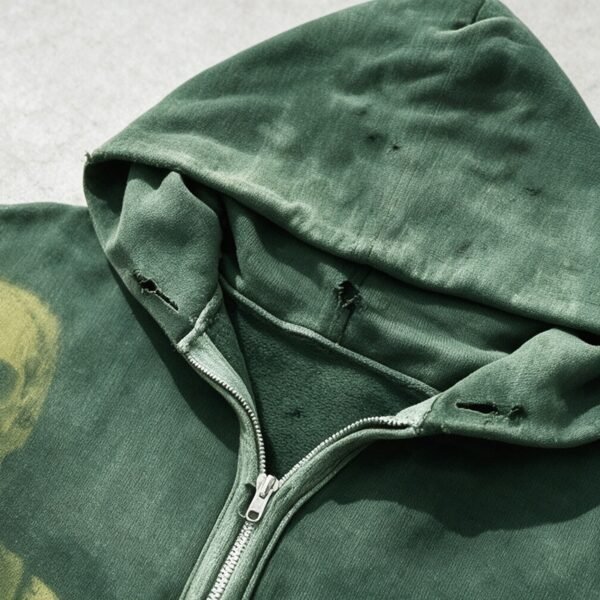
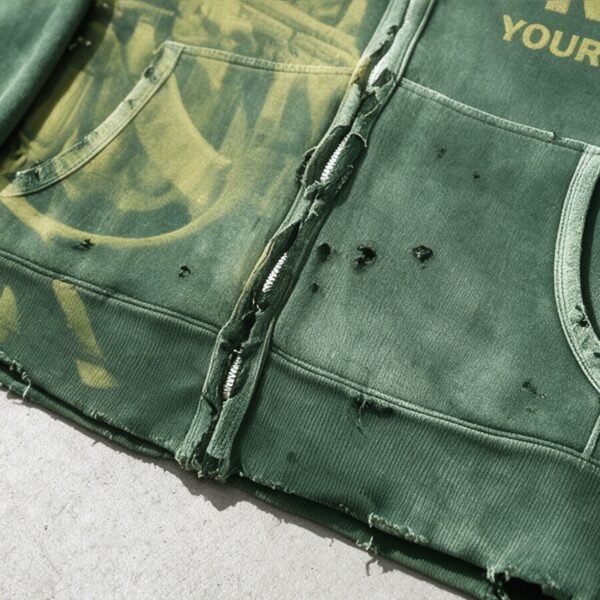
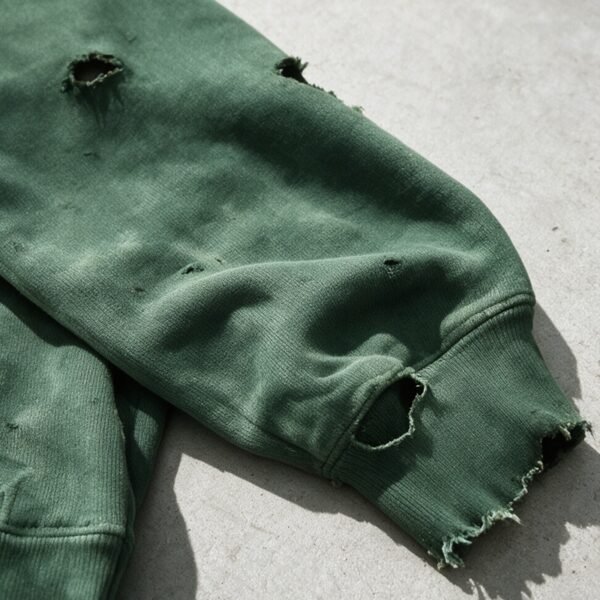
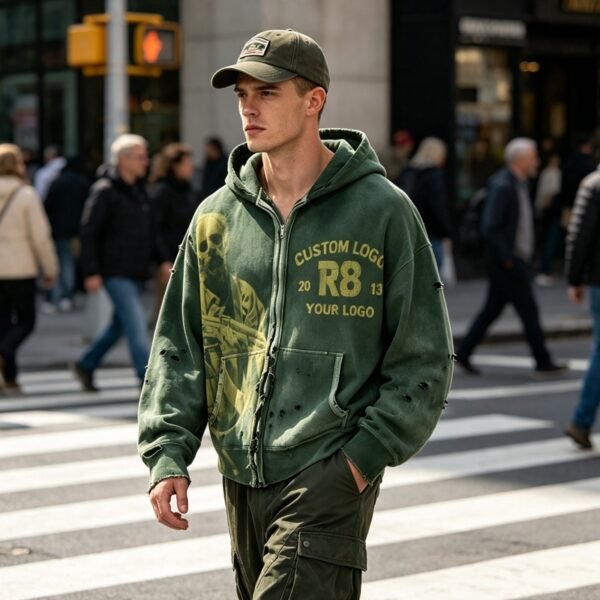
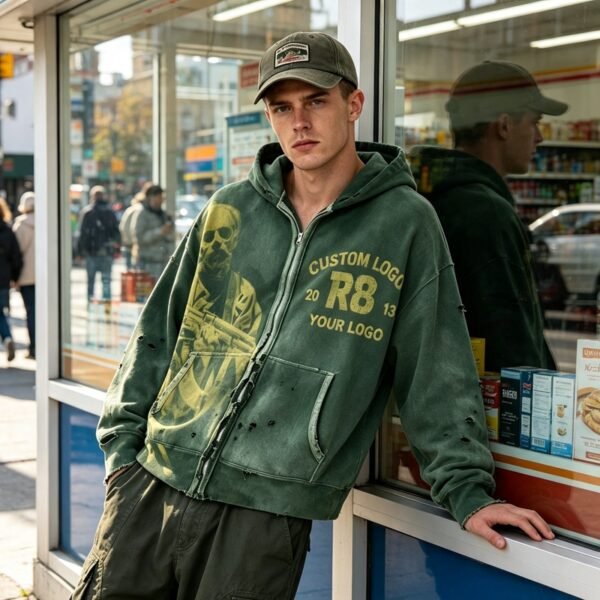
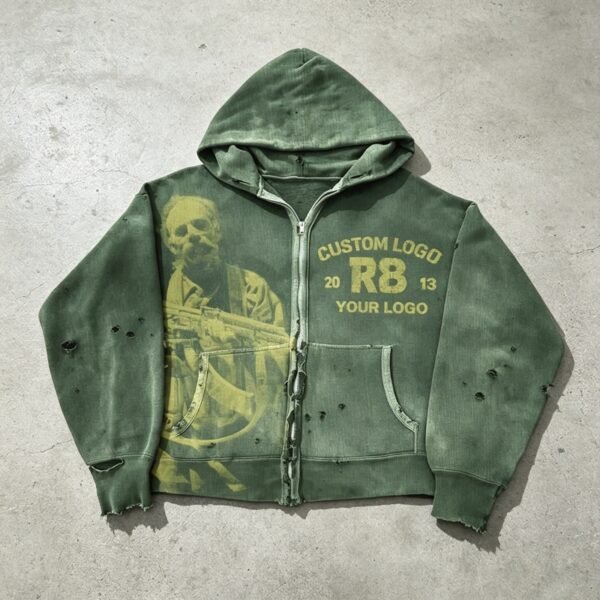
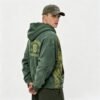
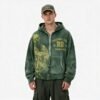
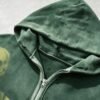
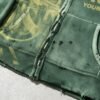
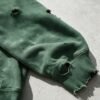
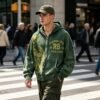
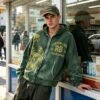
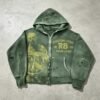
This custom distressed washed hoodie uses controlled fabric weight to balance a relaxed streetwear fall with enough body for visible graphics and pocket structure. The supplied image shows a green zip-front silhouette, dropped shoulder volume, worn abrasion, and oversized cargo styling.
Weight Sets the Intended Fall
A heavier fleece or dense knit can hold the large front artwork, hood volume, and pocket opening closer to the pictured shape. The trade-off is reduced fluidity, so the sample should test whether the body swings naturally during walking.
A lighter construction may create softer movement and easier layering, but it can let the hood, zipper tape, and graphic area appear less substantial. VeeWen should compare fabric hand, recovery, and hanging length before approving the production weight.
Graphic Scale Needs Stable Support
The image presents a large yellow-green graphic extending across the left torso while text occupies the upper right chest. That split composition needs a stable base so the artwork remains readable when the wearer moves or the zipper opens.
For development, the artwork should be reviewed across the center-front opening, pocket transition, and lower body. A fabric that drapes too freely may distort alignment, while excessive body can make the print feel stiff against the wearer.
Distress Must Follow the Fabric
Visible sleeve holes, lower-body punctures, frayed edges, and faded coloration create a deliberately aged surface. Their placement is irregular rather than evenly repeated, making the distress map part of the garment's visual identity.
Weight changes the way those openings behave after washing and wear. A dense base can keep tears visually controlled, while a softer base may enlarge them faster. The approval sample should therefore test edge scale and placement against the chosen hand.
Pocket and Zipper Influence Balance
The front zipper divides the artwork, while the large lower pocket adds a second structural block. Together they concentrate weight at the center front and can pull the garment downward if the fabric is too dense or hardware is oversized.
The development review should inspect zipper wave, pocket opening stability, and hood balance on a moving fit model. VeeWen's workflow can adjust panel allowances and reinforcement placement after the first sample reveals how weight distributes across the front.
VeeWen Workflow for Drape Approval
VeeWen can translate the image into a measured development brief covering target silhouette, graphic boundaries, distress zones, zipper construction, and pocket dimensions. The first sample should isolate fabric weight as the primary variable rather than changing several fit factors simultaneously.
After the initial review, the team can compare alternate fabric weights on the same pattern and artwork placement. Buyer comments should record movement, hood fall, pocket behavior, and print readability before the approved specification becomes the production reference.
Commercial Trade-Off and Checkpoint
This hoodie offers a strong statement through washed color, large artwork, and controlled damage, but its appeal depends on avoiding a costume-like stiffness. More body strengthens visual presence; more fluidity improves comfort and layering but softens the graphic architecture.
Before committing to the MOQ: 100 pieces per style requirement, approve one fit sample and one fabric-weight comparison. Confirm the selected hand, drape, distress boundaries, graphic registration, and zipper behavior as the final development checkpoint.
Buyer Questions
What fabric weight should this hoodie use?
The image supports a medium-to-heavy streetwear direction, but the correct weight depends on desired drape. VeeWen should confirm hand, GSM, recovery, and movement through comparative development samples.
How should the distressed details be controlled?
Use a mapped distress layout with defined hole sizes, abrasion zones, and edge treatment. Confirm placement visually after washing because softness and fabric density can change opening behavior.
Can the graphic cross the zipper?
Yes, the artwork can be engineered as coordinated left and right panels. The buyer should approve zipper alignment, artwork registration, pocket clearance, and opening distortion before production release.
What is the commercial minimum?
The exact commercial minimum is MOQ: 100 pieces per style. Final quantities, grading, colorways, artwork files, and material selections should be confirmed during development approval.
Approve the Drape Comparison Sample.
Send the preferred artwork, target hand, size range, and distress direction to VeeWen. The next checkpoint is a side-by-side fabric-weight review confirming movement, graphic stability, pocket structure, and final washed appearance.


Reviews
There are no reviews yet.