








This cropped washed T-shirt depends on symmetry more than its simple appearance suggests. A short body exposes hem imbalance, while tonal washing can emphasize small panel differences. VeeWen should develop the garment through mirrored pattern checks, controlled component placement, and post-wash inspection before confirming production readiness.
Why Symmetry Controls the Crop
A cropped T-shirt has limited vertical length, so small differences at the shoulder, sleeve, or hem become immediately visible. Unlike a longer tee, the shortened body cannot hide uneven shaping beneath the waistband or create visual distance from the neckline.
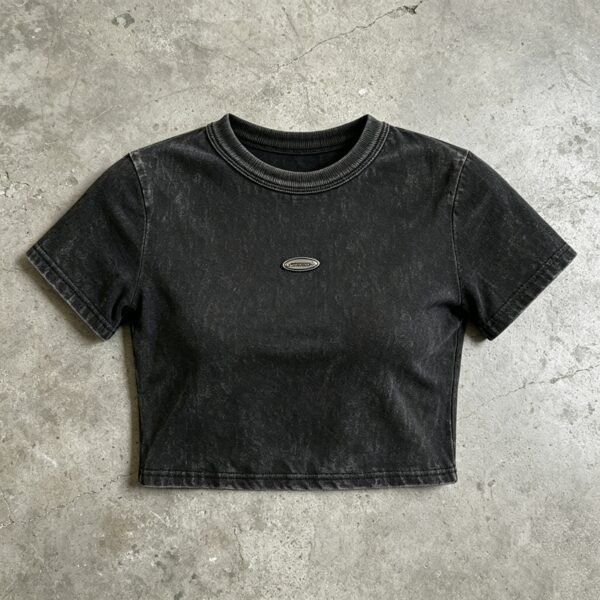
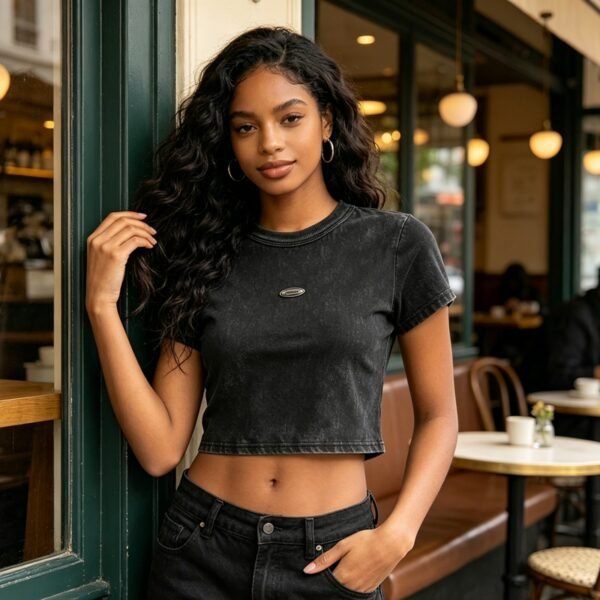
The supplied image shows a compact silhouette ending above the waist, with a clean relationship between collar, chest badge, and hem. That arrangement should become the development reference for mirrored measurements across front, back, and sleeve components.
Mirrored Components and Pattern Balance
Panel symmetry depends on matching left and right shoulder slopes, armhole curves, sleeve caps, side seams, and hem arcs. If one component is rotated or stretched during cutting, the garment can look tilted even when individual seams remain technically closed.
VeeWen should establish a center-front line, paired notches, and mirrored pattern checks before cutting. Measurements should compare sleeve length, opening circumference, shoulder width, side-seam length, and hem drop from the center line.
Managing the Washed Surface
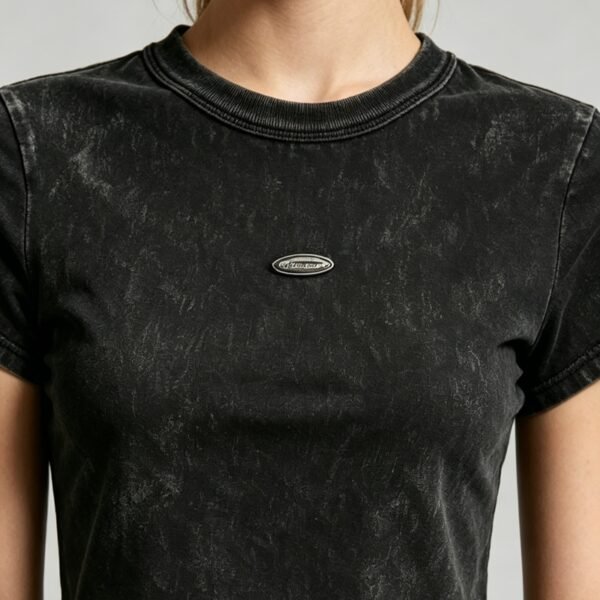
The washed black appearance introduces tonal variation across the knit, which can make an uneven hem or offset seam more noticeable. Distressing and wash movement may also change how the body hangs, especially around the collar, sleeves, and lower edge.
For approval, inspect symmetry both before and after washing. Review whether the neckline remains centered, the hem stays level, sleeve openings match, and surface effects distribute consistently without disguising a pattern or sewing imbalance.
Badge Placement as a Center Reference
The small oval metal badge sits near the chest center and creates a precise visual marker. Even a modest horizontal offset can make the neckline or shoulder imbalance appear greater, because the eye compares the badge against the garment's center-front axis.
The component should therefore be applied using a controlled placement template rather than visual judgment alone. Confirm badge distance from neckline, center-front alignment, attachment method, and surrounding fabric stability before approving the decorated sample.
Development Workflow at VeeWen
VeeWen's product-development workflow should translate the image into a symmetry map covering center front, neckline, shoulder, sleeve, side seams, hem, and badge position. Each point can receive a tolerance in the technical pack, making approval specific to this cropped garment.
After the first sample, compare flat measurements and on-body balance before and after the agreed wash treatment. Record deviations, update the mirrored pattern pieces, and recheck the badge template so grading preserves the intended center relationship.
Approval Checkpoint Before Bulk Production
The buyer should approve bulk production only after reviewing a washed sample under front-facing photography and flat measurement. Check collar centering, shoulder balance, sleeve equality, side-seam alignment, hem level, crop length, and badge position from the center front.
The final decision should also confirm shade variation, distressing boundaries, hardware appearance, labels, packaging, and MOQ: 100 pieces per style. Documenting these points protects the garment's compact geometry when production scales across sizes and colors.
Buyer Questions
What material is referenced for this crop top?
The source identifies a cotton blend, but exact fiber percentages, GSM, knit structure, and finishing details remain To Confirm through material development.
Why is symmetry especially important for this garment?
Its short body exposes hem and shoulder differences quickly, while the centered badge and washed tonal surface make small offsets more visually apparent.
Can the badge and distressing be customized?
Yes. Buyers can define badge shape, size, finish, placement, distressing boundaries, wash character, labels, and packaging within the approved technical specification.
What is the minimum order quantity?
The commercial minimum is MOQ: 100 pieces per style. Color allocation, size ratios, decoration details, and final production specifications require confirmation before ordering.
Approve the Symmetry and Wash Reference
Share your target crop length, size chart, wash direction, badge artwork, placement tolerances, labels, and quantity plan. VeeWen will organize development around measurable mirrored construction and post-wash balance.


Reviews
There are no reviews yet.