


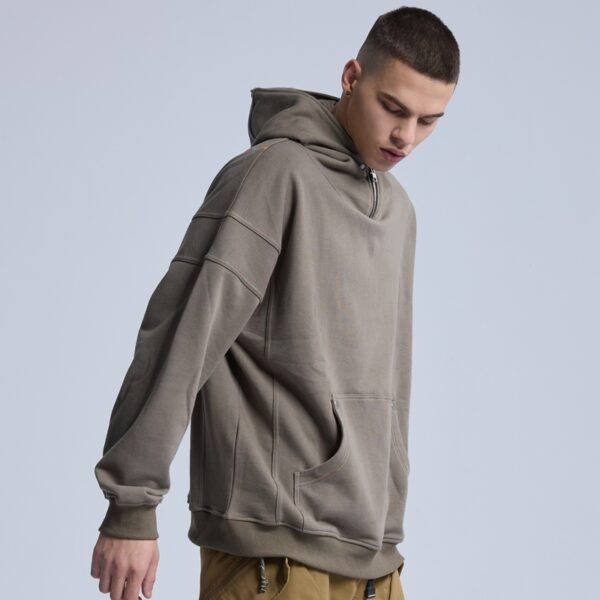


Develop this loose-fit half-zip hoodie around a sealed approval sample that captures the neckline, pocket hardware, stitch contrast, and relaxed proportions. VeeWen can use that physical reference to control reorder decisions while the buyer confirms every visible construction point, with MOQ: 100 pieces per style.
Why the Sample Must Be Sealed
This half-zip hoodie combines several visible decisions that can drift between orders: neckline height, zipper exposure, hood shape, pocket opening, stitch contrast, and loose-fit balance. A sealed sample turns those decisions into one physical reference instead of leaving reorder interpretation to separate documents.
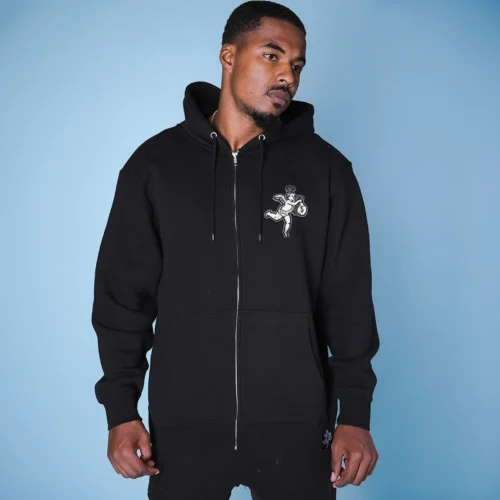
The supplied image shows a clean front interrupted by a short zipper and a pocket with visible hardware points. Because these details are concentrated in the wearer's central field, even small changes can alter the garment's utility, visual balance, and perceived design intent.
Fit Reference and Measurement Control
The model image indicates dropped shoulders, generous sleeve volume, and a roomy body rather than a close athletic fit. The approval sample should therefore record shoulder drop, chest width, body length, sleeve length, cuff opening, and hem tension as connected measurements, not isolated numbers.
During reorder review, VeeWen should compare the new sample directly against the sealed reference on a flat surface and on-body fitting. This reveals whether grading, fabric behavior, or sewing tension has shifted the loose silhouette, allowing the buyer to approve or correct before production.
Half-Zip and Hood Geometry
The half-zip opening controls how the hooded neckline frames the face and how the garment is pulled over the head. The visible zipper rises into a structured collar area, so its length, tape position, top stop, and surrounding seam alignment should be fixed in the reference sample.
The hood should be reviewed with the zipper both open and closed, checking overlap, depth, edge shape, and recovery after handling. These observations connect comfort and appearance to a repeatable construction instruction, while the absence of visible drawstrings remains a sample-defined design choice.
Pocket and Stitch Landmarks
The front pocket is not merely storage; its opening, corner shape, and hardware points create a strong horizontal landmark on the black body. The sample should preserve pocket placement relative to the hem, along with the visible snap or eyelet treatment indicated by the image.
Contrast topstitching appears on the shoulders, sleeves, and pocket area, making thread color and stitch path part of the reorder identity. VeeWen should document these landmarks against the sealed sample so later production reviews can distinguish intentional variation from construction drift.
VeeWen Development Workflow
VeeWen can translate the supplied image into a first technical package covering half-zip dimensions, hood construction, pocket placement, stitch paths, rib edges, and the no-drawstring direction. The first physical sample then becomes the decision surface where fit and visible details are assessed together.
After buyer comments are resolved, VeeWen should mark one sample as the sealed approval reference and connect its measurements, approved trims, and construction notes to the reorder file. This workflow makes future review faster because the buyer evaluates changes against an agreed physical standard.
Reorder Approval Checkpoint
Before approving a reorder, the buyer should compare the proposed sample with the sealed reference across fit, zipper position, hood shape, pocket hardware, contrast stitching, cuff behavior, and hem proportion. Any deviation should be classified as intentional revision or correction before quantities are confirmed.
The commercial discussion should also retain MOQ: 100 pieces per style and identify all remaining material or trim details as confirmed or open. VeeWen can proceed when the buyer accepts the sample as the controlling reference for the next production decision.
Buyer Questions
What does a sealed approval sample control?
It controls the approved fit, half-zip geometry, hood shape, pocket placement, hardware appearance, stitch contrast, rib proportions, and other visible reorder details.
Why is a physical sample important for reorders?
A physical reference captures how measurements, fabric behavior, sewing tension, and trims work together, helping buyers identify meaningful variation that paperwork may miss.
Can the no-drawstring detail be changed later?
Yes, but adding or removing drawstrings changes the approved construction and should be treated as a documented revision requiring a new sample decision.
What is the minimum commercial quantity?
The commercial minimum is MOQ: 100 pieces per style, with final composition, trims, measurements, construction, and reorder conditions confirmed during development.
Seal the Reorder Reference
Share the target fit, trim direction, and material reference with VeeWen for sample development. Approve one sealed sample covering zipper, hood, pocket, stitching, and rib details before reorder planning begins.


Reviews
There are no reviews yet.