
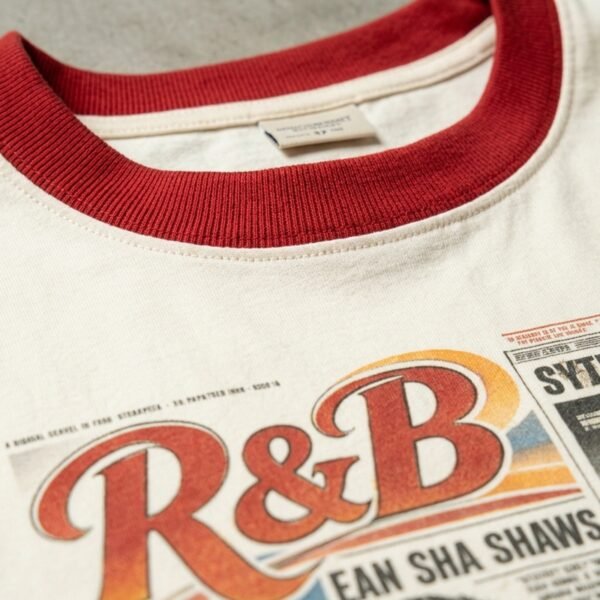
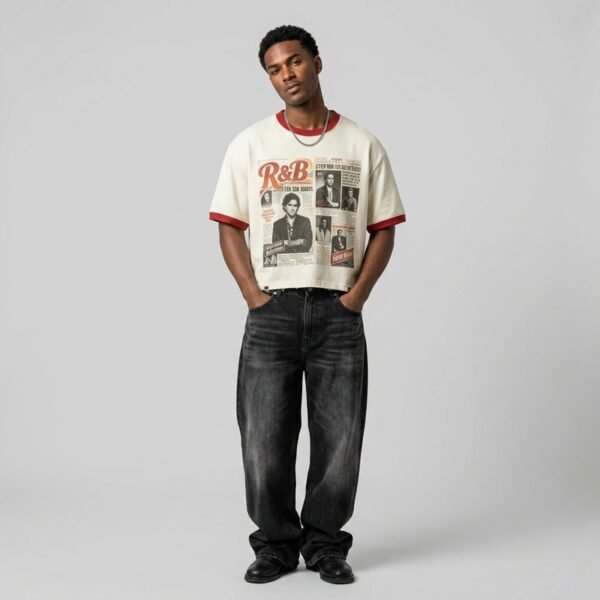
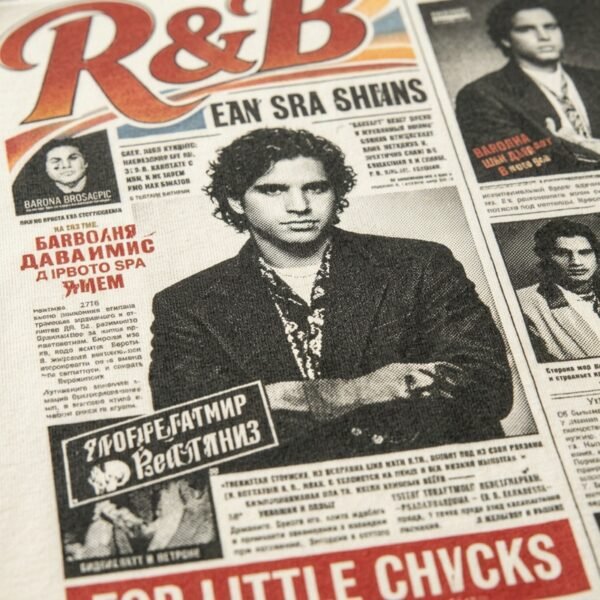
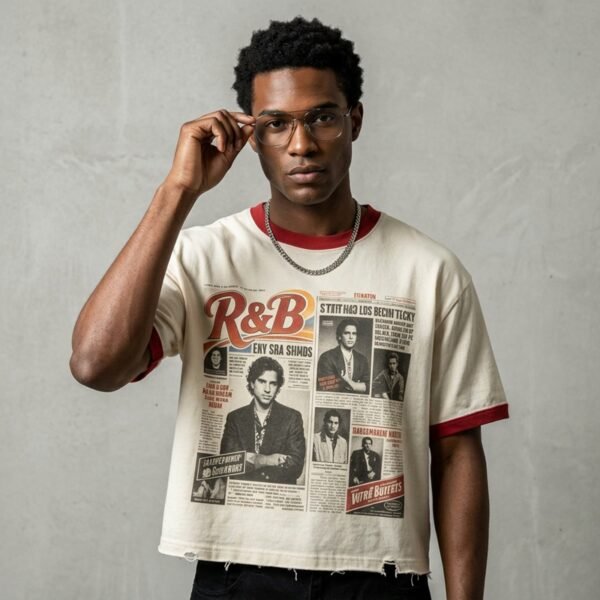
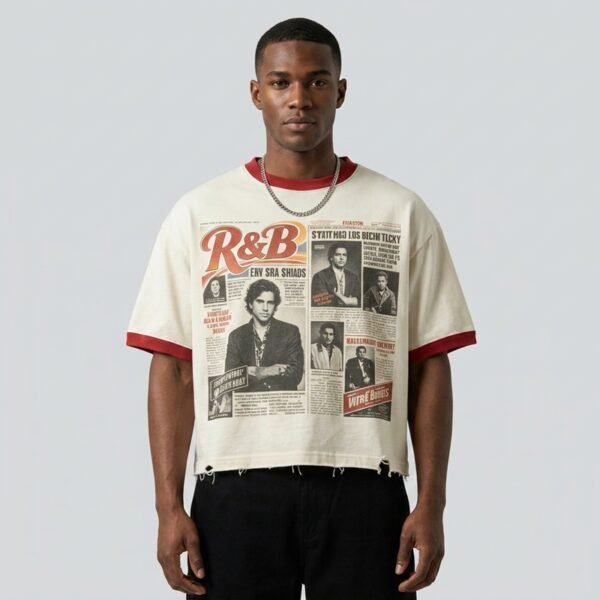
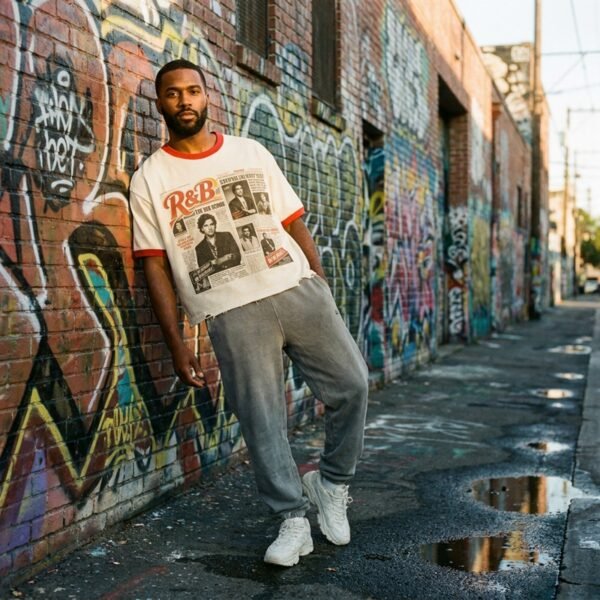
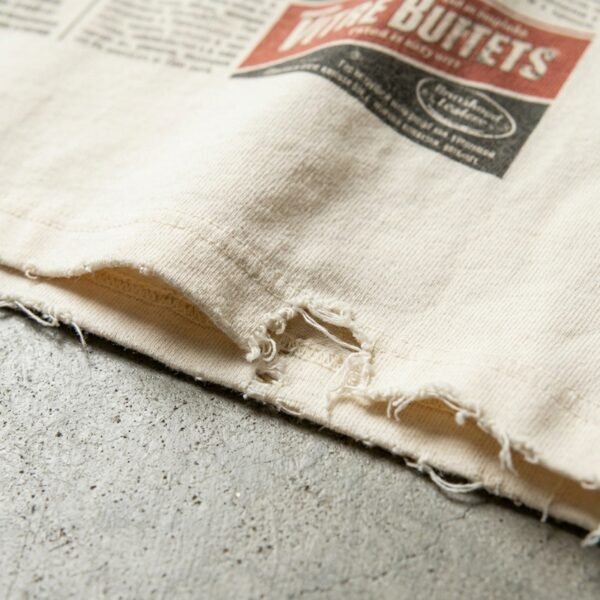






This tee should be developed around registration control, because the artwork must remain visually intentional after panels are cut, joined, printed, and finished. The supplied image shows a dark red rib neck, off-white body, large chest graphic, and distressed construction cues that all affect placement approval.
Registration Begins with the Pattern
A large front graphic can shift perceptually when the shoulder slope, neckline curve, side seams, or hem are altered. Registration therefore begins with the graded pattern, where artwork boundaries must be mapped against each cut panel and protected from seam allowances.
The supplied image places visible artwork near the crew neckline and across the chest, making the upper placement especially sensitive. A buyer-approved print map should define centerline, neckline clearance, side balance, and artwork scale for every size before sampling proceeds.
Panel Assembly Changes the Artwork
Printing on separate cut panels may improve placement control, but it introduces alignment points at shoulder, side, or other joining seams. Printing after assembly can preserve continuous artwork, yet may complicate access, distortion control, and handling around the rib neckline and distressed hem.
The correct route depends on artwork scale, seam crossings, fabric behavior, and equipment suitability. VeeWen should test the chosen sequence on an assembled sample, then inspect registration from normal viewing distance as well as close technical review.
The Neck Rib Sets the Frame
The dark red ribbed crew neck is a strong visual frame around the off-white body and upper print. Its width, recovery, attachment angle, and seam allowance can change the apparent distance between the collar and the first graphic elements.
Artwork approval should therefore include the actual rib sample, not only a digital mockup. Confirm neckline depth, rib width, topstitch visibility, and print clearance together, because small changes can make the graphic feel crowded or unintentionally low.
Distressed Hem Needs a Registration Boundary
A fringe or distressed hem introduces an irregular lower edge, so the artwork should not rely on a fixed distance from the garment bottom unless that tolerance is clearly defined. Uneven fringe length can make a correctly centered graphic appear vertically inconsistent.
The development brief should separate artwork placement from distress variation by establishing a stable reference line above the hem. Buyers should approve the allowable fringe range, edge appearance, and relationship between the lowest printed elements and the finished body length.
VeeWen Workflow: Test the Sequence
Within VeeWen's workflow, artwork development should begin with a placement file over the production pattern, followed by a fabric and rib review using the stated cotton reference. The team can then select a print sequence that respects panel geometry and finishing operations.
The assembled sample is the decisive technical handoff. Review registration, neckline framing, seam interaction, body measurements, and hem distress simultaneously, then record corrections by size or panel. This creates a usable approval record for grading and later production checks.
Buyer Approval Checkpoint
Before release, approve the final artwork dimensions, color separations, print clearances, neckline construction, body measurements, and hem-distress tolerance. The buyer should also confirm whether the intended appearance requires printing before assembly, after assembly, or another validated sequence.
The supplied wording confirms a cotton reference and DTG concept, but it does not establish GSM, shrinkage, colorfastness, print durability, or exact finishing limits. Those variables should be tested or specified before commercial approval, because they directly influence registration and perceived quality.
Buyer Questions
Why map artwork to the pattern first?
Pattern mapping protects centerlines, seam clearances, neckline spacing, and size grading before printing, reducing visual drift caused by changing panel dimensions.
Can DTG printing cross garment seams?
It may be possible depending on equipment and sequence, but seam distortion, access, fabric handling, and registration should be validated on an assembled sample.
Is the fabric composition confirmed?
The supplied source wording states 100% cotton. Fabric weight, knit structure, shrinkage behavior, and finishing treatment remain To Confirm during development.
What is the commercial minimum?
MOQ: 100 pieces per style. Final artwork, colorways, size ratios, packaging, measurements, and production details follow technical approval.
Approve the Artwork Registration Map
Share the artwork files, graded placement requirements, cotton fabric preferences, neckline measurements, and distress tolerance so VeeWen can coordinate a production-ready sample.


Reviews
There are no reviews yet.