


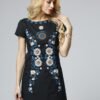

This custom embroidered shift dress is developed around visual repeatability. Its black base, centered floral arrangement, short sleeves, and straight hem create a recognizable approval target, allowing future orders to follow an agreed physical sample instead of memory or changing image interpretation.
Why the Approval Sample Controls Reorders
The approval sample acts as a physical reorder control: its black ground, vertical floral path, neckline border, and short straight proportions establish what must remain consistent. The supplied image shows these elements working together as one composition, rather than isolated decoration applied afterward.
For a buyer, this reduces ambiguity around embroidery scale and placement between development and repeat orders. The trade-off is that approval takes attention at the visual-detail level; accepting an unclear sample can preserve the wrong spacing, density, or silhouette across later production.
Reading the Embroidery Map
The supplied front image shows large daisy-like motifs descending through the center, smaller flowers around them, and blue curling stems extending toward the sides. That map gives the development team concrete checkpoints for embroidery placement, spacing, contrast, and the visual weight carried by each zone.
Because the image does not verify stitch count, backing, thread specification, or dimensional height, those variables remain open. Buyers should separate confirmed appearance from unverified technical settings, recording each approved embroidery detail before the sample becomes the reorder reference.
Silhouette and Proportion Checkpoints
The garment presents a straight shift silhouette, short sleeves, a round neckline, and an above-knee hem. These visible proportions matter because the embroidery occupies much of the front; even modest changes in body width or length can alter the relationship between motif scale and available surface.
A shorter body may make the floral path feel crowded, while a longer body may create excessive empty space below the final motif. The approval review should therefore assess the whole garment worn or displayed flat, not embroidery alone, before sealing the sample.
Color Contrast as a Repeat Variable
Black provides the dominant visual field, while blue, white, and orange threads create the contrast hierarchy visible in the supplied image. The white flowers attract immediate attention, blue stems connect the composition, and orange centers provide small points of warmth and emphasis.
This color structure should be documented as a placement reference, not treated as an assumed thread recipe. Screen images can shift hue and brightness, so the buyer should approve physical thread shades alongside the garment sample before confirming a reorder standard.
VeeWen Development Workflow
VeeWen can route this dress through a focused development sequence: translate the photographed motif map into a working specification, produce a physical sample, review silhouette and embroidery together, then seal the corrected sample as the reorder benchmark.
The key checkpoint is not simply sample completion; it is buyer approval of the exact physical reference. VeeWen's team can then use that sealed sample to align later cutting, embroidery placement, finishing review, and buyer-side reorder inspection.
Commercial Approval and Trade-Offs
This style suits a buyer who values recognizable embroidery placement over rapid visual improvisation. The central arrangement gives the dress a distinct identity, but it also creates more visible risk if motifs drift, thread contrast changes, or the hem proportion moves away from the approved balance.
Before commercial release, confirm fiber content, fabric weight, embroidery backing, size grading, care labeling, and packaging requirements. The commercial minimum is MOQ: 100 pieces per style, while all other production variables remain subject to development confirmation.
Buyer Questions
What should the sealed sample record?
Record the approved silhouette, neckline, hem length, motif positions, thread colors, embroidery density, labeling, and any construction details that affect repeat-order appearance.
Is the fabric composition confirmed?
No. The supplied evidence shows appearance only, so fiber content, fabric weight, stretch, lining, backing, and care requirements must be confirmed during development.
What is the reorder decision point?
The buyer should approve one corrected physical sample after checking the complete garment, then seal that reference before authorizing repeat production.
What is the minimum order quantity?
The commercial minimum is MOQ: 100 pieces per style. Final sizing, color assortment, packaging, and technical details require confirmation during the development process.
Approve the Dress Reference
Send your target measurements, embroidery artwork or placement notes, labeling requirements, and delivery brief. VeeWen can develop the sample for review, correction, sealing, and reorder alignment.



Reviews
There are no reviews yet.