

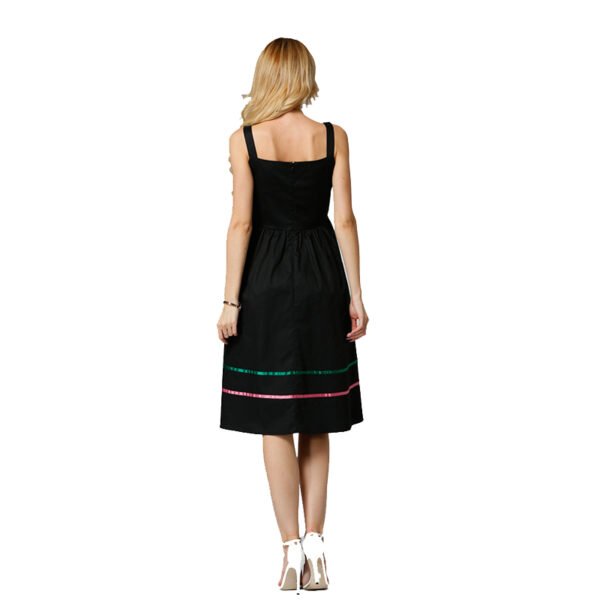
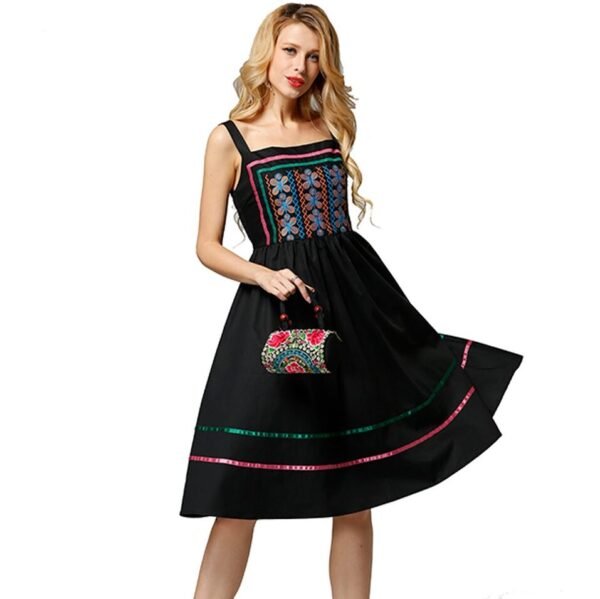




This custom embroidered panel midi dress is developed around the relationship between closure length and front-body composition. The dense central embroidery, contrasting frame lines, and gathered waist leave little room for an arbitrary zipper decision without disturbing visual balance or entry function.
The Front Panel Controls Visual Balance
The supplied image places a dense embroidered panel at the center of a black sleeveless bodice. Its framed edges create a strong visual rectangle, meaning the front closure must either disappear within the composition or be positioned deliberately beside it.
Because embroidery attracts attention, even a modest zipper shift could make the bodice appear off-center. Development should therefore establish the panel's true centerline first, then assess whether the closure interrupts, borders, or sits behind that decorative field.
Zipper Length Changes Entry and Proportion
A longer zipper can improve dressing ease, but it may extend through the embroidered field or alter the apparent length of the front body. A shorter zipper protects more decoration, yet can increase entry restriction or stress at the waist transition.
The correct choice depends on the target opening method and wearer movement. The buyer should review zipper length alongside bust, waist, and hip measurements, rather than approving a closure from a flat sketch without checking the garment's actual balance.
Gathering Creates a Second Alignment Point
Visible gathering begins below the bodice, creating a second horizontal reference beneath the embroidered panel. The zipper endpoint, seam, and gathered transition must cooperate so the front does not look stretched above one side or crowded below the other.
During sampling, VeeWen can compare the closure endpoint against the waist seam and panel border. This makes proportion review tangible: the buyer can see whether decoration, closure, and fullness form one controlled front rather than three competing construction signals.
Contrast Raises Construction Visibility
The black base is bordered by bright pink and green lines, while blue and orange embroidery forms repeated floral and geometric details. This contrast makes alignment, turnings, and any closure interruption more apparent to the viewer.
The sample review should inspect how the zipper tape, seam allowance, and panel edge interact under normal light. The objective is not to hide every construction line, but to ensure visible details appear intentional and remain consistent through the front-body balance.
VeeWen Workflow Maps the Closure to Decoration
VeeWen's workflow should translate the image into a front-body map showing panel boundaries, centerline, waist transition, and proposed zipper endpoint. That map gives pattern, embroidery, and sewing reviews a shared reference for resolving proportion conflicts.
After the first sample, comments should separate functional entry concerns from visual alignment concerns. This allows the team to adjust opening length, panel placement, or seam position selectively, preserving the embroidery's role while solving the actual fit requirement.
Approve the Closure Before Embroidery Lock
The buyer's approval checkpoint is the relationship between closure operation and decorative continuity. Confirm that the wearer can enter comfortably, the zipper does not distort the bodice, and the gathered waist begins at the intended front-body level.
Only then should the final embroidery placement and graded pattern be locked. The commercial decision is to protect a repeatable visual center while accepting the closure length that best supports wearability for the selected size range.
Buyer Questions
Is the zipper visible in the supplied image?
The supplied image focuses on the front bodice and does not clearly verify zipper placement or length. Those details must be selected and approved through the technical sample review.
Why does the embroidery affect zipper development?
The centered embroidered panel creates a strong visual center. A zipper crossing or shifting that field can affect alignment, decoration continuity, seam stress, and the perceived balance of the bodice.
Can the dress retain the gathered waist?
The image visibly shows a gathered lower-bodice transition. Its final fullness, seam position, and relationship to zipper endpoint should be confirmed through pattern development and fitting.
What is the minimum order quantity?
The commercial minimum is MOQ: 100 pieces per style. Final size ratios, color details, embroidery approvals, packaging, and production requirements should be recorded in the order documentation.
Approve Closure Balance and Panel Alignment
Share the target size range, entry preference, and embroidery placement direction with VeeWen. We can coordinate zipper length, front-body balance, waist transition, and decorative continuity through sample approval.


Reviews
There are no reviews yet.