



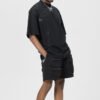
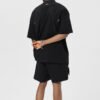
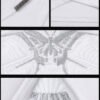
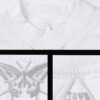
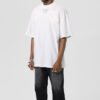
This development record treats pocket-bag depth and opening geometry as the shirt's central engineering decision. The supplied image supports an oversized black silhouette and high-contrast embroidered spider focus, while pocket dimensions remain to confirm through a structured prototype review.
Thesis: Carry Geometry Protects the Graphic Composition
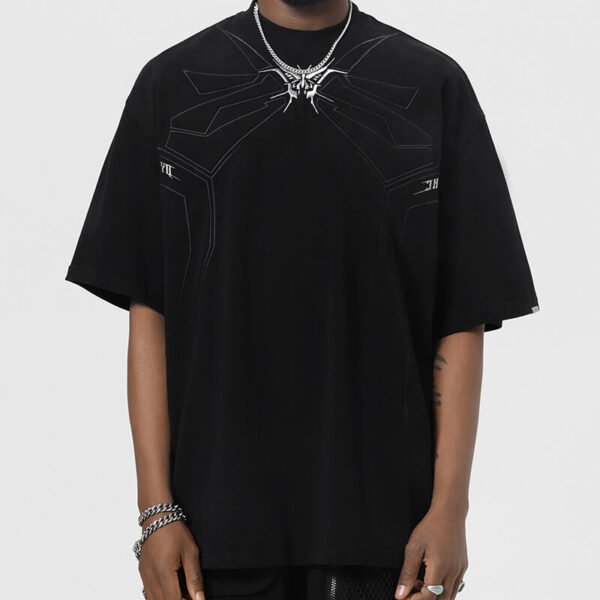
The front image places the brightest embroidered spider detail high on the chest, while the lower body remains predominantly black. A pocket opening positioned too high, wide, or sharply angled could interrupt that visual hierarchy, so geometry should be deliberately quiet.
Pocket-bag depth controls more than storage. Excess volume can pull the cotton body outward, create a visible bulge, and disturb the straight lower hem. Insufficient depth can spill everyday items. The approval target is a balanced bag that holds intended contents without reshaping the shirt.
Reading the Supplied Visual Evidence
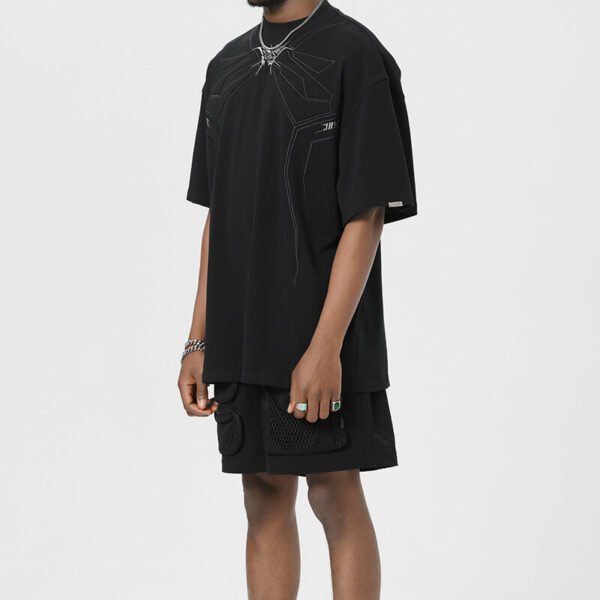
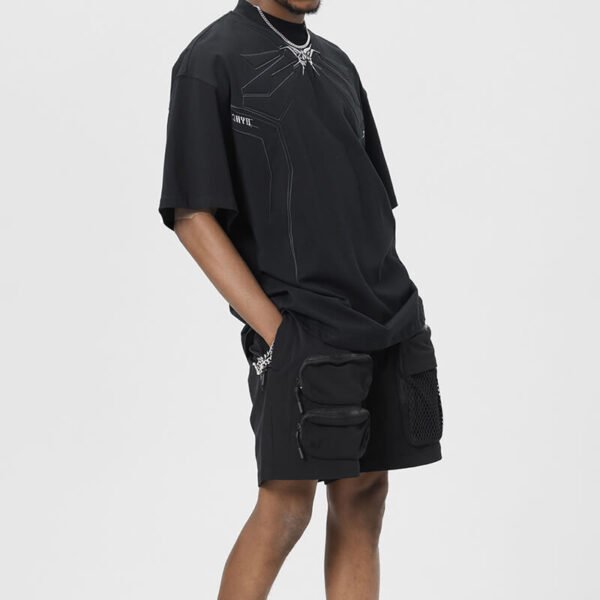
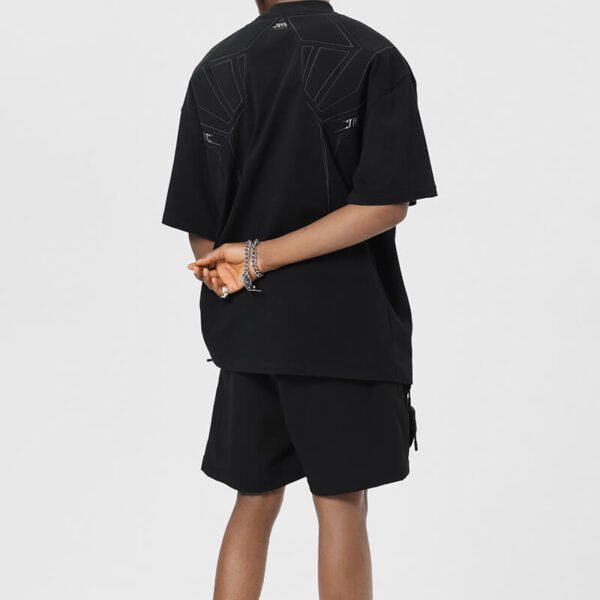
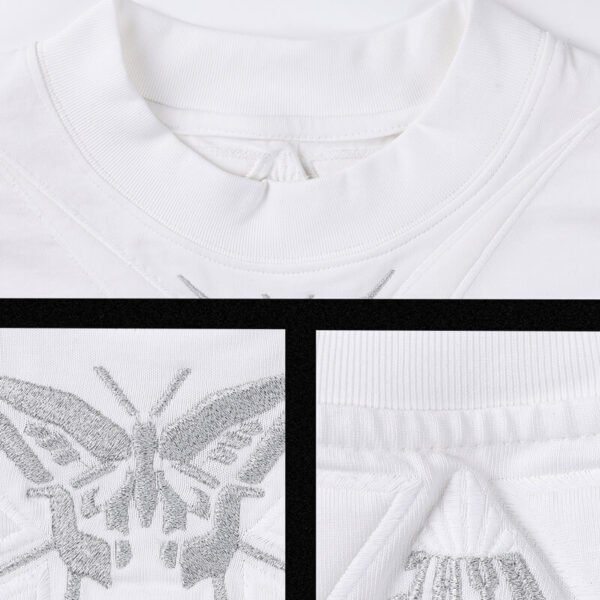
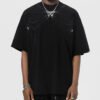
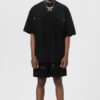
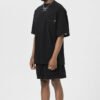
The image shows a black short-sleeve shirt with broad sleeves, a roomy body, and a centered white spider motif. Tonal lines radiate across the upper front, creating a structured graphic field that requires lower-front placement decisions to remain visually disciplined.
The supplied view does not show a usable pocket opening or internal bag. Therefore, pocket depth, entry orientation, seam allowance, and reinforcement cannot be treated as verified specifications. They should enter the development sheet as measured variables for sampling and buyer approval.
Opening Geometry and User Access
A nearly horizontal opening can feel familiar but may expose contents when the wearer bends. A slightly angled entry can improve hand access and reduce visual interruption, although angle, width, and edge finishing must be tested against the selected fabric behavior and intended carry items.
For this silhouette, the opening should be evaluated while the shirt hangs naturally and while worn. Reviewers should inspect hand clearance, edge recovery, and whether the pocket mouth twists the front panel. The preferred geometry is the one that preserves access without becoming the graphic's secondary focal.
Depth, Bag Shape, and Body Balance
A deeper bag may suit phones, cards, or small tools, but its lowest point must be controlled so it does not create a pendulum effect during movement. A shallower bag reduces drag but can compromise security. The correct depth depends on the collection's declared carry use.
The oversized body offers room for a pocket strategy that remains proportionate rather than ornamental. During prototype review, measure the bag vertically, assess its side-to-side spread, and observe the hem under load. This converts a subjective streetwear detail into a repeatable construction decision.
Construction Risks Around the Opening
Pocket openings concentrate stress at their corners, especially when the shirt is worn loosely and contents are repeatedly inserted. Reinforcement choices may include controlled bar tacks, stabilized facing, or a shaped binding, but the appropriate solution depends on fabric weight and the approved opening design.
The graphic itself also creates a placement boundary. Pocket stitching should not cut through the spider, obscure tonal lines, or introduce avoidable distortion. VeeWen's sample review should map artwork and pocket coordinates together, allowing the pattern, print placement, and sewing sequence to resolve as one package.
VeeWen Development Workflow and Approval Gate
VeeWen can translate this axis into a focused development path: confirm the carry scenario, draft several opening geometries, build the pocket into the base pattern, and review the garment on-body. Each iteration should record depth, opening dimensions, reinforcement, and loaded drape observations.
The buyer checkpoint is a measured approval sample, not a visual assumption. Confirm the cotton reference, final artwork method, pocket location, bag dimensions, and acceptable distortion threshold. Once those decisions are signed, the style can proceed toward MOQ: 100 pieces per style.
Buyer Questions
Is the cotton composition confirmed?
Cotton appears in the supplied source title, but fiber percentages, fabric weight, and finishing details require confirmation through the selected material specification.
What pocket details should buyers approve?
Approve opening width, angle, bag depth, entry security, reinforcement, and loaded drape after reviewing a physical sample on the intended oversized pattern.
Can the chest graphic be changed?
Yes, artwork placement and production method can be developed for the collection, subject to confirming embroidery, printing, scale, and interaction with pocket coordinates.
What is the minimum order?
The exact commercial minimum for this VeeWen development is MOQ: 100 pieces per style, with final specifications agreed before production authorization.
Approve the Pocket Geometry for Sampling
Send the intended carry items, artwork files, and target measurements so VeeWen can develop a pocket sample that protects access, drape, and graphic clarity.


Reviews
There are no reviews yet.