
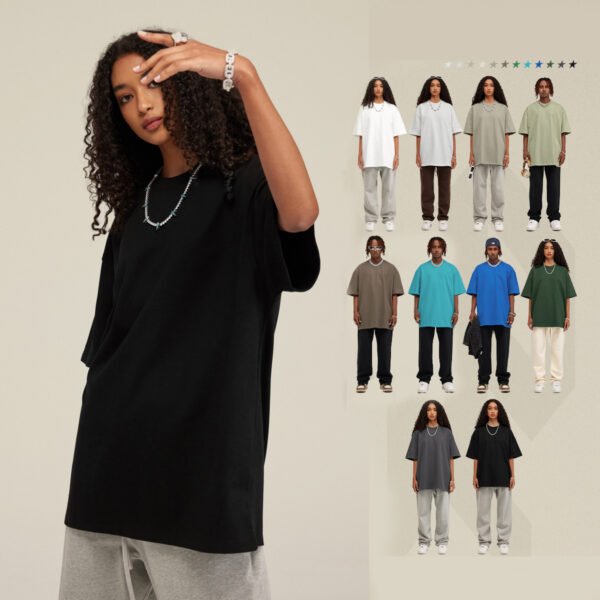



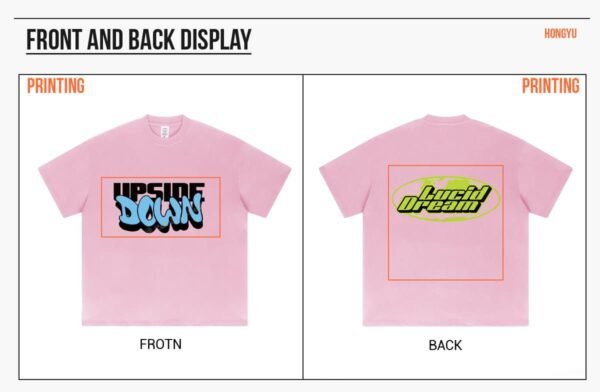










This custom extra-heavy oversized T-shirt is built around label placement and wearer comfort, not simply visual volume. The supplied imagery shows broad shoulders, extended sleeves, a long body, and multiple solid colorways, while the source wording references 425gsm and makes neckline-area decisions especially consequential.
Weight Amplifies Label-Area Pressure
The source wording identifies a 425gsm construction, which indicates a materially substantial garment requiring confirmation before production. In a heavy jersey, a label can add localized stiffness or pressure at the neck, especially when the oversized body pulls downward during movement.
The main image shows the neckline sitting close to the upper chest while the body falls broadly below it. That relationship means comfort depends on balancing label size, edge finish, attachment density, and seam allowance rather than selecting placement from a flat artwork file.
Drop Shoulders Change Wearer Contact
The visible shoulder seam is lowered and the sleeve extends widely from the upper arm, creating a relaxed geometry that moves differently from a regular T-shirt. Label placement near the neck must avoid becoming a rigid anchor as the shoulder line shifts during walking or layering.
A centered back-neck label may remain visually logical, but its comfort depends on the label material, folded edge, stitch path, and neckline recovery. Buyers should compare inside-neck options directly on a worn sample, checking rubbing, twisting, and pressure after natural arm movement.
Long Body Proportions Need Alignment
The garment appears substantially longer than a conventional fitted tee, with the hem falling well below the hip on the models. That length increases the visual importance of vertical balance, so a label that is too low or wide can make the interior feel crowded.
Confirm label position using the finished neckline and shoulder measurements, not only the center-back pattern point. The development review should check whether the label remains centered after side seams, shoulder drop, and body weight settle naturally on the wearer.
Colorways Reveal Different Comfort Cues
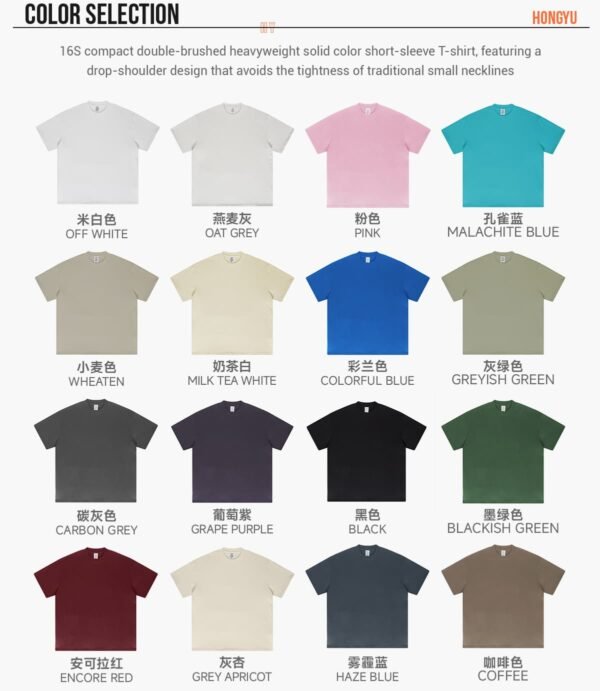
The supplied composite presents black, white, gray, olive, brown, turquoise, blue, and green color references. Although label comfort is physical, colorway review still matters because contrasting labels, topstitching, or neck tapes can expose placement irregularities more clearly on darker or brighter grounds.
Approve one representative light and dark body during label testing, then verify the remaining colors against the same construction standard. Check that label edges, stitch visibility, neck binding, and interior contrast remain intentional without encouraging a buyer to accept discomfort for visual consistency.
Interior Finish Must Support the Silhouette
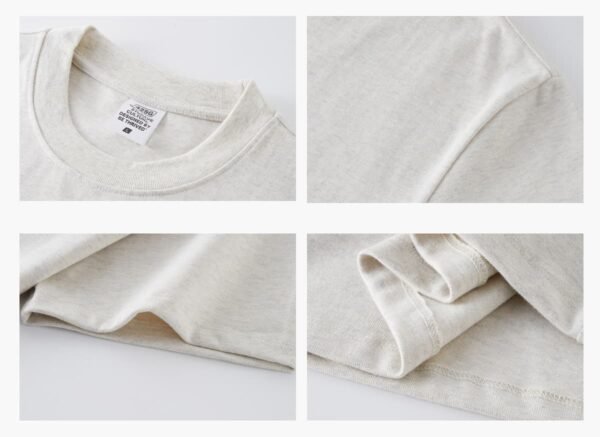
An oversized heavy T-shirt can feel relaxed externally while remaining uncomfortable inside if the label area is bulky. The clean exterior shown in the image places greater responsibility on the internal finish, including edge softness, stitch density, seam direction, and the transition into the neckline.
The buyer should review the garment inside out and during movement, particularly when the wearer raises both arms or layers a jacket. Record acceptable label dimensions, placement tolerances, attachment method, and any backing or tape requirement before approving the size set.
VeeWen Workflow Checkpoint
VeeWen can carry this axis into development by making label placement a fit review item alongside the oversized block, neckline shape, shoulder drop, and fabric confirmation. The checkpoint should use a worn sample so comfort is judged under the garment's actual weight and drape.
During approval, VeeWen should consolidate label artwork, position measurements, edge treatment, colorway requirements, and size-scaled construction notes into the production brief. The buyer then confirms the comfort standard and proceeds toward MOQ: 100 pieces per style.
Buyer Questions
Is 425gsm confirmed for the finished garment?
The source title references 425gsm, but the supplied evidence does not independently verify finished weight. Treat it as a source reference pending fabric specification and development confirmation.
Where should the private-label label be placed?
A centered back-neck position is a logical starting point, but comfort depends on label size, material, edge finish, stitch path, and neckline recovery during wear.
Why does the drop shoulder affect label comfort?
The lowered shoulder seam changes movement and drape, allowing the neckline area to shift differently from a regular tee. A rigid label can then create rubbing or pressure.
What is the commercial minimum for this style?
The commercial minimum is MOQ: 100 pieces per style. Confirm fabric weight, label construction, colorways, measurements, and comfort standards before production planning begins.
Approve the Comfort-Led Label Placement
Share your label artwork, preferred interior finish, target colorways, and fit measurements. VeeWen will align the neckline review with fabric confirmation, size scaling, and MOQ: 100 pieces per style.


Reviews
There are no reviews yet.