

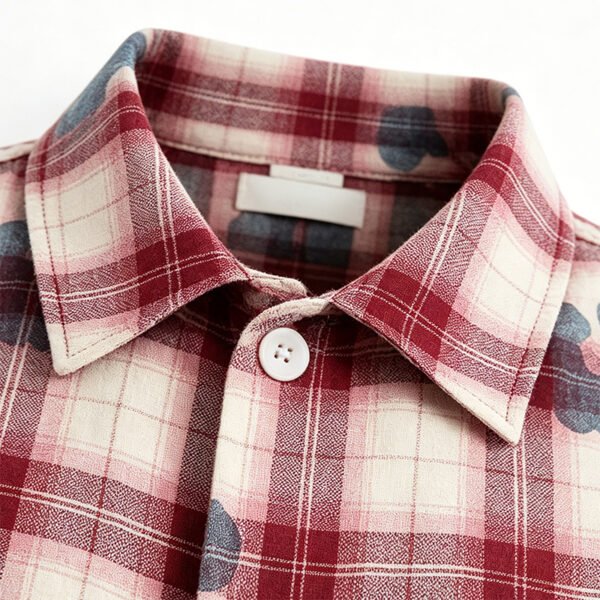
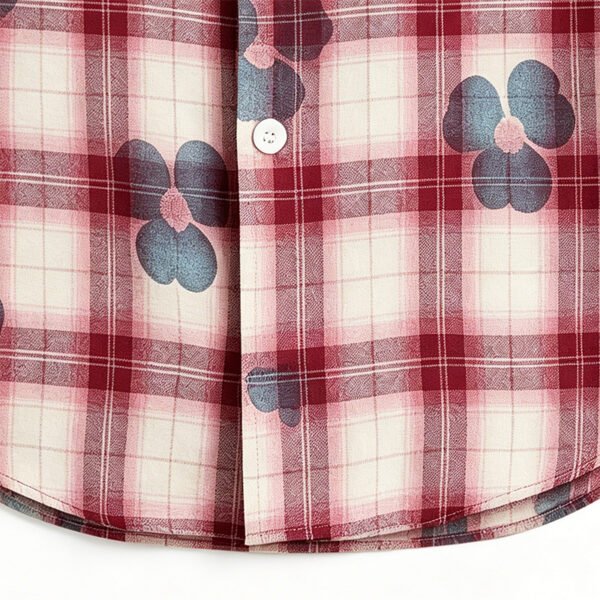
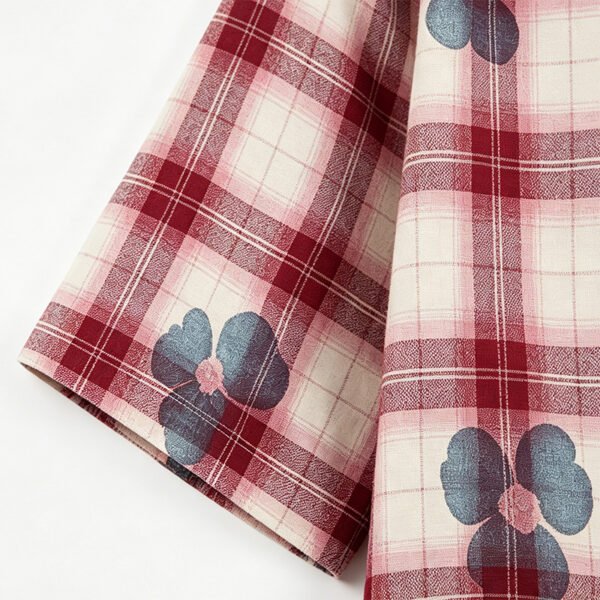

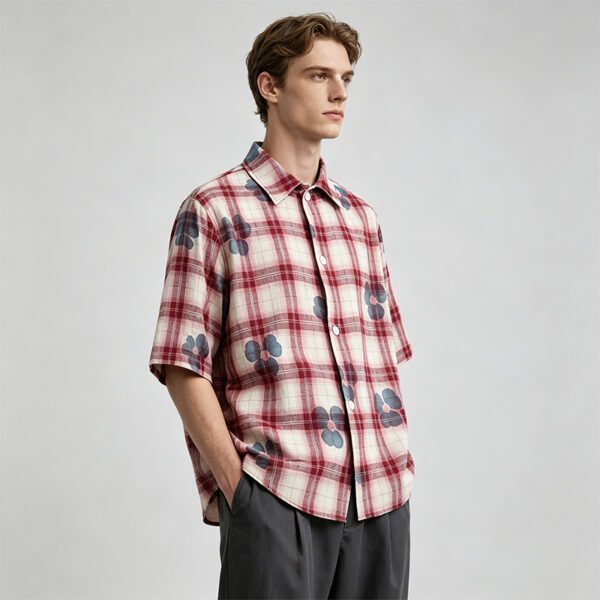

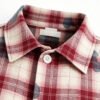
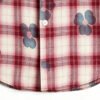
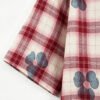
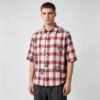
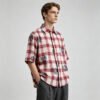
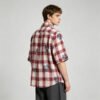



This custom short-sleeve shirt is developed around proportion control: the plaid body, rounded hem, broad sleeves, and scattered floral transfers need a deliberate relationship between rise, inseam, and hem opening for a relaxed streetwear silhouette that remains wearable.
Proportion Creates the Silhouette
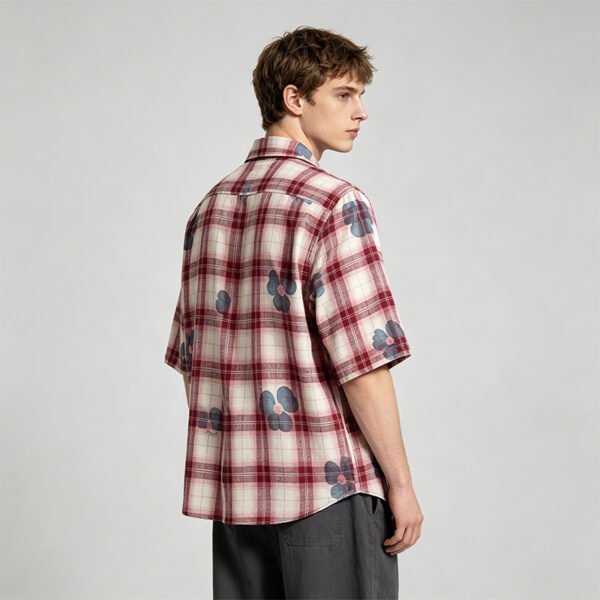
The rear image shows a shirt with substantial visual width, broad short sleeves, and a lower hem that curves gently around the body. Those features make body length and hem opening inseparable; excessive width without enough length can look cropped and unstable.
Rise establishes where the shirt settles over the torso, while inseam controls the vertical relationship from underarm to hem. For this design, the development target should preserve relaxed coverage without allowing the plaid grid to visually compress at the lower edge during movement.
Reading the Supplied Evidence
The visible plaid lines provide a practical proportion check because horizontal and vertical repeats expose distortion. The rear panel appears long enough to cover the seat area, while the curved hem softens the transition into dark trousers and supports a casual layered styling direction.
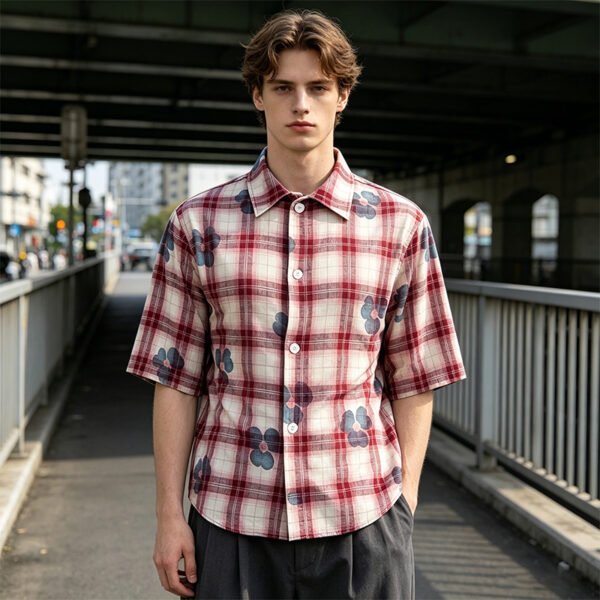
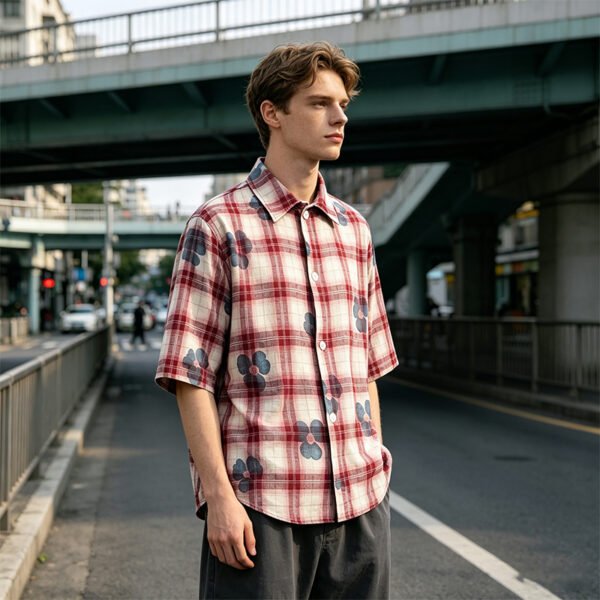
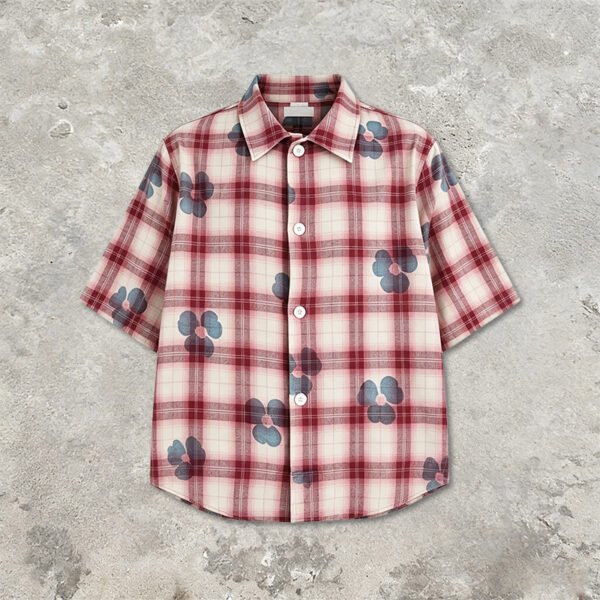
Floral transfer motifs are placed across the upper back, sleeve area, and lower body rather than concentrated in one badge position. Their spacing means hem width, side seam balance, and body length must be approved with artwork placement together.
Hem Opening Needs a Measured Decision
A generous hem opening can improve airflow and preserve an easy streetwear attitude, but an opening that exceeds the shoulder and body balance may make the shirt swing away from the torso. The correct value depends on intended styling, grading, and fabric behavior.
The lower hem should therefore be reviewed flat and on-body, including front-to-back difference and side seam drop. Confirm whether the rounded edge is symmetrical, then evaluate how the floral transfer sits when the opening spreads during walking or seated wear.
Construction Supports the Artwork
Heat-transfer decoration introduces a visual surface that can draw attention to panel joins and hem movement. Transfer boundaries should remain clear of seam allowances and high-flex edges where possible, while the plaid alignment must be maintained through cutting and sewing.
The supplied image suggests a clean rear panel without visible pocket interference. VeeWen's technical review should map artwork placement against collar, sleeve, side seam, and hem measurements, then use the proportion sample to confirm that decoration remains centered after assembly.
VeeWen Development Checkpoint
VeeWen can translate this design into a measurement-led development sequence: establish the base block, define rise and inseam relationships, set the hem-opening range, and position the floral transfers against the plaid repeat before sample approval.
The key workflow decision is not simply whether the print looks correct. Review the sample from rear, side, and moving positions, checking coverage, hem swing, artwork drift, and the relationship between sleeve volume and lower-body opening before locking the specification.
Buyer Approval and Trade-Offs
A longer body may improve coverage and make the rounded hem feel intentional, but it can reduce the crispness of the plaid proportion and increase perceived volume. A narrower hem may look cleaner, yet it can limit layering clearance and movement.
Approve the final block by choosing the commercial priority: relaxed coverage, stronger layering, or a neater standalone outline. Record the approved rise, inseam, hem opening, and artwork coordinates as one connected decision for production control.
Buyer Questions
What should be measured first on this shirt?
Start with body rise, inseam, and hem opening because these measurements determine coverage, swing, and whether the relaxed silhouette appears balanced on the wearer.
Is the floral decoration embroidery or printing?
The source wording identifies heat-transfer print, while the supplied image shows applied floral motifs. Transfer construction, adhesion, hand feel, and durability require confirmation during development.
Can this block support unisex sizing?
It can be evaluated for unisex grading, but shoulder, sleeve, rise, inseam, and hem-opening relationships should be tested on the intended size range before approval.
What is VeeWen's minimum order?
The commercial minimum is MOQ: 100 pieces per style. Final development should still confirm the approved block, artwork files, color standards, and production specifications.
Approve the Proportion Block
Send the target size chart, plaid reference, artwork files, and preferred styling balance to VeeWen. We will align rise, inseam, hem opening, and transfer placement for buyer review.


Reviews
There are no reviews yet.