
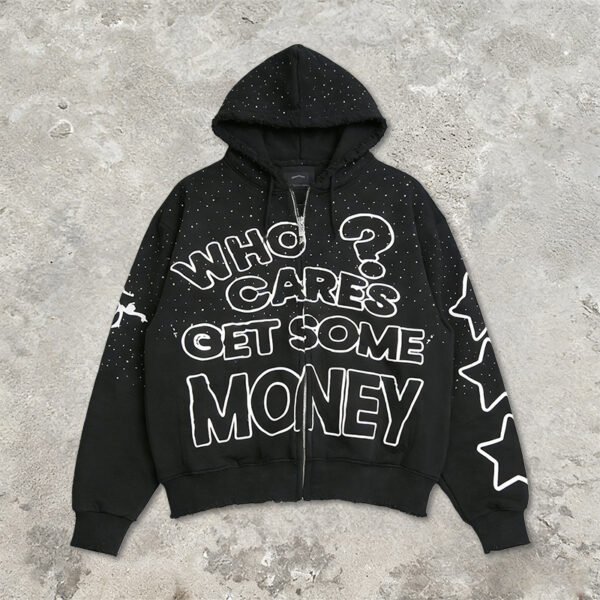
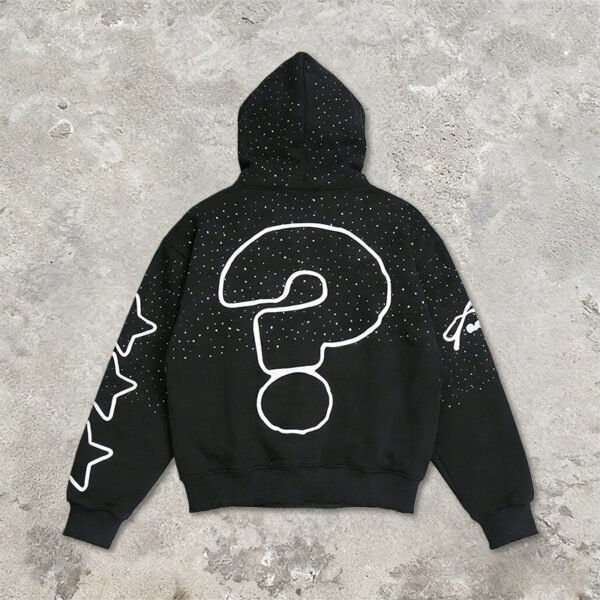

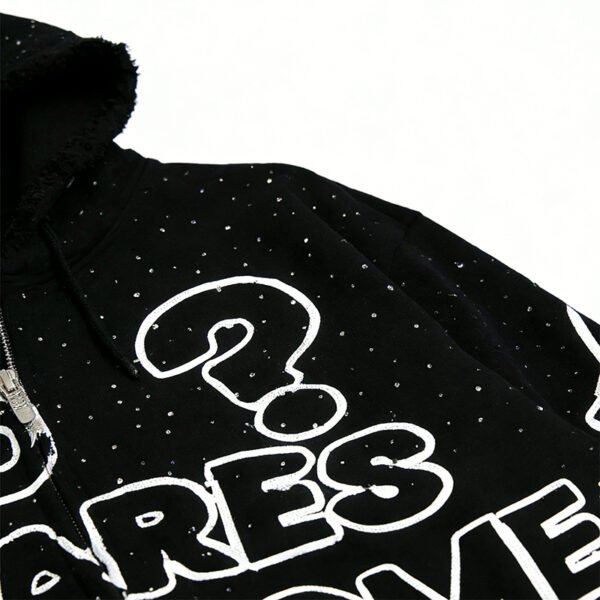
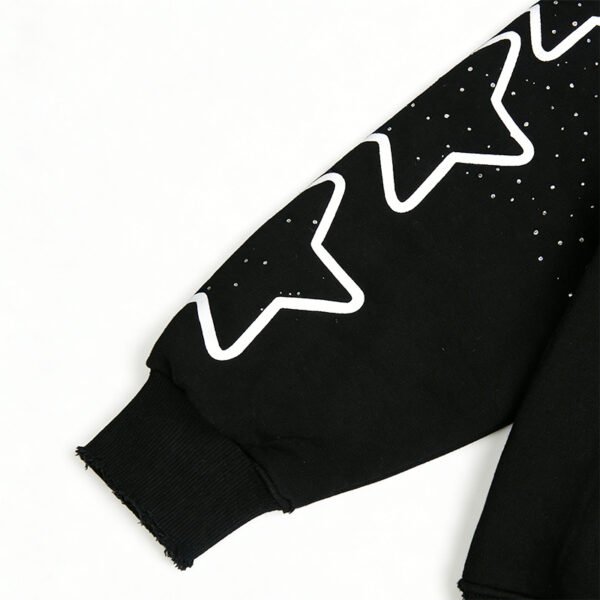


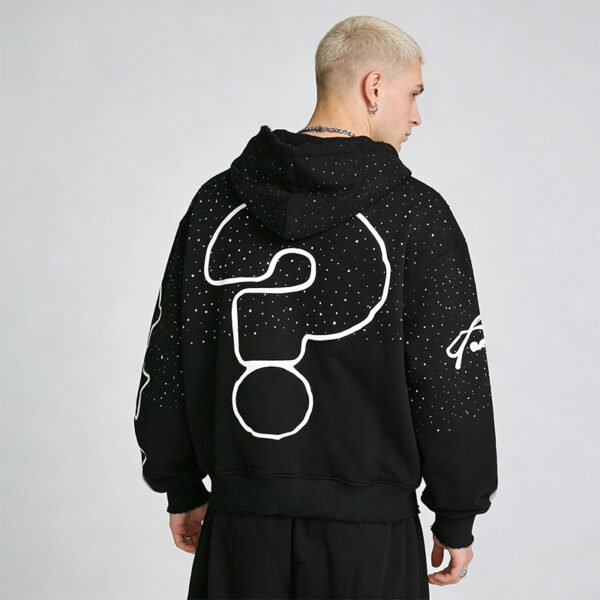



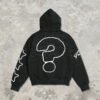

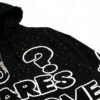
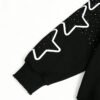




This custom graphic hoodie is built around post-laundering balance. Its black cropped body, outlined lettering, sleeve stars, bright embellishment points, and frayed lower edge make side-seam rotation highly visible. The development target is a controlled silhouette that keeps visual impact after washing and handling.
Spirality Is a Balance Problem, Not Only a Seam Problem
After laundering, knitted panels can relax unevenly and pull side seams forward or backward. On this garment, that rotation would shift the front lettering, disturb sleeve-star alignment, and make the cropped hem appear uneven, so seam behavior directly affects graphic presentation.
The image shows strong horizontal and vertical reference lines through lettering, sleeves, and lower edge. These references make small rotational changes easier to notice than on a plain sweatshirt, creating a clear reason to control panel direction and seam stability.
Cropped Proportions Magnify Hem Rotation
The lower body appears short with a deliberately frayed edge, leaving less vertical length to disguise movement. If one side seam spirals, the frayed hem can look longer on one side, while the front graphic appears to drift away from the wearer's center.
Development should measure side-seam angle, hem level, body length, and graphic center before and after laundering. Establishing these checkpoints gives the buyer a practical tolerance for acceptable vintage irregularity without allowing structural rotation to be mistaken for intentional styling.
Graphics Create Alignment Landmarks
The outlined front message occupies much of the visible body, and star graphics extend onto the sleeves. These elements form a connected visual system, meaning seam movement can create apparent print misalignment even when each graphic was accurately applied to its individual panel.
VeeWen's sample review should map artwork against center front, armhole, sleeve grain, and side seams. Approval should consider the assembled garment, not isolated panels, because the buyer experiences the relationship between graphics, hood, sleeves, closure, and frayed hem.
Embellishments Add a Laundering Variable
The image shows numerous bright points across the hood and upper body, consistent with the source reference to rhinestone detailing. These additions can increase local stiffness or weight, potentially changing how panels relax and making seam rotation more visible after washing.
The laundering review should examine embellishment retention together with spirality, rather than treating them as separate approvals. Confirm attachment method, placement tolerance, protective handling, and post-wash appearance so the surface detail does not obscure a developing balance problem.
Fraying Requires Controlled Irregularity
A frayed lower edge contributes expressive character, but uncontrolled unraveling can change body length and exaggerate apparent twisting. The visible hem should therefore be treated as a measured finish with an approved range, not an unlimited distress effect that varies without control.
Buyers should decide whether fraying is created before or after laundering, then compare edge length, seam exposure, thread release, and graphic position. The preferred sequence should preserve a deliberately worn look while preventing the hem from becoming the most inconsistent component.
VeeWen Workflow: Launder the Assembled Evidence
VeeWen should develop this style by approving panel grain, seam construction, graphic landmarks, embellishment placement, fray method, and laundering sequence as one connected package. The critical sample is a fully assembled garment processed through the intended wash evaluation before final comments.
The buyer checkpoint should record side-seam rotation, hem level, artwork alignment, embellishment condition, and overall balance. Before confirming MOQ: 100 pieces per style, approve the post-laundry standard, measurement tolerance, closure details, and any acceptable handcrafted variation.
Buyer Questions
Why is spirality especially visible on this hoodie?
Large front lettering, sleeve stars, and a short frayed body create strong visual landmarks, so even modest side-seam rotation can make the garment appear visibly unbalanced.
When should spirality be evaluated?
Evaluate the fully assembled hoodie after the intended laundering review, because panel relaxation, embellishment weight, graphic alignment, and frayed hem behavior interact during finishing.
Can fraying hide seam rotation?
Fraying may add intentional irregularity, but it cannot reliably conceal structural twisting; establish hem, seam-angle, and artwork tolerances so styling remains distinguishable from defects.
What must be confirmed before bulk production?
Confirm fabric specification, seam construction, closure, embellishment method, fray sequence, artwork placement, laundering standard, measurements, and MOQ: 100 pieces per style.
Approve the Post-Laundry Balance Standard
Share the target hoodie measurements, artwork, embellishment layout, fray reference, and laundering expectation with VeeWen for a complete assembled-sample approval before MOQ: 100 pieces per style.


Reviews
There are no reviews yet.