




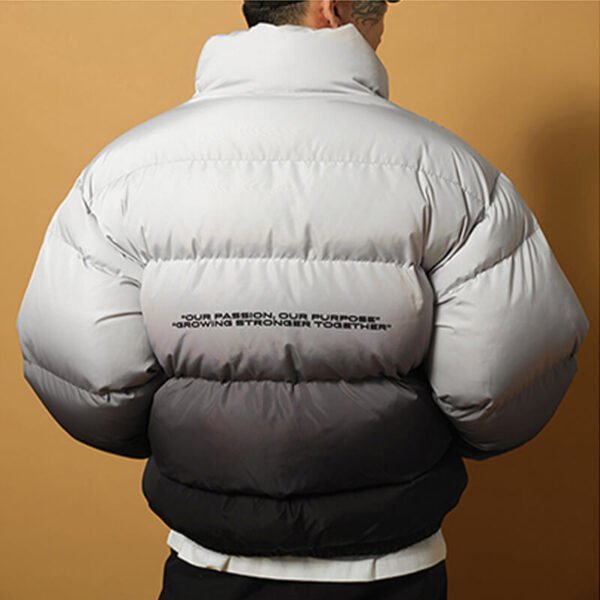







This oversized gradient puffer is best developed as a load-management exercise, not simply a color statement. Its broad padded body, high collar, long sleeves, and tonal transition require pocket openings, support layers, and stitch paths to work together without flattening the intended volume.
Read the Padded Load Map
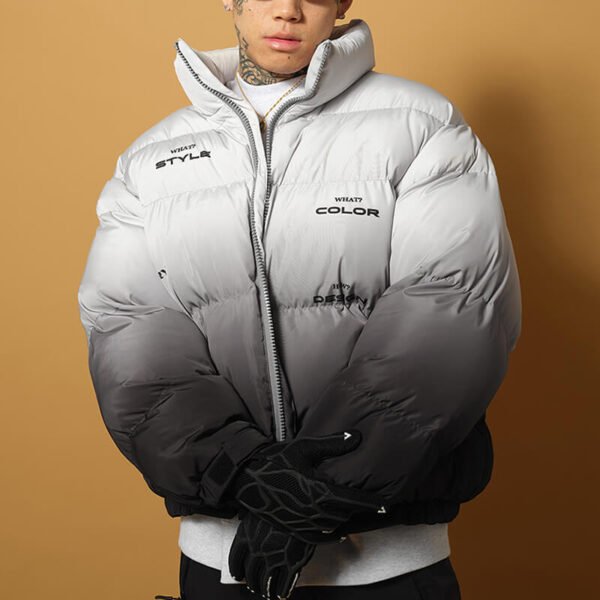
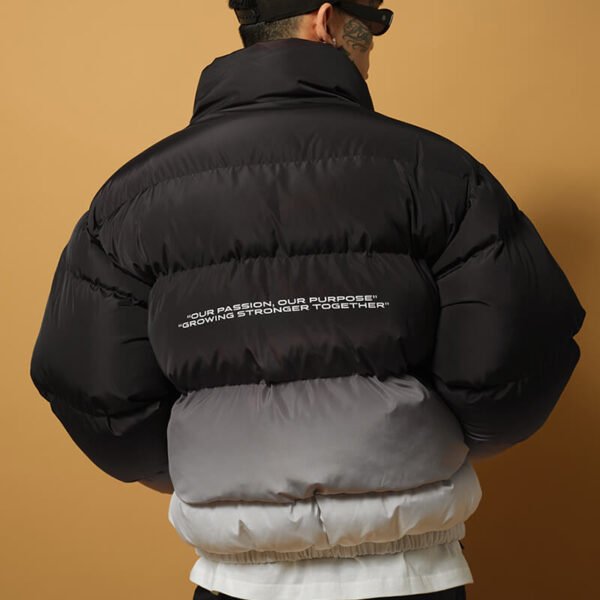
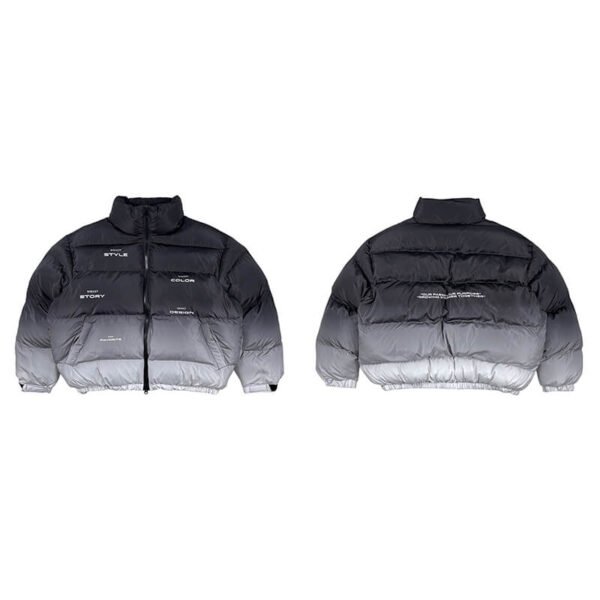
The image shows a substantial front surface interrupted by a vertical zipper and horizontal padded sections. A pocket placed across those transitions may pull unevenly when loaded, so the first pattern review should map openings against quilting, zipper tape, and hem support.
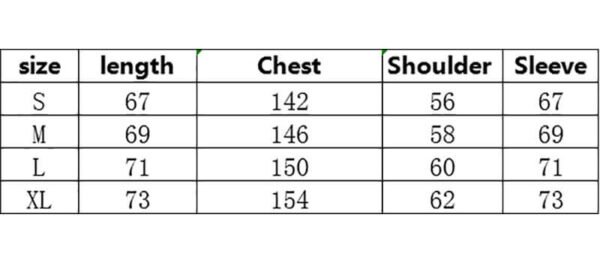
The oversized fit increases usable carrying space but also magnifies sagging, gaping, and panel distortion. VeeWen should mark pocket height from the finished hem and center front, then test hand entry while the jacket is worn over winter-weight layers.
Position for Natural Hand Access
For a streetwear puffer, lower welt or concealed-entry pockets can preserve the clean gradient while remaining reachable during movement. The final location should account for sleeve bulk, elastic hem recovery, and the wearer's hand angle, rather than following a standard jacket template.
A high pocket opening may improve access when the hem is cinched, while a lower opening can increase storage comfort. The trade-off is visual balance: openings crossing the darker-to-lighter transition may become a deliberate feature or an unwanted interruption.
Reinforce Without Flattening Volume
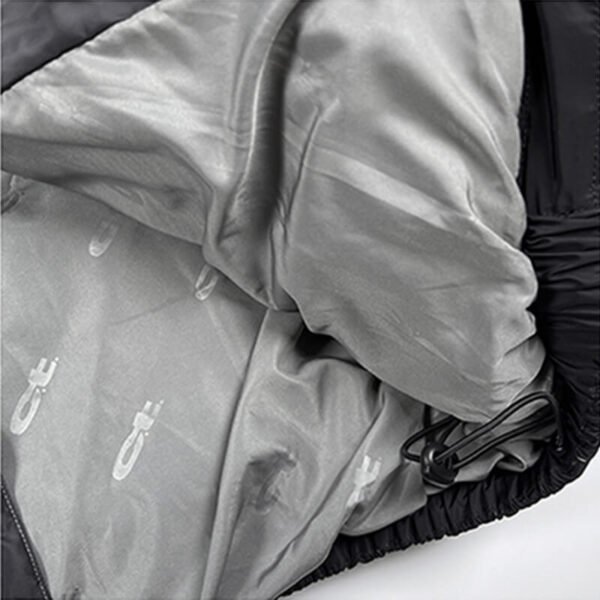
Pocket bags, entry facings, and attachment points need support that resists repeated loading without compressing adjacent insulation. Reinforcement should be tested at the opening ends and anchor seams, with stitch density and backing selected after the shell, lining, and fill package are confirmed.
Overbuilding the pocket area can create a stiff rectangle on an otherwise rounded jacket. Underbuilding can cause seam opening, lining drag, or visible collapse. The approval sample should therefore compare an unloaded appearance with weighted pocket use and repeated hand entry.
Coordinate Hardware and Panel Lines
The center zipper is the strongest visible vertical reference in the supplied image, so pockets should either align with it or intentionally counterbalance it. Pocket hardware, zipper tape, and pull direction must remain clear of nearby quilting so operation does not catch padded edges.
Dark hardware may visually recede against the upper black field, whereas contrast hardware can emphasize the gradient. Either choice changes perceived pocket prominence. Confirm pull length, slider clearance, and opening angle with gloves or layered styling before approving production components.
Translate the Argument Into Development
VeeWen's development workflow should begin with a pocket map over the approved block, identifying each opening, bag boundary, reinforcement zone, and relationship to quilting. A first sample can then isolate load behavior before decorative graphics and final color placement are locked.
After fitting, VeeWen can revise pocket height, entry angle, backing, and anchor points against observed distortion. The meaningful checkpoint is a wear-and-load review on the intended oversized size range, followed by written approval of the construction sheet and graded placement rules.
Approve the Production Gate
The buyer should approve this jacket when pocket access remains comfortable, pocket bags stay controlled, and loaded use does not visibly flatten or twist the gradient panels. Review both front symmetry and side profile, because stress may appear differently across the padded volume.
Before bulk confirmation, sign off on pocket type, opening dimensions, reinforcement materials, stitch limits, hardware clearance, and placement tolerances. Also confirm the final shell, lining, insulation, and care requirements, because each can alter the tested load path and finished hand.
Buyer Questions
Are the pocket locations confirmed by the supplied image?
No. The main image clearly shows the padded body and center zipper, but pocket openings and internal pocket construction are not sufficiently visible for confirmation.
What pocket type suits this oversized puffer?
A concealed welt or clean zip pocket may protect the gradient, but final selection depends on hand access, glove use, panel thickness, and approved hardware.
How should reinforcement be evaluated?
Evaluate opening-end stability, anchor-seam behavior, pocket-bag control, and panel distortion under representative weight, repeated access, and layered winter wear conditions.
What is the commercial minimum?
The exact commercial minimum is MOQ: 100 pieces per style, with final quantities governed by the approved specification and production arrangement.
Approve the Pocket Engineering Brief
Send the target size range, carrying requirements, preferred pocket access, and material references. VeeWen can convert the visible gradient puffer concept into a reviewable construction and sampling brief.


Reviews
There are no reviews yet.