
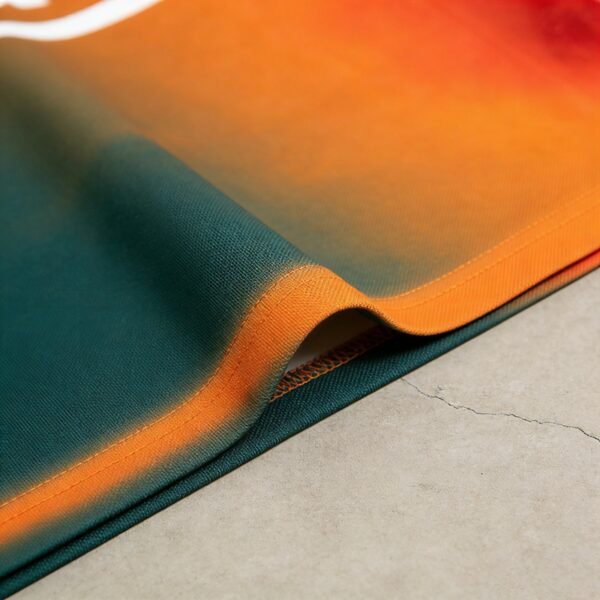

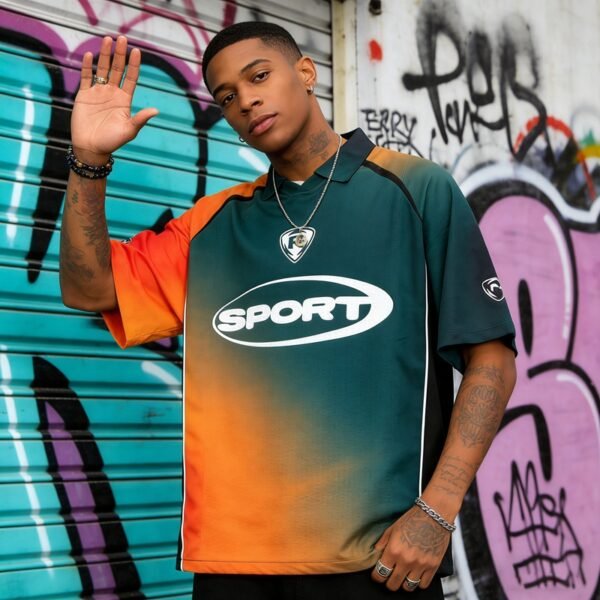





This custom polo is developed around neckline discipline: the rib must recover evenly without distorting the gradient print or embroidered patch placement. The supplied textile close-up shows a fluid multicolor surface and clean edge stitching, so the product brief treats collar geometry as the central fit and durability checkpoint.
Why the neckline controls the product
A polo neckline frames the face and determines whether a relaxed streetwear body still looks intentional. If rib recovery is weak, the collar can widen, ripple, or expose uneven seam tension, making the gradient surface appear less controlled around the upper chest and placket.
The supplied image does not reveal the collar, but it does show a textile with directional color transition and a finished stitched edge. That evidence makes neckline stability especially important: movement at the opening should not introduce visual breaks that compete with the garment's color architecture.
Rib recovery and shape mechanism
Neck rib recovery depends on rib structure, cut length, relaxation, seam allowance, and attachment tension. A shorter rib can return sharply but feel restrictive, while a longer rib improves comfort yet risks a loose opening; the correct balance must follow the intended neckline depth.
The development sample should record relaxed opening measurement, extended measurement, return after release, and collar height. These measurements translate the visual requirement into a repeatable pattern decision, while the buyer checks whether the neckline remains flat, balanced, and comfortable during movement.
Print and patch interaction
A gradient print creates a continuous color field, while an embroidered patch introduces localized thickness and stiffness. Their relationship to the neckline matters because excessive decoration near the opening can add weight, interfere with drape, or amplify distortion when the collar expands.
Artwork placement should therefore be reviewed against the final neckline pattern rather than a flat graphic alone. The buyer should inspect the patch edge, screen-print registration, and upper-chest balance together, confirming that the decorative hierarchy remains clear when the polo is worn.
VeeWen development checkpoint
VeeWen can route this product through a neckline-focused development sequence: establish the body block, engineer rib dimensions, attach a collar sample, then evaluate decoration placement against the approved shape. This keeps the manufacturing axis inside pattern and sewing decisions, not only visual styling.
At the fit approval stage, the buyer should compare the collar before and after controlled stretching, then review the decorated garment on a body. Any change to neckline depth, rib length, or seam allowance should be locked before grading and production documentation.
Trade-offs for wholesale approval
A firm rib usually protects neckline shape and gives the polo a sharper frame, but excessive firmness can reduce comfort and make the opening difficult to pull over the head. A softer rib improves ease, though it may require tighter dimensional control during sewing.
The commercial decision is not simply maximum recovery; it is the acceptable relationship between comfort, visual crispness, and decoration stability. Buyers should define the wearer experience first, then approve a rib construction that supports the planned streetwear fit without over-tightening the collar.
Final sample decision
Before production approval, inspect the neckline on the body, laid flat, and after repeated manual opening and release. Confirm that the rib returns evenly, the collar points remain balanced, and the gradient does not show puckering created by attachment tension.
The approval record should include neckline measurements, rib specification, seam construction, artwork position, and accepted tolerance. Once those controls are signed off, the polo becomes a measurable product-development package rather than a color reference dependent on interpretation.
Buyer Questions
Is the fabric composition fully verified?
No. Polyester appears in the supplied source wording, but the exact composition, weight, and performance properties remain To Confirm through technical material documentation.
What should the first sample prove?
The first sample should prove neckline depth, rib recovery, collar attachment balance, decoration placement, and comfortable opening movement on the intended streetwear body.
Can the gradient artwork be changed?
Yes. Gradient direction, color stops, print scale, and patch artwork can be developed, subject to artwork approval, decoration feasibility, and the agreed production specification.
What is the minimum commercial quantity?
The exact commercial minimum for this VeeWen style is MOQ: 100 pieces per style, with final assortment details confirmed during order development.
Approve the neckline control package
Send the target neckline measurements, artwork, and fit reference so VeeWen can prepare a rib-focused sample for review before production approval.


Reviews
There are no reviews yet.