
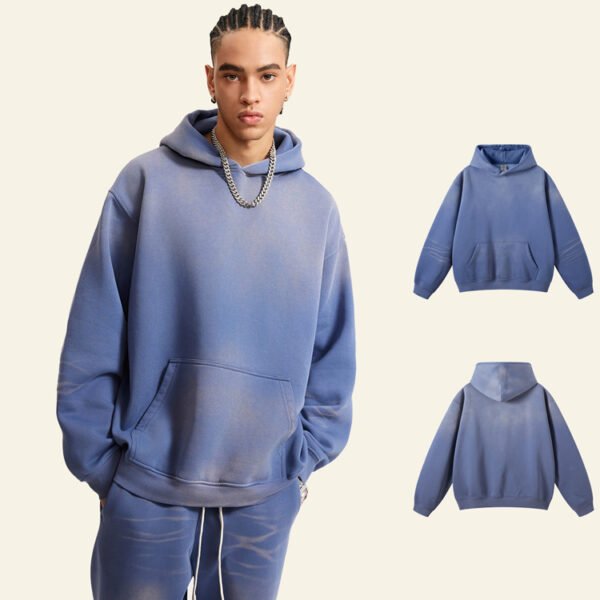
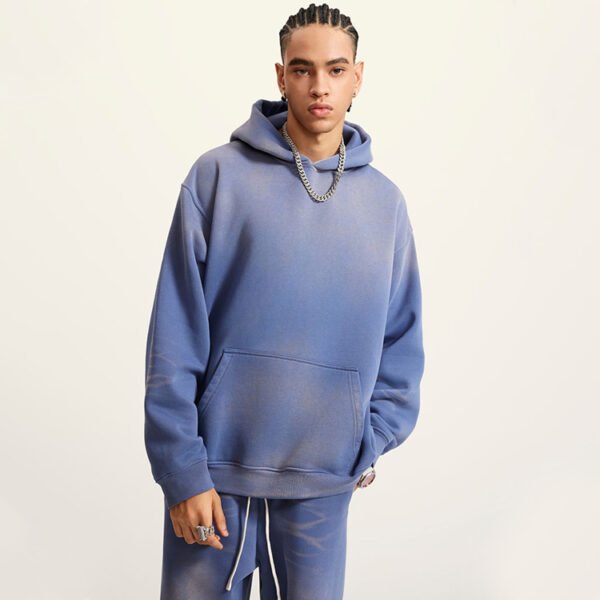
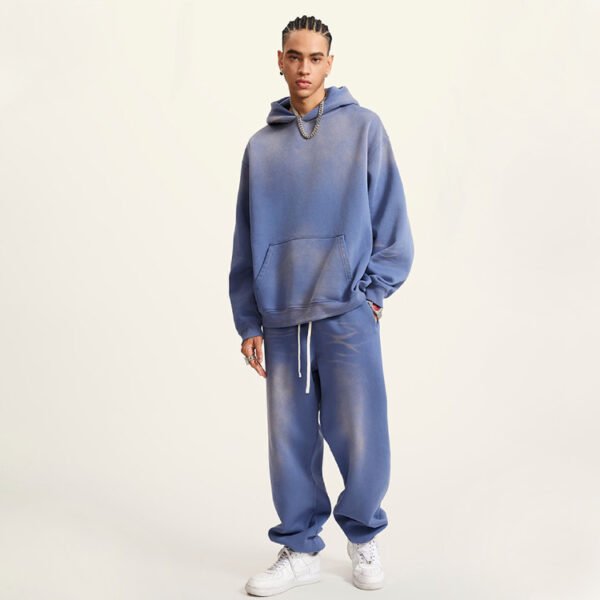
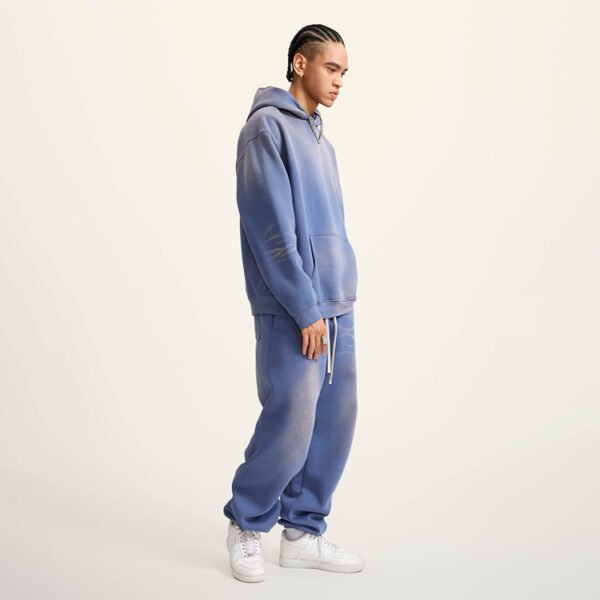
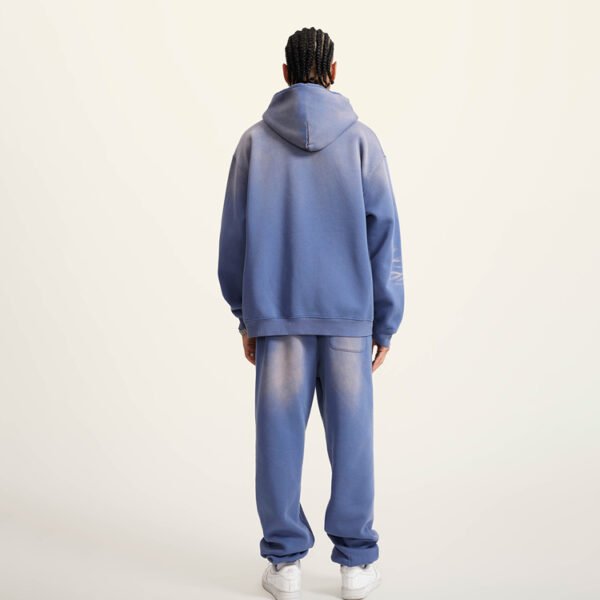
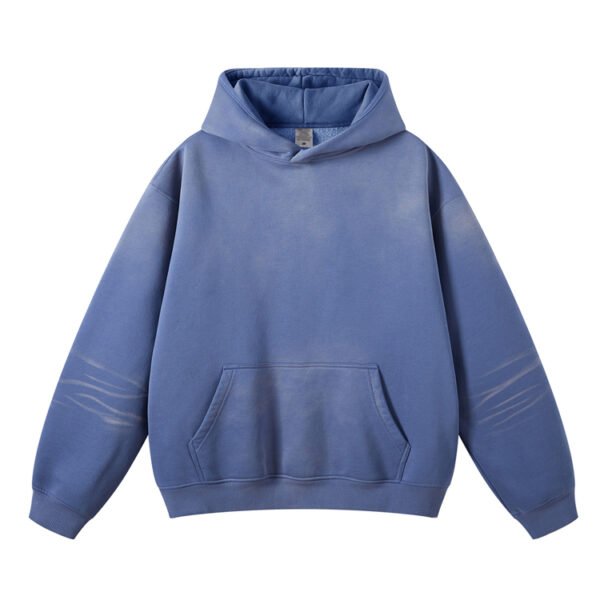
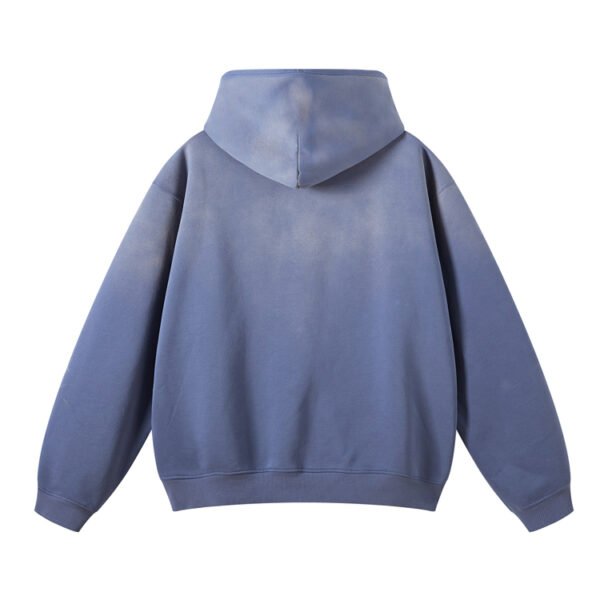
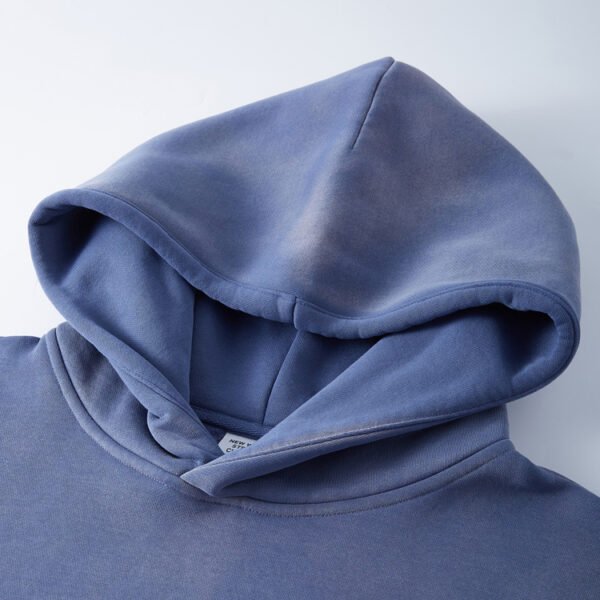
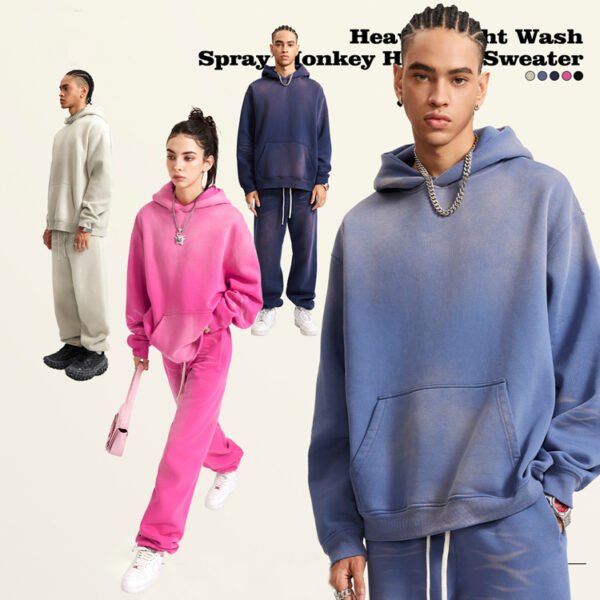

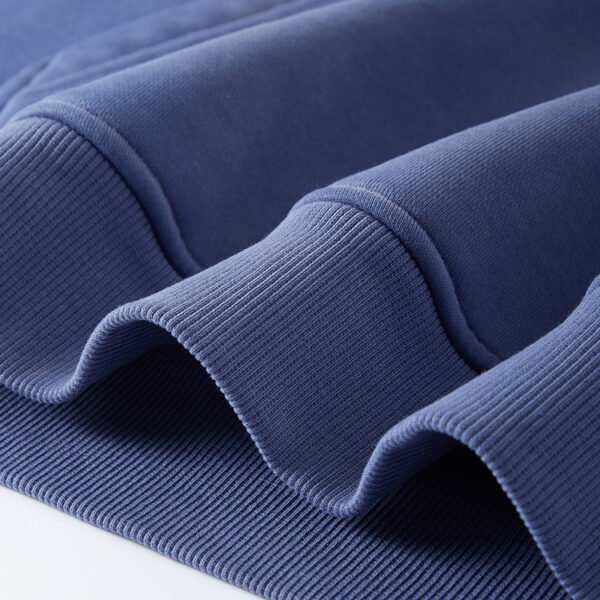




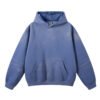
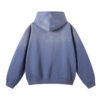
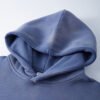

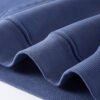
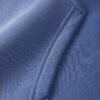
This blue pullover concept is strongest when treated as a surface-led streetwear hoodie first, with quilting or fill added only if the target season requires insulation. The image shows a roomy silhouette, kangaroo pocket, hood, and tonal washed variation, creating a clear approval question around warmth versus clean drape.
Fill Placement Must Follow the Surface Intent
Because the supplied image shows a smooth, non-quilted exterior, the starting pattern should preserve uninterrupted body panels. Any fill would change loft, weight, seam behavior, and pocket bulk. Development should therefore compare an unfilled fleece sample with a controlled insulated sample before approving the construction.
Quilt lines divide insulation into cells, limiting migration but introducing stitch perforations and visible geometry. Uneven fill can create cold spots or lumpy shoulders, while excessive fill can stiffen the kangaroo pocket. The buyer should approve cell spacing and fill hand together.
What the Supplied Image Actually Establishes
Front and rear views show a tonal blue hoodie with a centered kangaroo pocket, broad hood, long sleeves, and relaxed hem. Those visible elements support a clean pullover block; they do not verify fiber content, fleece weight, quilting, or internal insulation.
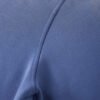
The apparent wash variation is a surface effect, so padding must be evaluated separately from color development. A filled version may soften tonal contrast through loft and light reflection, while an unfilled version keeps the cloudy blue treatment visually continuous across panels.
Silhouette Consequences of Added Fill
The displayed proportions rely on soft volume through the sleeves and torso rather than engineered puff. Introducing fill into the body alone could enlarge the chest while leaving sleeves visually flatter, disrupting the relaxed balance. Distribution should be tested across body, hood, and sleeves.
The kangaroo pocket is a sensitive approval area because insulation can make its opening stand away from the body. Pocket layers, edge binding, and attachment stitching should be reviewed after filling. The buyer should prioritize hand access and clean lay over maximum apparent thickness.
VeeWen Workflow Checkpoint
VeeWen should convert this axis into a side-by-side development brief: one washed pullover retaining the pictured smooth exterior, and one version mapping proposed fill zones and quilting. Both samples should use identical color direction, pattern proportions, pocket placement, and hood shape.
At review, the buyer can isolate whether fill improves the intended product or merely adds construction complexity. Record the approved insulation decision, cell layout if applicable, wash tolerance, and measurement changes in the technical pack before the MOQ: 100 pieces per style quotation stage.
Trade-Offs for Collection Planning
An unfilled construction protects flexible drape, simpler surface expression, and the visible washed gradient, but offers less thermal structure. A filled construction can support cooler-weather positioning, yet it may increase bulk, sewing complexity, and sensitivity to uneven distribution.
The decision should follow the collection's wearing environment and retail price architecture rather than the word insulated alone. If the product is layered indoors or transitional, a clean fleece baseline may be more coherent; confirm this against target-market expectations.
Approval Gate Before Production
Approve the baseline only after confirming fabric composition, fleece weight, wash process, hood construction, rib specifications, and size grading. None of those technical details are verified by the image, so each belongs in the sample review and measurement comments.
If insulation remains under consideration, require a filled prototype with documented zone placement and a direct comparison against the unfilled sample. The final buyer decision is whether added warmth improves sell-through enough to justify altered drape, pocket behavior, and visible quilting risk.
Buyer Questions
Does the image prove this hoodie is insulated?
No. The supplied image shows a smooth exterior without visible quilting, but internal fill, fleece weight, and thermal construction require confirmation through technical development.
What should be sampled first?
Sample an unfilled washed pullover matching the displayed proportions, then create a filled comparison only when the collection brief requires additional warmth.
How can fill affect the kangaroo pocket?
Added fill can increase pocket bulk, alter opening tension, and change how the pocket lies. Review hand access, edge stability, and stitching after filling.
What is the commercial minimum?
The exact commercial minimum is MOQ: 100 pieces per style. Final specifications, color approvals, and production review should precede commitment.
Approve the Fill Direction
Send the target season, fabric reference, wash intent, and insulation requirement to VeeWen for a focused comparison sample and technical review before approving MOQ: 100 pieces per style.


Reviews
There are no reviews yet.