




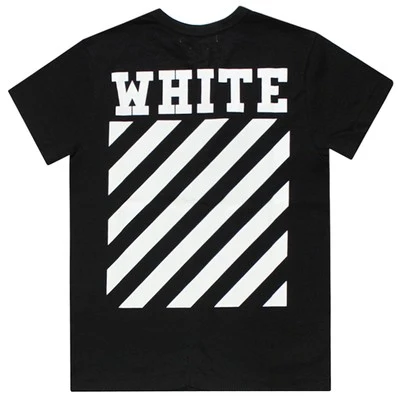
This custom graphic T-shirt is a packaging-led development project because its front artwork carries the product's recognition. The supplied image shows stacked white lettering on black, extending down the torso with a small red accent below. Folding, labeling, and presentation must protect that hierarchy.
Why Folding Is a Product Feature
The front graphic is not a small chest emblem; it occupies the central torso and reads vertically. A conventional center fold could crease through several words, making the packaged shirt communicate less clearly than the worn presentation shown in the image.
The black ground provides strong contrast, but contrast cannot compensate for hidden content. VeeWen should define the retail fold around the graphic's reading order, preserving enough of the upper message for recognition while avoiding pressure across key printed forms.
Map the Graphic Before Packing
The supplied image establishes three presentation zones: dominant white lettering through the torso, a lower continuation, and a small red accent near the hem. These zones should be marked on the pattern and packing guide before selecting bag size or fold dimensions.
A fold map can specify neckline exposure, sleeve tuck, torso panel position, and final label placement. This turns packaging into a repeatable production instruction rather than an informal finishing preference, especially when multiple sizes change the graphic's proportion relative to the body.
Protecting Print Readability
Large printed lettering may show pressure lines or temporary fold marks where the package compresses the garment. The image does not verify print technology or performance, so the development sample should test the chosen fold and handling sequence on the actual graphic.
If the red lower accent is hidden, the package loses a distinctive secondary cue; if too much hem is exposed, the pack may look untidy. VeeWen should balance graphic visibility with a consistent, compact presentation approved across the size range.
Fit, Sleeves, and Fold Geometry
The model image shows a straightforward short-sleeve silhouette with a crew neckline and unobstructed front. Sleeve width and body length will affect how much fabric stacks behind the central graphic, so fold geometry should be tested against the approved measurement chart rather than copied visually.
A consistent sleeve tuck can reduce side bulk and keep the front panel flat. However, aggressive compression may create ridges through the lettering. The buyer should review folded samples in representative sizes, checking front smoothness, edge squareness, and message visibility.
VeeWen Development Workflow
VeeWen's product-development workflow should connect artwork approval to a packaging dieline or fold diagram. The graphic placement file, size grading, care-label position, and presentation fold should be reviewed as one system before the first production-intent sample.
At the approval gate, VeeWen should show the shirt worn, laid flat, folded, and packed. The buyer can then confirm that the retail view preserves the message hierarchy, the lower accent remains intentional, and the selected packaging method works across approved sizes.
Commercial Trade-Off and Approval
Maximum graphic exposure in a package may require a larger pack or looser fold, while compact packaging can improve handling efficiency but conceal more artwork. Neither choice is universally correct; the range's retail context should determine the approved presentation standard.
Before ordering, approve the fold diagram, pack dimensions, visible graphic area, label location, and handling sequence. MOQ: 100 pieces per style applies, while composition, GSM, print method, and wash performance remain To Confirm.
Buyer Questions
Is the packaging visible in the supplied image?
No. The image shows the worn garment only, so fold method, bag dimensions, labels, and final retail presentation require a separate development approval.
Which graphic area should remain visible after folding?
The upper portion of the stacked white message should remain recognizable, while the lower red accent should be intentionally shown or intentionally concealed.
How can size grading affect presentation?
As body proportions change, the same graphic occupies a different visual percentage. Representative folded samples should confirm readability and consistent packing across approved sizes.
What is the minimum order?
The commercial minimum is MOQ: 100 pieces per style. Final fabric, graphic process, packaging details, grading, and performance requirements should be confirmed beforehand.
Approve the Retail Fold
Share the final artwork, size range, packaging preference, and label requirements for a fold-preservation review. VeeWen can document the presentation standard before sampling and production approval.


Reviews
There are no reviews yet.