


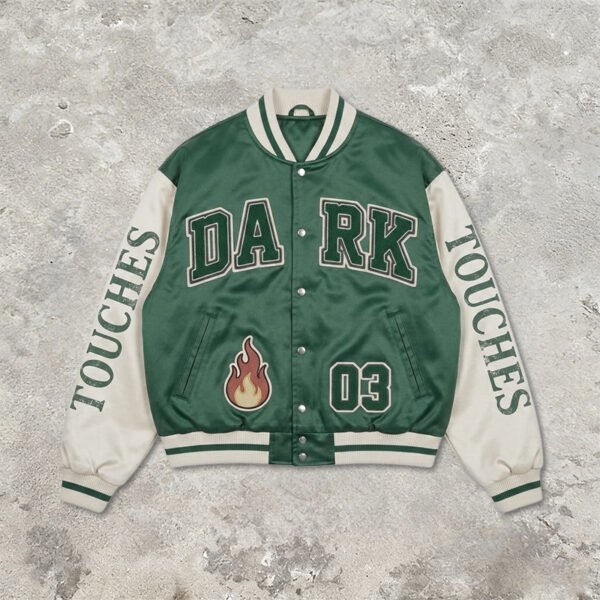


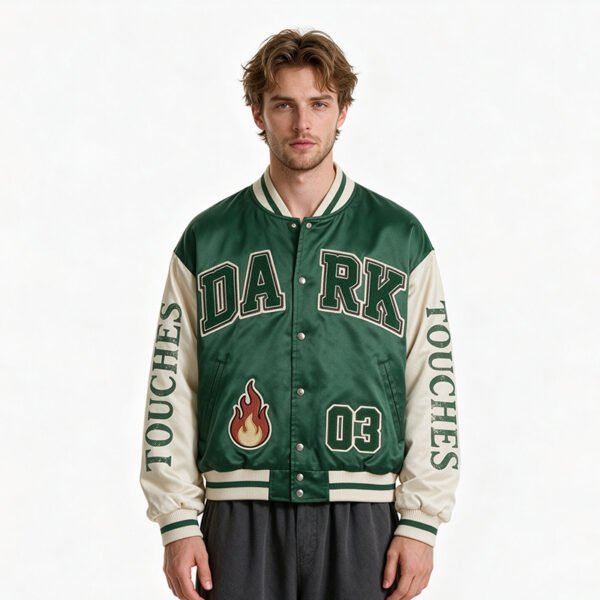




This custom green varsity jacket is developed around fabric weight and intended drape. The visual reference combines a smooth reflective body, ribbed hem, snap-front structure, and a substantial fire applique, making weight selection central to silhouette control, movement, and perceived streetwear character.
Weight Sets the Varsity Silhouette
Fabric weight determines whether this jacket reads as a crisp outer layer or collapses into a softer casual overshirt. The reference shows enough body to support a varsity profile, yet visible folds near the hem indicate that controlled flexibility remains important.
A heavier construction can stabilize the snap placket, ribbed hem, and applique placement, but may restrict movement or create unwanted bulk. A lighter option can improve fluidity while weakening shape retention, so the target must be defined through sample handling rather than appearance alone.
Reading Drape from the Image
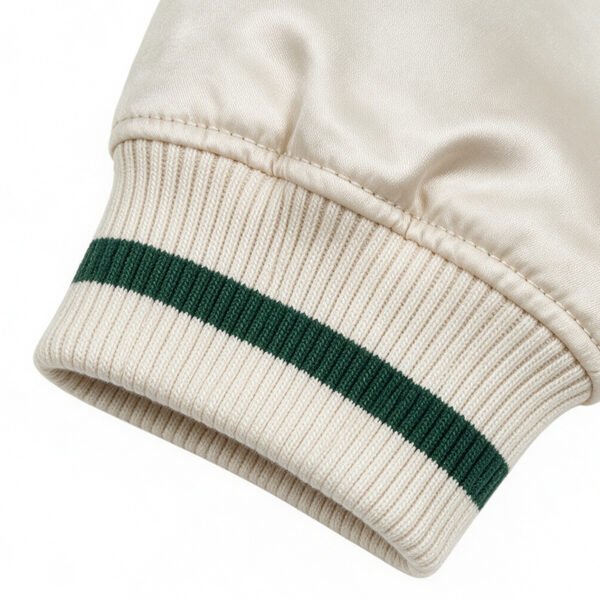
The supplied image shows light reflecting across the green surface while the lower body forms irregular, soft folds above the ribbing. That combination suggests a smooth face where drape will strongly influence how color, sheen, and panel tension appear during wear.
The visible hem area should guide fitting review: the body cannot be so rigid that it stands away from the ribbing, nor so light that the ribbed finish overwhelms the silhouette. Wear-test photos should capture front, side, and seated positions.
Applique Load Changes Balance
The fire motif is visibly denser than the surrounding body and occupies meaningful front-panel space. Its placement introduces localized weight, thickness, and visual focus, which can pull or distort the panel if fabric support and attachment methods are not balanced.
Development should inspect the jacket after applique application, not only before decoration. Compare panel smoothness, hem behavior, and snap alignment with the decoration installed, because the final load may alter drape more than the untrimmed shell sample suggests.
Trim and Closure Need Support
The contrasting ribbed hem provides a firm visual boundary beneath the smooth green body, while the snap-front layout establishes the jacket's central line. Both details depend on fabric weight that supports clean joining without making the lower edge excessively rigid.
The reference also shows contrasting ribbing at the lower edge and a visible vertical pocket detail. Confirm whether the chosen body weight allows accurate pocket installation, stable snap reinforcement, and smooth transitions where structured components meet more flexible knitted trim.
VeeWen Development Checkpoint
VeeWen can translate this argument into a controlled development sequence by setting a drape target before finalizing fabric selection. The team should compare candidate weights on a shell mock-up, then review the silhouette with ribbing, closure hardware, and applique included.
The approval package should record hand feel, fold recovery, panel appearance, and decoration balance as separate decisions. This keeps fabric approval tied to the finished garment mechanism, allowing pattern, reinforcement, and applique positioning to be adjusted together when evidence requires it.
Approve by Finished-Garment Behavior
Buyer approval should focus on how the completed jacket behaves in motion, not simply whether the green color and fire motif match the reference. Request front and side evaluations showing the hem, placket, pockets, and applique under natural movement and relaxed posture.
Before confirming bulk production, lock the selected fabric weight, lining decision, rib specification, applique dimensions, and reinforcement approach. The commercial checkpoint is a finished sample that preserves intended drape while maintaining a credible varsity outline throughout ordinary wear.
Buyer Questions
What fabric weight should this varsity jacket use?
Select weight through sampling against the required drape, structure, movement, and applique load. No composition or GSM is verified in the supplied evidence, so both remain To Confirm.
Will the applique affect the jacket's drape?
It can influence local panel behavior because the motif appears denser than the body. Review the finished decorated sample for distortion, balance, fold behavior, and snap alignment before approval.
What details need confirmation before production?
Confirm fiber composition, measured weight, lining, insulation, rib specification, applique construction, snap reinforcement, measurements, grading, and decoration dimensions through the approved technical package.
What is the minimum order quantity?
The exact commercial minimum is MOQ: 100 pieces per style. Final quantities, colorways, size ratios, and production planning should follow approved specifications and confirmed development requirements.
Approve the Drape Direction
Send your target measurements, color references, and decoration artwork to begin a VeeWen development review focused on weight, finished drape, trim support, and applique balance.


Reviews
There are no reviews yet.