




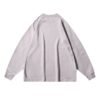


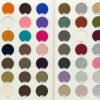
This long-sleeve T-shirt is best developed around fabric behavior before the first cut. Its substantial jersey body, extended sleeves, ribbed cuffs, and washed appearance make settled dimensions central to consistent fit, especially when the same pattern must repeat across sizes and production batches.
Why Relaxation Comes Before Pattern Cutting
Cotton jersey does not reach its final dimensions immediately after knitting or washing. Allowing the fabric to relax before cutting lets the pattern reflect its settled width and length, reducing avoidable panel mismatch during assembly and later laundering across repeated sizes.
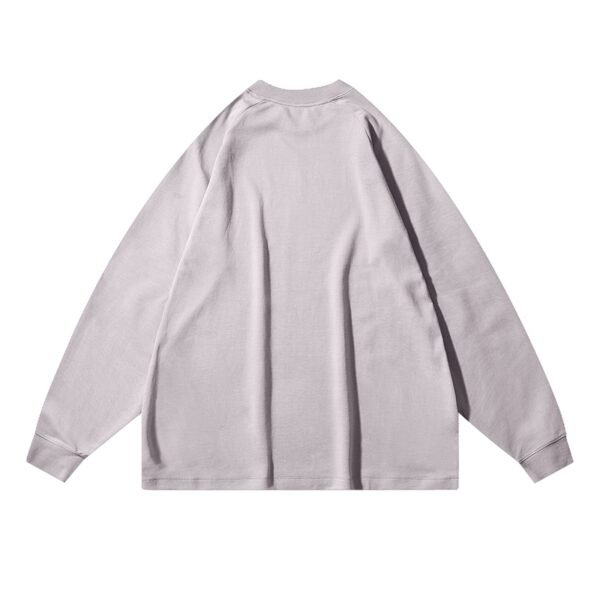
That control matters here because the image shows a broad body, long sleeves, and a relatively straight hem. If the cloth is cut while tensioned, sleeve length, cuff placement, and side seams can shift differently, making an otherwise simple silhouette appear inconsistent between samples.
Managing a Substantial Jersey Hand
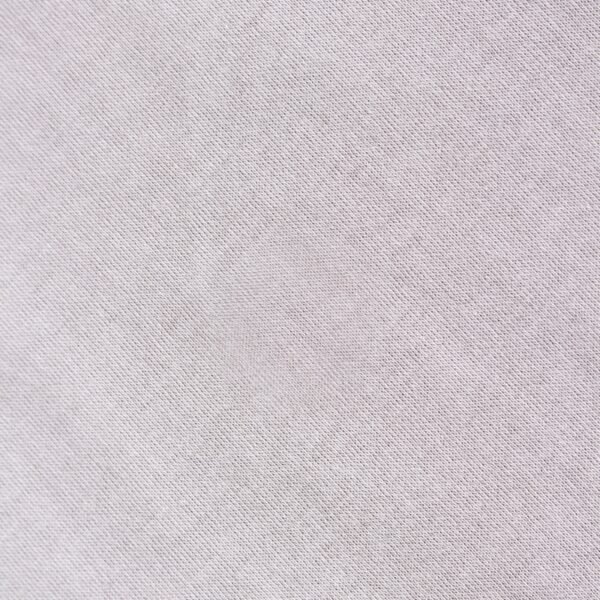
The source title identifies 220 GSM, which indicates a heavier jersey direction than a lightweight layering tee. Greater fabric mass can support the clean, opaque visual shown, but it also makes relaxation time, lay tension, and cutting accuracy more consequential during development.
VeeWen's workflow should therefore record the fabric state before marker planning, then compare pre-cut and post-wash measurements. This exact record connects the material decision to pattern approval, allowing the buyer to judge whether the intended weight supports comfort without creating unwanted growth or shrinkage.
Sleeve and Cuff Balance
The supplied image shows long sleeves ending in distinct ribbed cuffs rather than open hems. That junction concentrates dimensional risk: a relaxed sleeve panel must meet a cuff opening evenly, while the cuff must retain a comfortable circumference after joining and finishing.
Development approval should compare sleeve pitch, cuff width, and wrist opening on a washed sample. The buyer can then decide whether the cuff proportion complements the roomy body, or whether grading and rib tension need adjustment before the style is released for cutting.
Vintage Wash as a Dimensional Variable
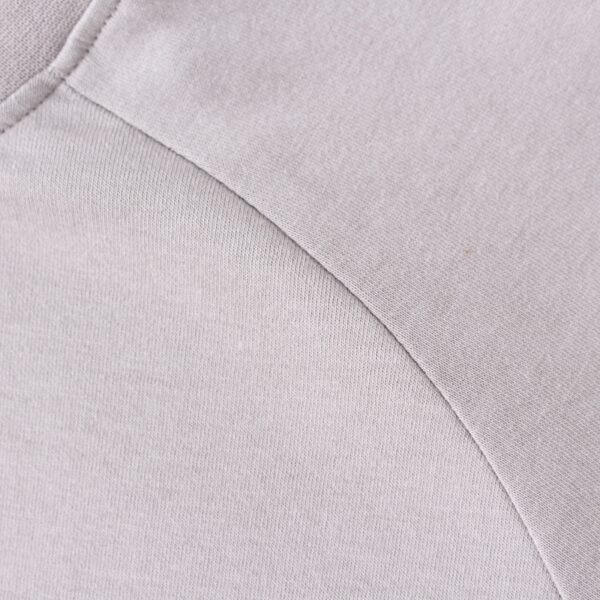
A vintage-wash appearance is named in the source title and visibly suggested by the muted, softly uneven lavender-gray surface. Washing is not only a color step; moisture, agitation, and drying can change dimensions after the pattern has already been evaluated.
VeeWen should treat the wash route as part of the fit checkpoint, documenting measurements before and after the approved finish. The buyer should assess shade character, seam reaction, and overall length together, because approving color alone could hide a dimensional issue.
Pattern Control Across Size Grading
Relaxed fabric before cutting gives the base pattern a more dependable starting point, but it does not replace thoughtful grading. Long sleeves, cuff openings, shoulder width, and body length should each follow a deliberate size progression rather than simple proportional enlargement.
At VeeWen, the product-development review can use the stabilized base size to test graded panels and compare the washed set. This makes the approval decision specific: confirm whether every size preserves the same relaxed balance, not merely whether one sample looks correct.
Buyer Approval Checkpoint
The commercial decision is whether the garment remains visually balanced after its actual production sequence. Review the relaxed fabric record, cut measurements, stitched sample, wash measurements, cuff recovery, and shade against the approved standard before confirming the size set.
For this style, approval should be conditional on dimensional evidence rather than the unwashed appearance alone. Once the buyer accepts the stabilized pattern and finish tolerance, VeeWen can proceed toward MOQ: 100 pieces per style under the agreed specifications.
Buyer Questions
Why is fabric relaxation important for this T-shirt?
Relaxation allows jersey to settle before cutting, helping the pattern match stable dimensions and reducing inconsistent sleeve, body, and hem measurements between production pieces.
Is the cotton composition verified?
No. The source title identifies heavy cotton and 220 GSM, but the exact fiber composition, yarn details, and test documentation remain to confirm before approval.
What should the buyer inspect after washing?
Inspect body length, chest width, sleeve length, cuff circumference, seam balance, and shade consistency after the approved wash route has been applied.
What is the minimum order quantity?
The commercial minimum is MOQ: 100 pieces per style. Final quantities, size ratios, colorways, and development specifications should be confirmed in the order review.
Approve the Stabilized Long-Sleeve Specification
Send the target size chart, wash direction, and color reference for review. VeeWen can align relaxation, pattern measurements, cuff proportions, and final approval around MOQ: 100 pieces per style.


Reviews
There are no reviews yet.