



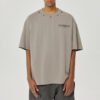


This custom heavyweight T-shirt is developed around the point where a relaxed neckline must remain stable beside planned front hardware. The supplied textile image supports a dense jersey direction, while the source wording identifies screen print, rivet detailing, and a loose silhouette. MOQ: 100 pieces per style.
Why the Collar-to-Hardware Zone Matters
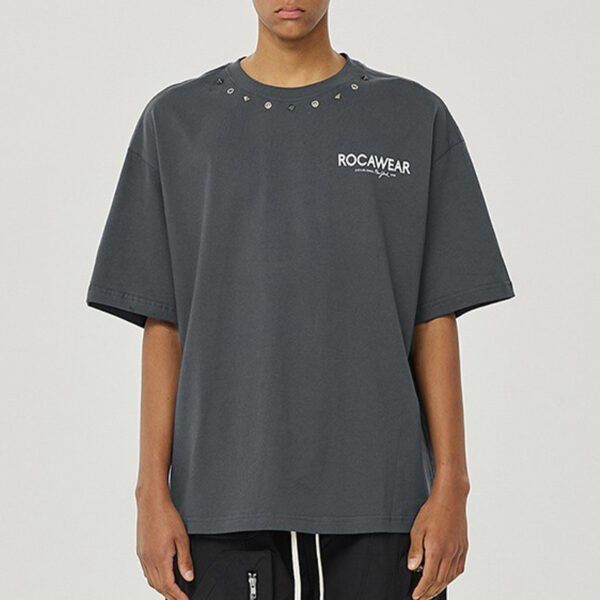
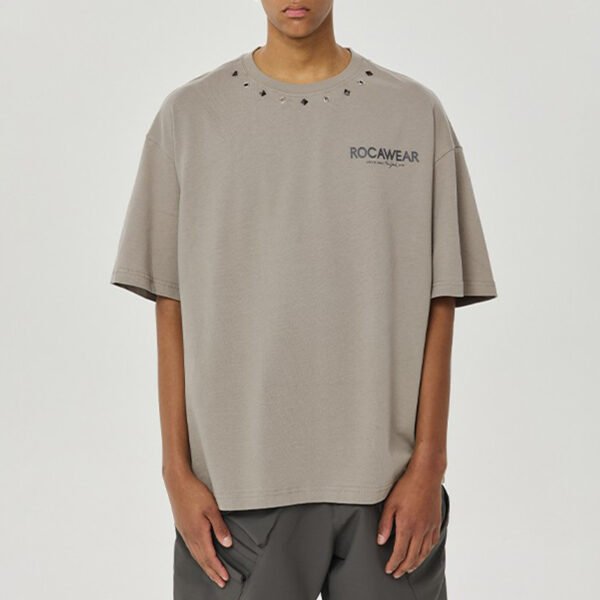
A loose T-shirt body allows more movement around the upper chest, so the collar opening can experience repeated distortion when front hardware is added nearby. The development objective is a balanced stress path, keeping the neckline comfortable while preventing localized stretching during wear and handling.
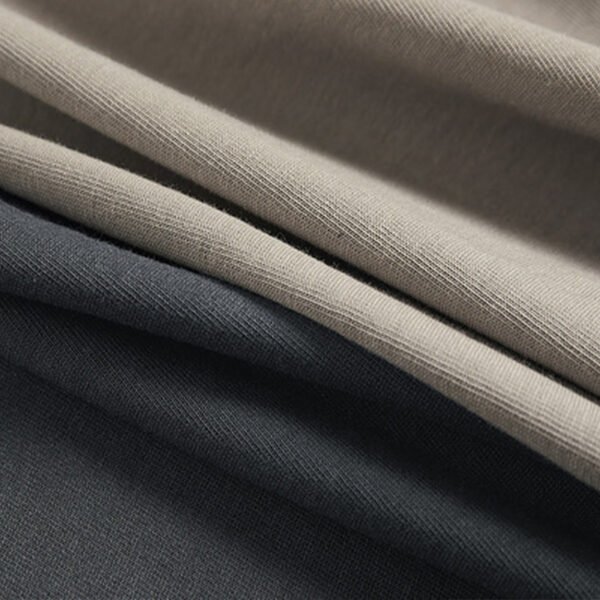
The supplied fabric image shows compact-looking jersey surfaces with visible knitted texture across charcoal, black, and natural layers. That evidence supports evaluating recovery and seam behavior directly, rather than assuming density from the word heavyweight. Composition, GSM, and stretch remain subject to confirmation.
Pattern Planning Before Decoration
The collar should be finalized alongside any rivet placement, because a decorative attachment near the opening can influence seam allowance, needle access, and local rigidity. VeeWen can map these points during pattern development so the neckline, front panel, and decoration share one approved construction logic.
Screen print placement also belongs in this review. Artwork crossing a curved upper-body area may distort visually, while artwork near hardware can create handling conflicts. The buyer should approve a placement diagram showing collar clearance, graphic boundaries, and rivet coordinates before sample execution.
Managing Jersey Weight and Recovery
Heavier-looking jersey can improve body presence, but additional mass may increase collar sag if the neckline finish is not proportioned correctly. The practical checkpoint is not a nominal weight claim; it is whether the approved collar maintains its intended opening after movement, laundering evaluation, and repeated handling.
The neutral fabric layers visible in the image provide a useful color-direction reference, not a verified shade card. VeeWen should confirm the selected fabric, color standard, rib relationship, and recovery behavior together, because a close-looking collar can still behave differently from the body fabric.
Screen Print and Rivet Coordination
A screen print and rivet detail compete for attention when placed within the same visual field. Their relationship should be tested for spacing, registration, and hand interaction, especially where the wearer bends or pulls the shirt. The objective is a deliberate hierarchy rather than crowded decoration.
The source wording supports both graphic and hardware directions, but does not verify ink type, print thickness, rivet alloy, or attachment method. Those variables should remain open in the technical pack until the buyer approves artwork, hand feel, hardware sample, and wash-care implications.
VeeWen Development Workflow
VeeWen can translate this argument into a focused development sequence: lock the relaxed block, define the neckline opening, overlay the planned hardware zone, then review screen print boundaries against construction lines. This keeps visual design decisions connected to the physical stress points identified in the brief.
At sample review, the buyer should inspect collar recovery, front-hardware security, graphic placement, and comfort as one approval group. Any change to neckline depth, decoration location, or fabric reference should trigger a revised specification review before MOQ: 100 pieces per style is confirmed.
Buyer Approval Checkpoint
Approve this style when the neckline retains its shape beside the planned hardware, the loose body remains proportionate, and the screen print sits without interfering with movement or attachment. A photograph alone cannot establish those outcomes, so the physical sample should carry the decision.
Record the approved fabric reference, collar dimensions, artwork position, rivet coordinates, color standard, and care direction in the final technical file. If a zipper or other front closure is later introduced, its junction with the collar requires a separate fit and reinforcement review.
Buyer Questions
Is the fabric composition verified as a specific cotton percentage?
No. The source wording references cotton, while the supplied image shows textile texture; exact composition, GSM, and blend details remain To Confirm.
Does this T-shirt include a zipper at the collar?
No zipper is visibly confirmed in the supplied evidence. Treat any collar-to-zipper intersection as a future design checkpoint requiring technical review.
What must be approved for the screen print?
Approve artwork dimensions, placement, color references, ink appearance, hand feel, and care direction through the physical sample and final technical pack.
What is the minimum order quantity?
The commercial minimum is MOQ: 100 pieces per style. Final ordering remains subject to approved specifications, sample acceptance, and production planning.
Approve the Stress-Zone Sample
Send the intended artwork, hardware placement, fabric preference, and measurement file for review. VeeWen will align the collar, decoration, and fit checkpoints before MOQ: 100 pieces per style.



Reviews
There are no reviews yet.