
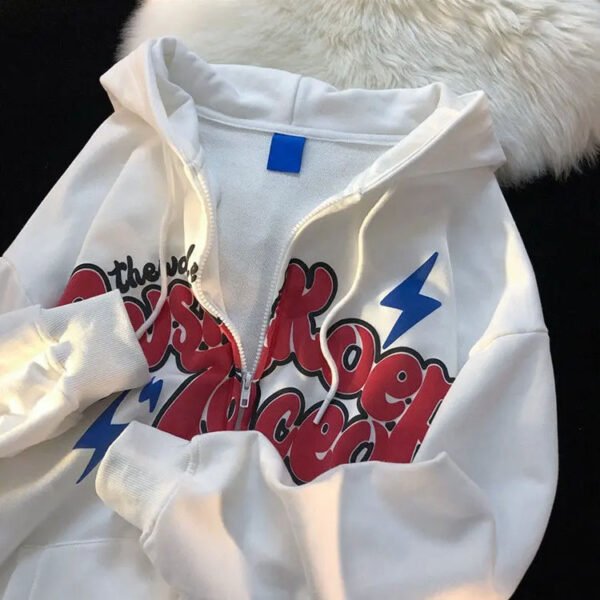
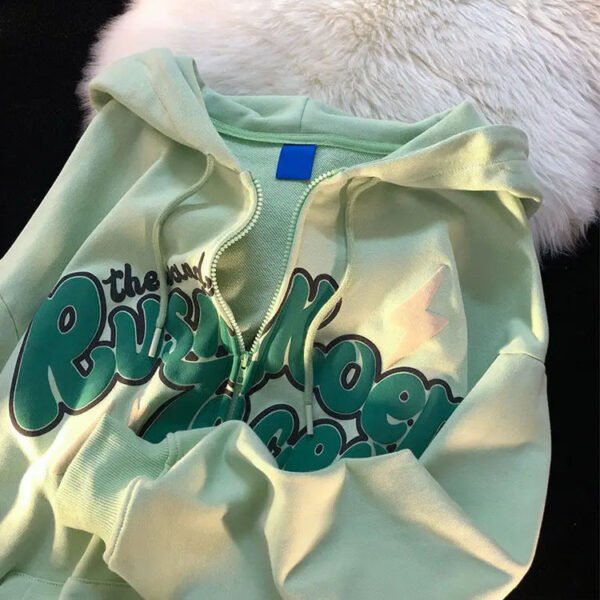

This zip hoodie development record focuses on side-seam spirality after laundering, using the layered image evidence to frame a measurable approval question for heavyweight streetwear production. The visible drawcord hood, front zip, dense-looking body, and oversized graphic placement make post-wash panel rotation especially important before bulk release.
Why Side-Seam Spirality Matters After Laundering
Side-seam spirality occurs when knitted panels or yarn torque relax unevenly during laundering, causing seams to rotate toward the front or back. On a zip hoodie, movement can shift the zipper line, pocket relationship, sleeve balance, and graphic alignment, making post-wash stability a construction decision.
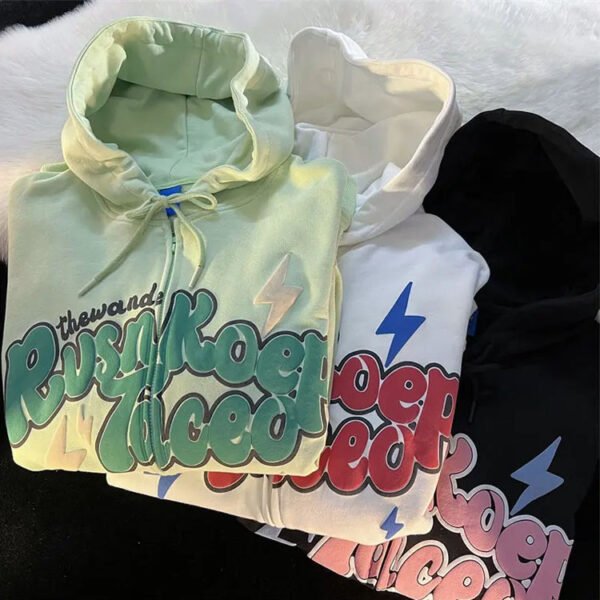
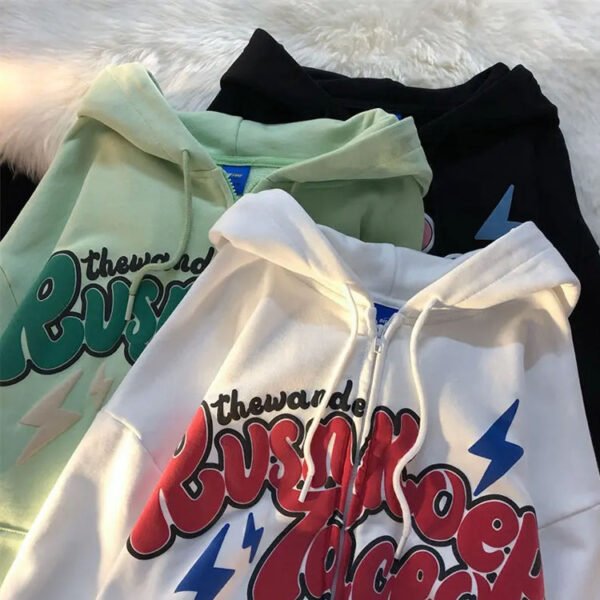
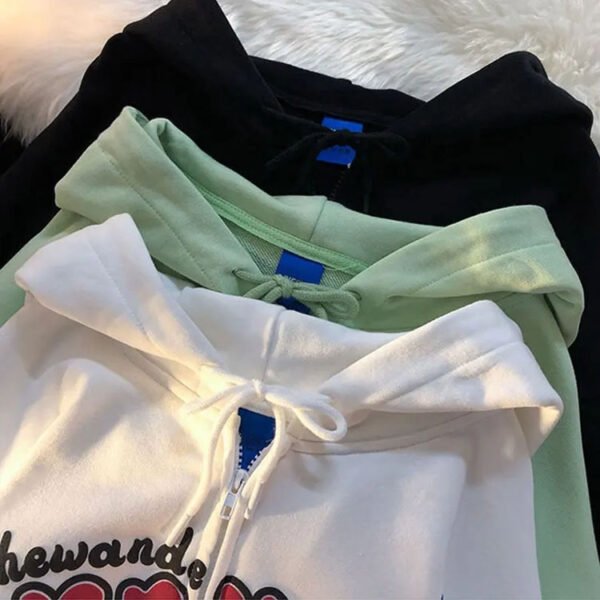
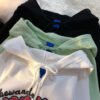
The supplied image shows several hoodies layered together in pale green, white, black, and pink, with seams partly obscured by overlap. That evidence confirms a multi-color presentation and drawcord construction, but it cannot prove fiber content, fabric weight, stitch density, or laundering dimensional change without records.
Build the Sample Around Measurable References
Control begins with a balanced pattern and consistent panel relaxation before decoration. The development sample should be washed using the intended care route, then measured from center front to side seams and compared across body, sleeve, and hood reference points for angular displacement.
Because the front zipper is a datum, spirality should be reviewed beside zipper waviness and hem skew rather than as an isolated seam issue. If the zipper remains straight while side seams rotate, the pattern and knit relaxation require different corrections than a complete front-panel distortion.
Separate Seam Rotation From Graphic Distortion
A large graphic can make minor construction movement more noticeable because lettering and contrast establish strong visual horizontals. Review artwork registration against the zipper and hem after laundering, while separating print stretch, surface texture, and panel rotation during the diagnosis process.
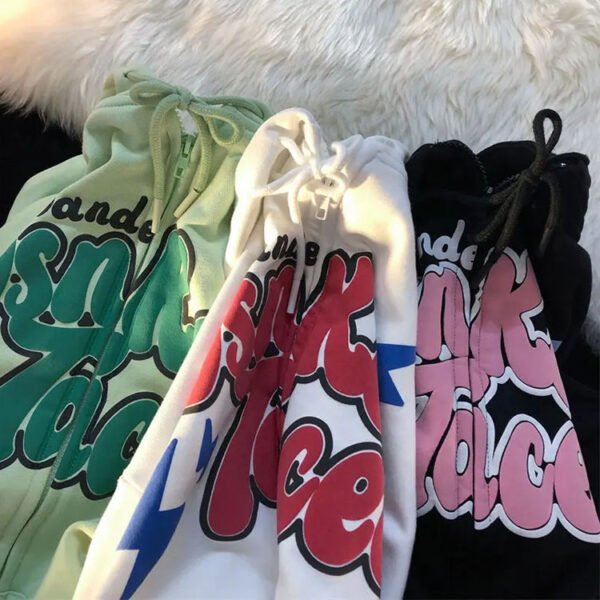
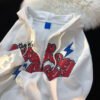
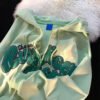
The image presents contrasting graphic treatments across multiple colorways, including pale green, red, blue, black, and pink impressions. These visible differences support color and placement planning, but print height, ink system, curing conditions, and dimensional behavior remain source references requiring confirmation.
Use Wash Testing Before Size Grading
Wash evaluation should precede final size grading when seam orientation is the assigned production risk. Establish the intended care route, capture pre-wash measurements, launder representative samples, and document rotation at consistent landmarks before approving graded patterns or repeating artwork placements.
A sample that passes in one size may not represent every size because seam length, panel proportion, and sleeve geometry change with grading. The buyer should therefore define acceptable angular movement and visual alignment by size range, not rely on a single favorable garment.
Connect the Argument to VeeWen Development
Within VeeWen's product-development workflow, the buyer's approved artwork and intended wash route should travel together from tech pack review into the first fit sample. The team can mark seam balance, zipper straightness, and measurement points directly on the sample, creating a focused revision brief.
That revision brief should identify whether the next action concerns pattern balance, fabric relaxation, sewing handling, decoration timing, or finishing. Keeping those causes distinct helps the buyer evaluate the actual spirality mechanism instead of accepting a cosmetic adjustment that may fail after laundering.
Set the Bulk Approval Checkpoint
Bulk approval should depend on the revised sample retaining acceptable seam orientation after laundering, with the buyer documenting tolerance before size grading. This checkpoint protects artwork placement and wear balance while acknowledging that heavier fleece, colorways, and finishing choices may respond differently in production.
Before releasing the MOQ of 100 pieces per style, confirm the approved size set, colorway assortment, artwork files, care route, and inspection landmarks. The final decision is construction approval, not merely visual approval, because seam rotation can emerge only after laundering.
Buyer Questions
When should side-seam spirality be checked?
Spirality should be checked after the intended laundering method, because dry measurements cannot show torque released by wet processing. Record center-front, side-seam, hem, sleeve, and hood reference positions before and after washing for comparable review.
Can a straight zipper coexist with rotating side seams?
Yes, a straight zipper can coexist with rotating side seams. Review front closure, hem, pocket, and sleeve relationships together, then identify whether the correction belongs to pattern balance, panel relaxation, sewing control, or finishing.
Should every colorway receive wash evaluation?
The image suggests multiple color options, but shade selection should follow approved artwork and wash evaluation. Test each colorway when fabric, dye behavior, print coverage, or finishing changes could influence seam movement or alignment.
What must be confirmed before production?
MOQ is 100 pieces per style. Confirm size range, colorway split, artwork versions, and spirality acceptance tolerance together, because changing these after sample approval can complicate grading, marker planning, and bulk inspection.
Approve the Washed Sample With Confidence.
Send the target measurements, artwork placement, wash-care route, and colorway plan to VeeWen for review. Approve the first sample only after seam orientation and zipper alignment remain within your documented tolerance after laundering under intended production conditions.




Reviews
There are no reviews yet.