






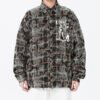
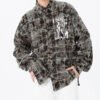


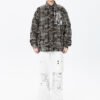
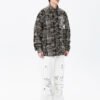
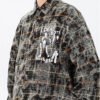




This shirt is developed around one visible engineering question: how can a high-contrast chest patch sit on an oversized plaid body without disrupting the garment's proportion? VeeWen should treat placement, perimeter control, and line continuity as one approval system.
Patch Placement Controls the Front Balance
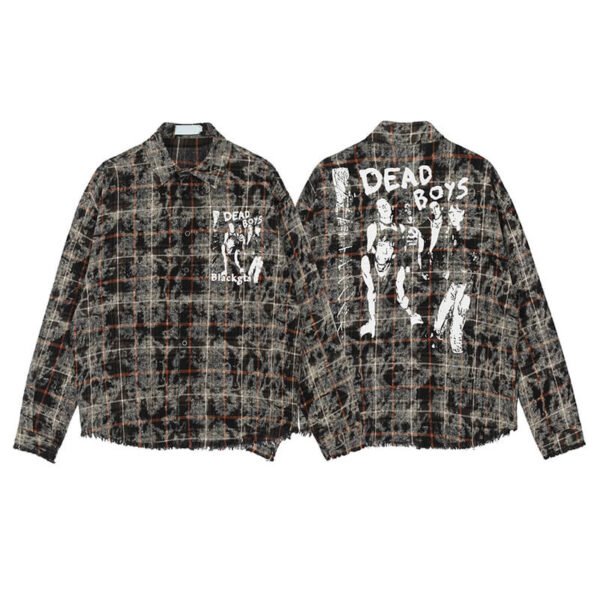
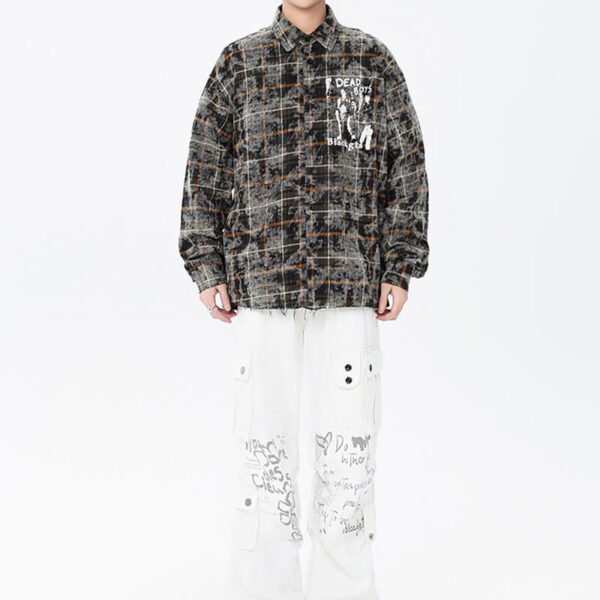
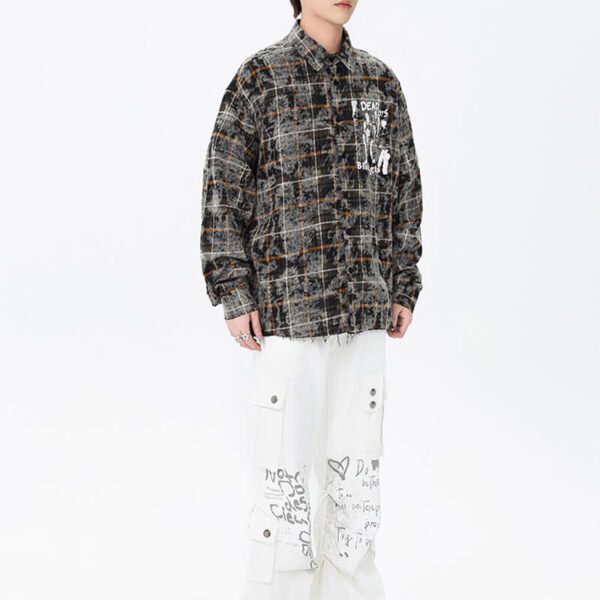
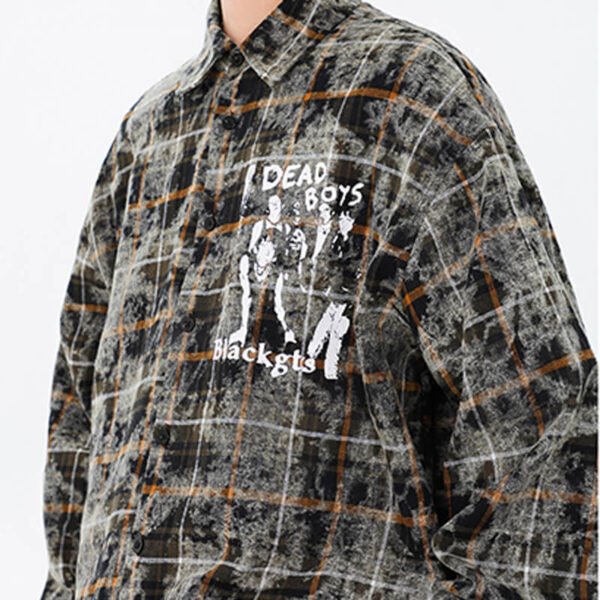
The supplied image places one illustrated patch high on the wearer's left chest, above the center button line. That location creates a deliberate focal point while leaving the lower oversized body visually open, so placement drift would immediately change the shirt's balance.
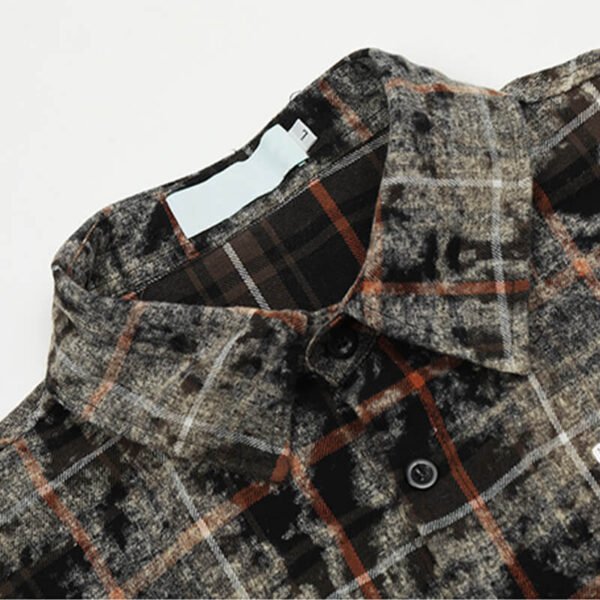
VeeWen's development check should record the patch's distance from the collar point, armhole, and button placket, then preserve those coordinates across graded sizes. The approval sample should show whether the artwork remains proportionate when the body width and sleeve volume increase.
Stitch Containment Protects the Plaid
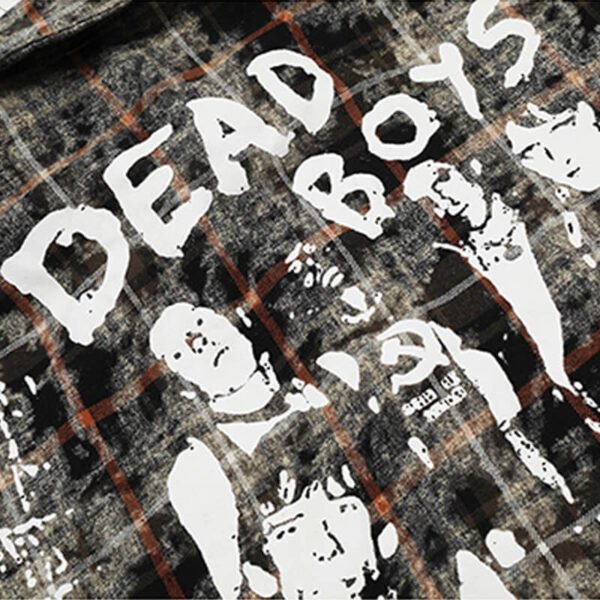
A plaid surface makes every seam and applied edge easier to inspect because intersecting lines expose misalignment. The visible patch has a defined rectangular boundary, giving production a practical containment zone for turning, topstitching, or securing the application without spreading tension into neighboring checks.
The trade-off is that a tighter perimeter can stiffen the chest area, while a loose edge may ripple or catch during wear. Buyers should approve stitch density, corner behavior, and seam allowance against the actual fabric hand before locking the construction package.
Distressed Texture Needs Repeatable Boundaries
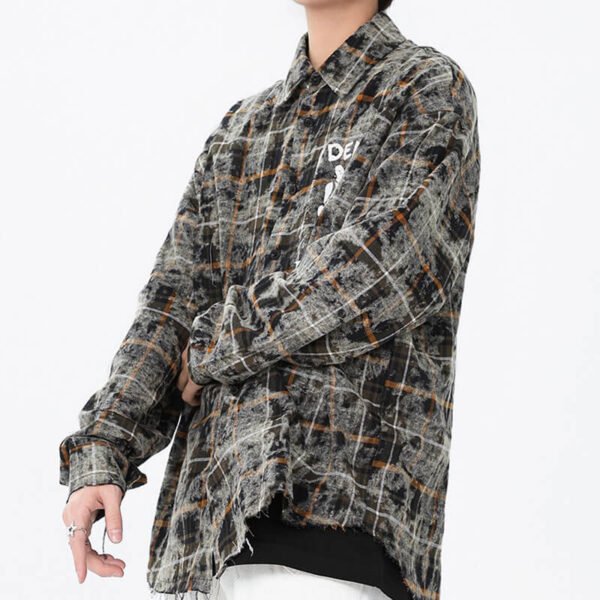
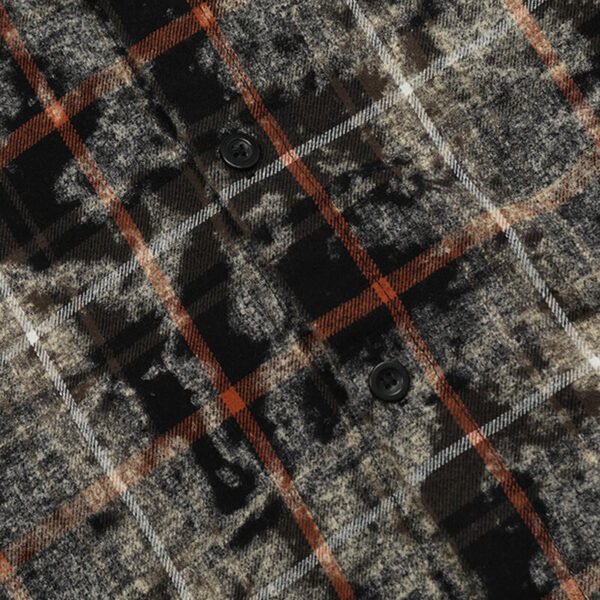
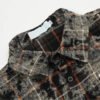
The image shows a charcoal ground with pale distressed texture layered over white and muted orange plaid lines. Because that surface variation already supplies visual complexity, the patch should remain sharply located and consistently edged rather than gaining additional uncontrolled abrasion around its perimeter.
For development, separate the surface effect from the patch operation in the technical file. Confirm whether the distressed appearance is created in fabric, finishing, printing, or a combination, then inspect how that treatment affects stitch visibility and edge stability.
Oversized Volume Changes Patch Perception
The broad torso, dropped shoulder impression, and full sleeves make the chest patch appear relatively compact, even though it is the principal graphic. On a narrower size, the same dimensions may dominate; on a larger size, it may recede, making proportional grading essential.
VeeWen should evaluate artwork scaling separately from garment grading rather than automatically enlarging every element. The buyer checkpoint is a size-set review showing patch position, collar relationship, button alignment, and surrounding plaid continuity across the intended range.
Workflow Turns the Argument into Checkpoints
VeeWen's product-development workflow should begin with a placement map that overlays the patch, placket, collar, and plaid repeat. That map gives patternmaking and embellishment teams one shared reference, reducing interpretation when the style moves from concept imagery into a measurable sample.
The next checkpoint is a construction sample reviewed for edge containment, corner flattening, stitch pull, and line matching. Record approved coordinates and tolerances in the specification package, then use the pre-production sample to confirm that the approved appearance survives final materials.
Approve the Graphic System Before Bulk Cutting
The commercial decision is not simply whether the shirt looks distressed or oversized. It is whether the graphic application remains intentional after cutting, stitching, laundering, and size grading, while the plaid still reads as a continuous structure around the focal patch.
Approve the style when the patch position, perimeter finish, artwork scale, and adjacent plaid alignment meet the signed sample standard. If any one of those elements changes, reopen the front-panel review before releasing the style for production.
Buyer Questions
Is the 300 GSM weight confirmed for production?
It is stated in the supplied source wording, but VeeWen should confirm finished weight, fabric construction, and shrinkage after the nominated material is approved.
What patch method should buyers specify?
Choose after testing the artwork on the confirmed fabric; compare embroidery, printed application, and sewn patch construction for edge stability and hand.
Can the patch position change by size?
Yes, but use controlled coordinates and proportional review rather than arbitrary movement, ensuring collar, placket, armhole, and plaid relationships remain consistent.
What is the minimum order quantity?
The exact commercial minimum is MOQ: 100 pieces per style, with final colorways and specifications subject to the approved development package.
Approve the Front-Panel Development Check
Send the target size range, artwork file, plaid direction, and preferred patch construction to VeeWen for a measurable placement review and sample approval.


Reviews
There are no reviews yet.