

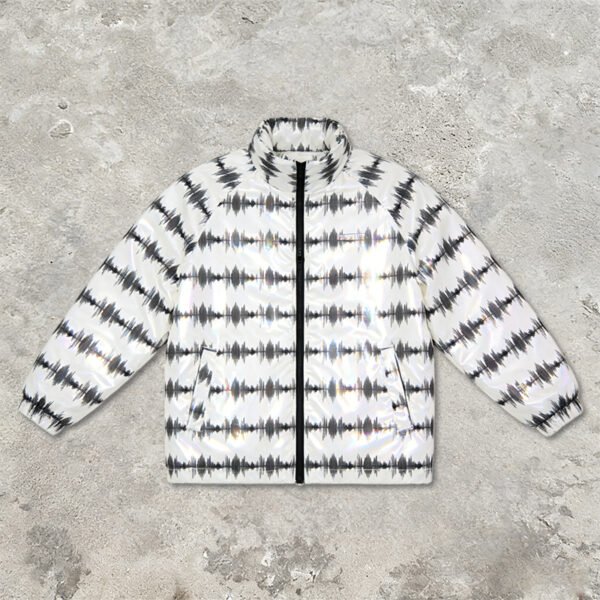
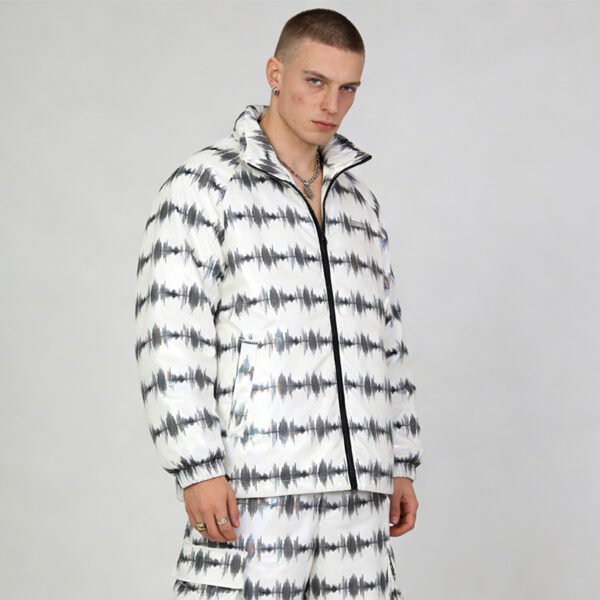








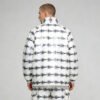


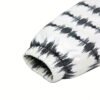


This puffer jacket should be developed around binding behavior, because reflective fabric and repeated soundwave graphics make every edge visually prominent. Binding width, stretch, and recovery must protect the shell profile while allowing movement through the collar, cuffs, hem, and panel transitions.
Why Binding Becomes a Graphic Variable
Binding normally stabilizes exposed edges, but here it also interrupts an iridescent surface covered with horizontal soundwave bands. A narrow binding may preserve graphic continuity, while a wider treatment creates stronger definition but consumes more visible shell area.
The supplied image shows reflective highlights crossing the back and sleeves, so edge contrast may change under different lighting. Binding width should therefore be selected with both physical coverage and visual interruption in mind, especially around the collar and lower hem.
Stretch Control at the Collar
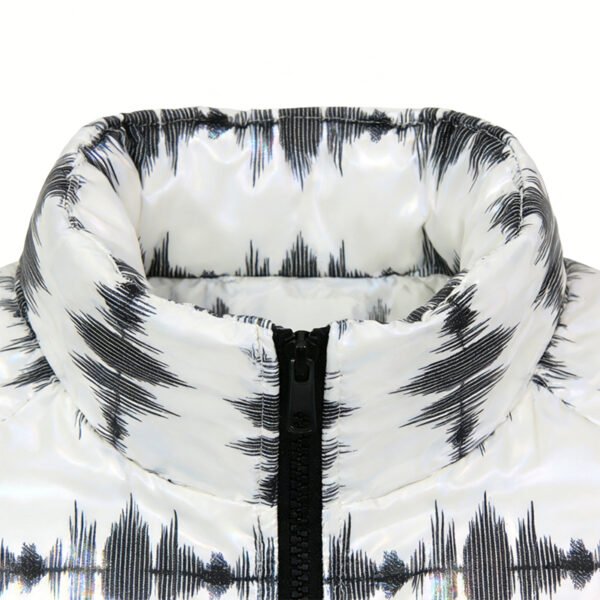
The high stand collar forms a strong frame around the neck and upper back. Its binding must stretch enough for comfortable entry and movement, yet recover sufficiently to prevent a loose, collapsing edge after repeated wear or packing.
VeeWen should evaluate collar binding with the selected shell, lining, and insulation together. The approval sample needs to check neck clearance, top-edge roll, seam exposure, and whether the soundwave print remains visually aligned when the collar is worn open or closed.
Cuffs and Hem Under Movement
Elastic cuffs and the straight lower hem create separate edge conditions. Cuffs need controlled stretch for sleeve access and wind coverage, while the hem must stabilize the padded body without squeezing the fill or producing an unwanted gathered effect.
A single binding specification may not suit every location. Buyers should compare cuff recovery, hem compression, and visual width independently, then confirm that the finished edges do not overpower the repeated graphic bands on the reflective shell.
Reflective Surface and Seam Definition
The shell visibly shifts between white, silver, and rainbow reflections, making seam lines and binding edges appear differently as the jacket moves. Uneven width can become noticeable because the surface highlights expose small changes in border proportion.
Binding application should be reviewed under direct, diffuse, and angled light during development. The purpose is not to assume a performance claim, but to confirm that width consistency, seam cleanliness, and print continuity support the intended visual impact.
VeeWen Development Checkpoint
VeeWen's product-development workflow should map binding requirements by location, recording separate targets for collar, cuffs, hem, and any internal exposed edges. Each target should connect to the shell thickness, insulation build, and required movement allowance.
The buyer checkpoint is a wear-and-inspection sample that tests entry, arm movement, cuff recovery, hem behavior, and edge appearance. Approve the binding package only after the physical sample confirms the chosen width and stretch balance in context.
Production Decision for the Outerwear Line
The central trade-off is visual sharpness against flexibility. More stable binding can improve edge definition but restrict movement or create bulk, while softer stretch can improve comfort yet reduce recovery and make the jacket look less controlled.
Proceed after confirming shell composition, insulation type, lining, artwork method, seam construction, binding material, and size measurements. The production file should identify each edge treatment separately so the reflective graphic remains consistent across graded sizes.
Buyer Questions
What does the main image confirm about the jacket?
It confirms a back-view puffer silhouette with iridescent reflective appearance, horizontal black soundwave graphics, high collar, elastic cuffs, and straight lower hem.
Why are binding width and stretch important here?
They influence edge stability, movement, collar comfort, cuff recovery, and how strongly the borders interrupt the jacket's reflective surface and repeated graphic rhythm.
Is the holographic finish a verified performance claim?
The image supports a visibly iridescent surface, while technical durability, reflectivity measurements, coating composition, and care behavior require confirmation through material and sample review.
What is the minimum order quantity?
The commercial minimum for this record is MOQ: 100 pieces per style, with final quantities and size distribution confirmed during order preparation.
Approve the Binding and Recovery Sample
Share the shell reference, graphic artwork, insulation direction, and movement priorities with VeeWen. We can then review location-specific binding width, stretch, recovery, and edge appearance before production approval.


Reviews
There are no reviews yet.