


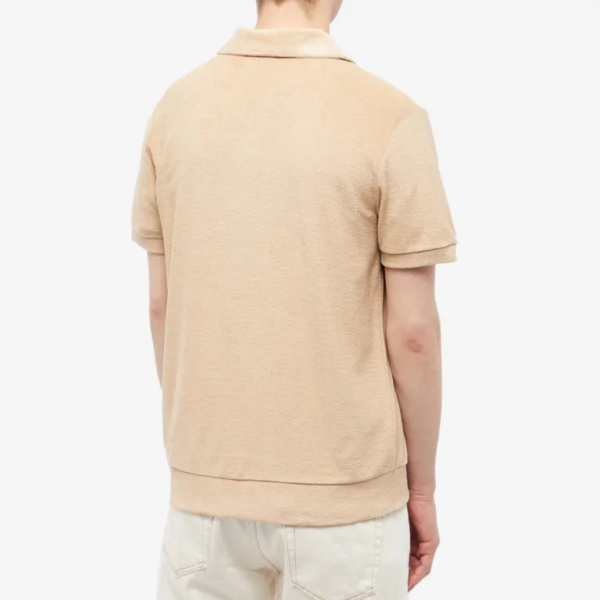
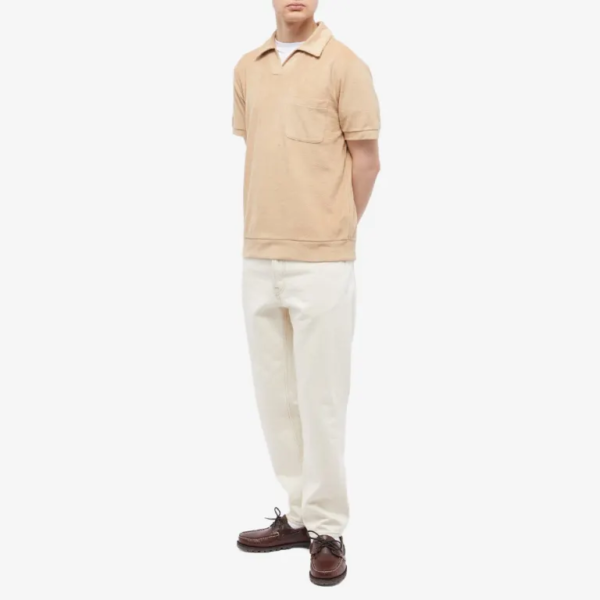
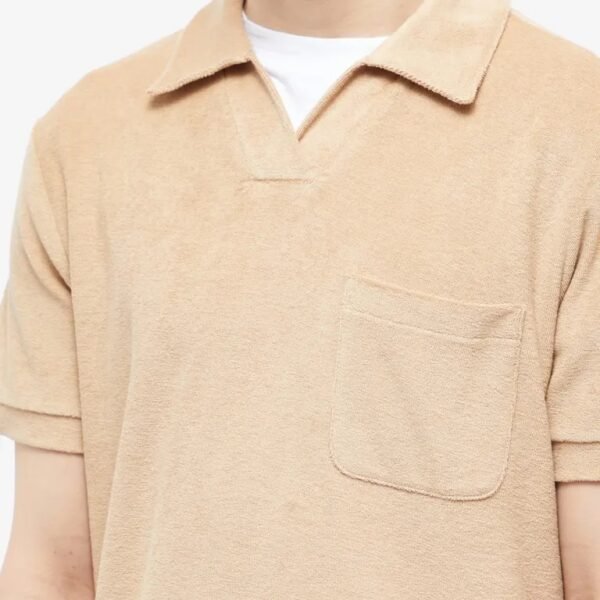


This custom khaki polo is a development study in controlled surface texture and seam puckering. Its split collar, chest pocket, and broad hem make tension management visible, giving buyers clear checkpoints for approving the fabric-handling balance before production begins.
Texture Is a Measurable Development Target
The visual surface reads soft and faintly napped rather than sharply smooth, so texture should be defined through approved swatches, face appearance, and handfeel language. This prevents later finishing changes from altering the intended character while preserving consistent inspection standards across production lots.
Because the image does not verify composition, GSM, or finishing chemistry, the first development decision is material confirmation. VeeWen can translate the visual target into fabric submissions, then record which face, weight, and finish combination best reproduces the reference before pattern approval.
Split Collar Requires Balanced Stabilization
The open split collar concentrates several seam directions around the neckline, where excessive thread tension can draw edges inward or create visible ridges. Stabilization must support the opening without making the collar rigid, especially against the polo's visibly soft body surface.
For VeeWen's workflow, collar construction should be reviewed on a sewn prototype under relaxed and worn conditions. The approval checkpoint covers opening symmetry, edge recovery, seam exposure, and puckering tolerance, allowing the buyer to choose the preferred balance before grading.
Pocket Perimeter Tests Local Tension
The rectangular chest pocket adds a defined stitched perimeter to an otherwise continuous textured front. Its corners and upper edge can reveal feed imbalance quickly, producing ripples that are more noticeable because the pocket interrupts the calm visual field of the body.
During development, VeeWen should compare pocket samples using the nominated fabric and thread construction, checking corner turn, mouth alignment, and surrounding distortion. Buyer approval should confirm whether slight natural movement is acceptable or whether a flatter engineered appearance is required.
Hem And Sleeve Seams Need Consistency
The broad lower hem appears visually quiet, while the short sleeves end with clean folded edges. These areas provide useful controls: uneven feeding or aggressive pressing may flatten texture, stretch the edge, or create puckering that changes the garment's relaxed proportion.
VeeWen's technical review should isolate hem and sleeve operations instead of judging the finished garment only from a distance. The buyer should approve edge width, topstitch visibility, pressing response, and acceptable texture variation before the complete size set proceeds.
Fit Should Protect The Surface Effect
A relaxed straight silhouette gives the textured face room to remain visible, but excessive ease can create additional folds mistaken for seam puckering. The block therefore needs proportionate chest, sleeve, and body measurements that distinguish intentional drape from construction distortion.
VeeWen can connect the surface argument to pattern development by fitting the prototype on the intended size-set form, then mapping movement lines against seam locations. The approval decision is whether the block preserves texture clarity during wear without sacrificing the required casual fit.
Production Approval Links Appearance To Process
This polo should enter bulk approval only after material, collar, pocket, sleeve, and hem observations are recorded as one appearance standard. Texture cannot be separated from sewing and pressing, because each operation can either preserve or disturb the chosen surface.
With MOQ: 100 pieces per style, VeeWen's development handoff should carry the approved swatch, construction notes, measurement tolerances, and puckering photographs into the production file. The buyer's final checkpoint is a signed preproduction sample matching those combined criteria.
Buyer Questions
Is the fabric confirmed as cotton?
The source wording references cotton, but the supplied visual does not verify composition. Request fabric documentation and approve the exact blend, weight, and finishing route before sampling.
Why inspect puckering on this style?
The split collar and applied pocket create concentrated seam paths on a textured body. Their edges make feed, tension, and pressing differences easier to see during development.
What should the first sample prove?
The first sample should establish surface handfeel, collar symmetry, pocket flatness, hem behavior, sleeve edges, and fit proportions against an agreed visual and technical reference.
What is the minimum order quantity?
The commercial minimum is MOQ: 100 pieces per style. Final quantities, color allocations, packaging, and production details should be confirmed with the approved development specifications.
Approve The Surface And Seam Standard
Send the target composition, measurements, color reference, and tolerance preferences to begin development. VeeWen will align the textured polo sample around those inputs, with MOQ: 100 pieces per style.


Reviews
There are no reviews yet.