


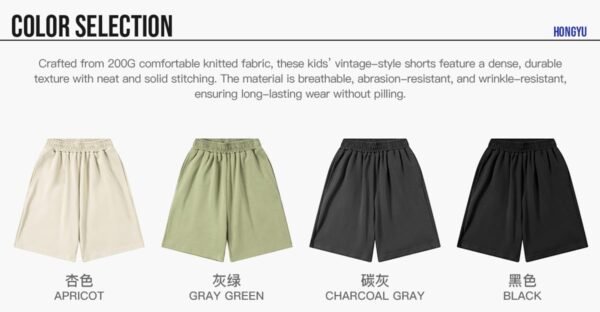
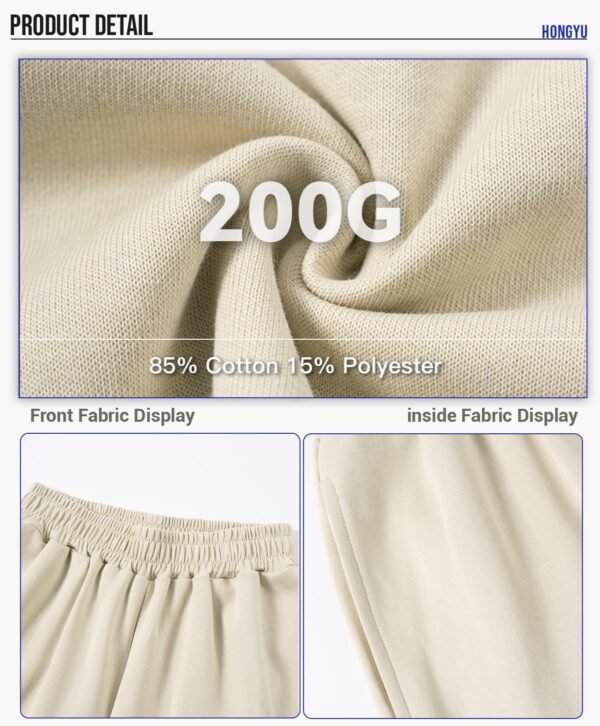






These custom kids French terry shorts are developed around one practical question: how much embroidery can the base fabric carry while retaining a smooth, comfortable silhouette. The visible 200gsm reference, relaxed shape, elastic waist, and four-color presentation create a focused approval path for buyers.
Fabric Stability Sets the Decoration Ceiling
A 200gsm French terry base gives this kids short a defined development starting point, but embroidery can expose instability through puckering, distortion, or registration drift, especially around dense motifs, curved seams, and pocket openings during production.
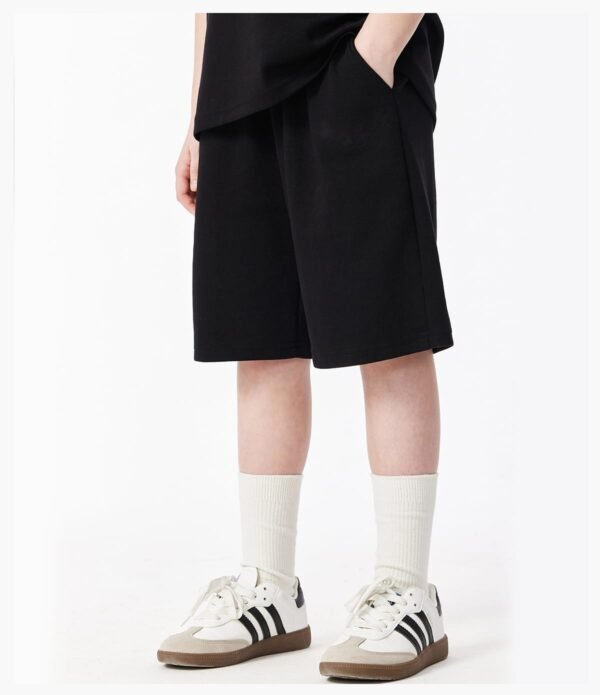
The supplied image shows a smooth, medium-weight face, relaxed leg opening, and elasticized waistband; these visible elements suggest a comfort-led foundation. They do not prove stretch recovery or wash durability, so those properties belong in the fabric approval checkpoint.
Embroidery Density Needs a Controlled Map
For children's shorts, dense decoration should be mapped away from high-flex zones and seam intersections before artwork is digitized. Lower stitch counts may preserve hand feel, while selective reinforcement can support definition where the design genuinely needs visual weight.
The buyer should review a placement plan that separates stable panels from moving edges, then compare light, medium, and dense embroidery trials. This creates a measurable trade-off between motif clarity, surface softness, production risk, and the visual scale appropriate for kidswear.
The Short Shape Supports Movement
The broad leg and elasticized waist visible in the image create a straightforward movement profile for outdoor styling. That simplicity leaves the base fabric and decoration carrying most of the product character, making proportion and surface behavior more important than ornamental construction.
A relaxed silhouette can accommodate active use, but excessive ease may weaken perceived neatness when paired with heavy embroidery. Confirm finished measurements, rise balance, leg opening, and waistband recovery together so the decoration does not overwhelm the garment's intended proportions.
Color Changes Can Alter Embroidery Results
The four-color presentation provides a useful range-building opportunity, yet the same embroidery program may read differently across sage, cream, charcoal, and black grounds. Thread contrast, backing visibility, and perceived density should therefore be evaluated by color rather than assumed identical.
Dark bases can sharpen contrast when lighter thread is selected, while pale grounds may expose backing or registration issues more readily. Approve a color-specific decoration standard covering thread palette, underlay, placement, and acceptable visual variation before confirming the full style range.
VeeWen Workflow Converts the Axis into Gates
VeeWen can structure this development through a fabric handfeel review, embroidery placement map, density trial, and combined approval sample. The sequence keeps base-fabric stability visible before decoration decisions become difficult or expensive to revise.
At the buyer checkpoint, compare the approved fabric swatch, measurement chart, embroidery strike-off, and sewn sample as one system. Release the style only when comfort, motif definition, color appearance, and seam-area stability meet the agreed product brief.
Commercial Planning Starts After Technical Approval
The commercial minimum is MOQ: 100 pieces per style, so range planning should follow technical approval rather than substitute for it. Buyers can use the four visible colors as a starting framework while preserving one approved decoration standard across the assortment.
Before order confirmation, document composition, weight tolerance, color references, embroidery density, placement measurements, labeling requirements, and packaging expectations. Any unverified performance or construction detail should remain open until supported by the final approved materials and sample.
Buyer Questions
Is the fabric composition confirmed?
No. The source identifies 200gsm French terry, but fiber percentages and recovery characteristics require confirmation through the selected fabric specification.
What embroidery issue should buyers prioritize?
Prioritize puckering and distortion around dense artwork, elastic areas, seams, and openings, then approve density using a sewn garment trial.
Are all four colors available for production?
The image presents four colors, but production availability, dye references, and shade tolerances must be confirmed during color approval.
What is the minimum order quantity?
The commercial minimum is MOQ: 100 pieces per style, subject to final specifications, approved samples, and documented production requirements.
Approve the Base and Decoration Together
Send the target artwork, color direction, size range, and intended use to VeeWen. We will organize the fabric, embroidery, measurement, and sample checkpoints around your approval criteria.


Reviews
There are no reviews yet.