
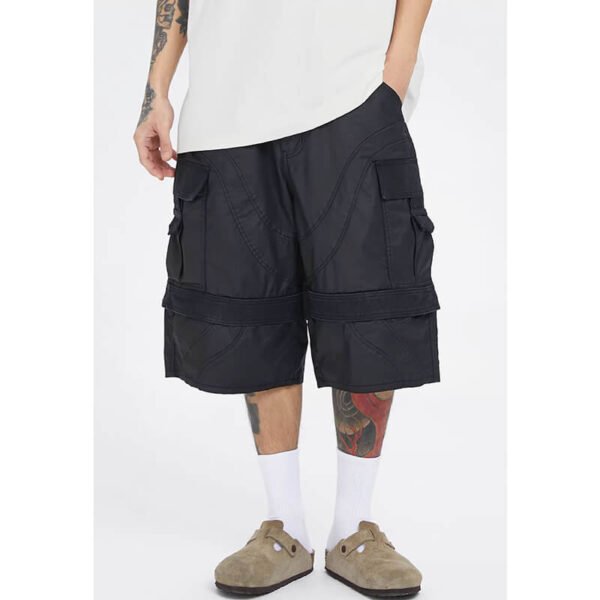


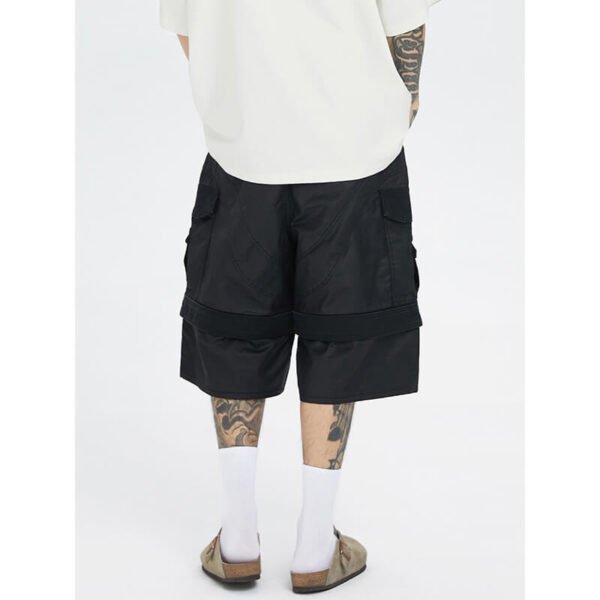


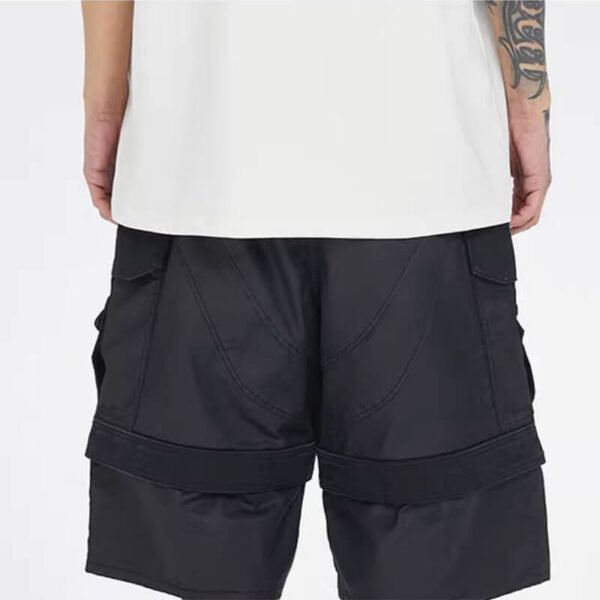
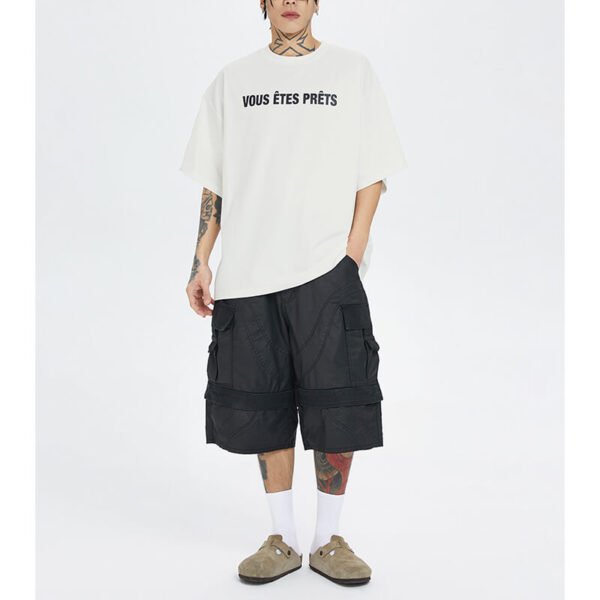
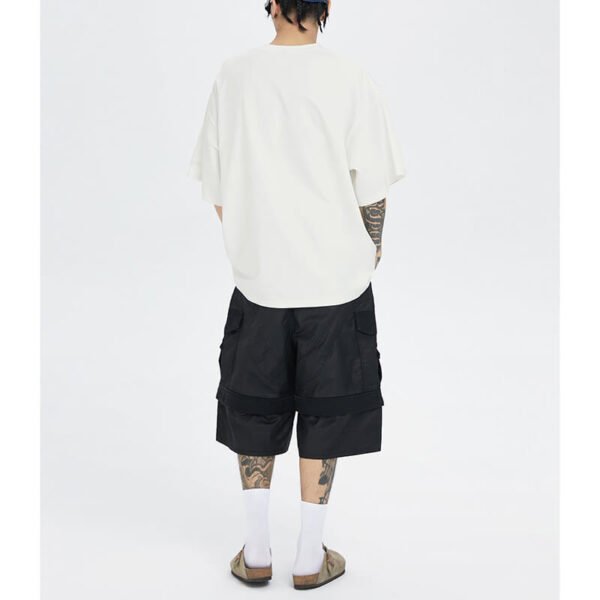

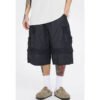
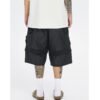
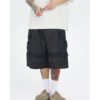

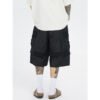
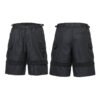
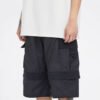
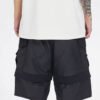
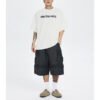
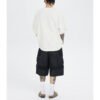

This custom cargo short is a technical study in controlled applique edge management. Its dark utility layout uses raised pocket components, a broad lower-leg band, and curved tonal seams, so the development priority is preserving definition while keeping layered areas wearable, stable, and proportionally clean.
Why Layer Bulk Determines the Silhouette
The image presents several stacked components: upper cargo flaps, side pocket bodies, and a wide lower-leg band. Each layer adds thickness and visual interruption, meaning seam placement must distribute volume instead of allowing one junction to dominate the silhouette.
The straight leg depends on controlled proportions. If pocket facings, applique turn-ins, or internal allowances become too heavy, the outer leg can project unevenly or hang stiffly. The target is visible utility structure with a flat, balanced fall when standing and walking.
Applique Edge Sequencing
Pocket flaps appear as distinct raised shapes against the dark body, so their edges must remain readable after pressing and sewing. Development should map the attachment order, corner behavior, and edge finish before grading, particularly where neighboring layers overlap.
A consistent edge sequence also protects visual rhythm across both legs. The sample review should inspect flap alignment, corner turn, seam exposure, and any rippling caused by differential tension. These checks reveal whether the chosen construction keeps applique boundaries crisp without excessive internal build.
Managing Pocket Junctions
The outer-leg pocket zones contain several nearby seams and flap attachments. Concentrated stitching can create hard ridges, especially when pocket bags, facings, and body seams meet. The construction plan should separate critical junctions and define where allowances are trimmed, layered, or redirected.
Pocket access must remain practical despite the layered appearance. Buyers should confirm opening dimensions, flap clearance, reinforcement locations, and pocket-bag placement on the sample. A visually dense cargo layout is commercially useful only when the hand entry remains comfortable and the pocket remains stable.
Lower-Leg Band and Movement
The broad horizontal band near the hem is a dominant visual layer in the image. It divides the leg and adds weight near the knee, so its height, attachment line, and internal allowance directly influence mobility and the perceived straightness of the short.
VeeWen's development workflow should isolate this band during pattern review, then test its relationship with the lower pocket panels. Approval should compare seated comfort, walking clearance, and hem behavior, because a visually accurate band can still restrict movement if layered too rigidly.
Material and Surface Considerations
The source title identifies cotton, while the image shows a dark, subdued surface rather than a glossy finish. Fiber composition alone does not establish the final body, recovery, or abrasion behavior, so material selection must connect the intended handfeel with the layered construction.
For this axis, VeeWen should request or develop fabric and trim references before finalizing applique methods. The buyer should review shrinkage expectations, pressing response, color consistency, and surface appearance after sewing, laundering, and handling relevant to the intended market.
Approval Checkpoint for Production
The decisive sample review is not simply whether the shorts resemble the reference. It is whether every raised component retains a controlled edge while the garment remains balanced through the waist, thigh, knee, and hem. Measurements should be checked beside the visual construction map.
VeeWen can carry the approved map into pattern refinement, component cutting, sewing instructions, and pre-production review. The buyer should sign off only after confirming layer order, edge finish, pocket function, fit balance, and tolerance rules for repeated production at the required MOQ.
Buyer Questions
What is the main development risk for this cargo short?
The main risk is concentrated bulk where pocket flaps, applique layers, lower-leg bands, and seam allowances overlap across the outer leg.
Is the cotton composition verified?
The source title states 100% cotton, but final composition, GSM, shrinkage, and handfeel should be confirmed against the selected production fabric.
What should the first sample demonstrate?
The first sample should demonstrate clean applique edges, stable pocket openings, balanced layer spacing, comfortable movement, and an even straight-leg silhouette.
What is the minimum order quantity?
The commercial minimum is MOQ: 100 pieces per style, with final specifications and production acceptance based on the approved development record.
Approve the Layered Cargo Construction
Send the target measurements, fabric references, branding files, and pocket requirements for a focused sample review centered on edge control, layer bulk, movement, and repeatable production execution.


Reviews
There are no reviews yet.