
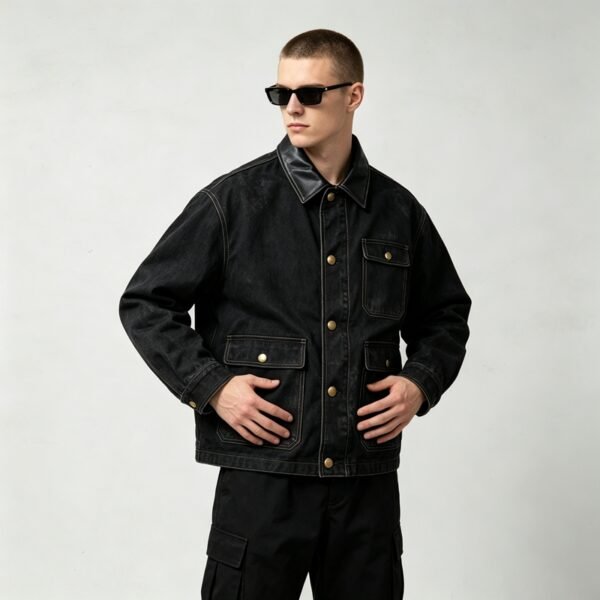


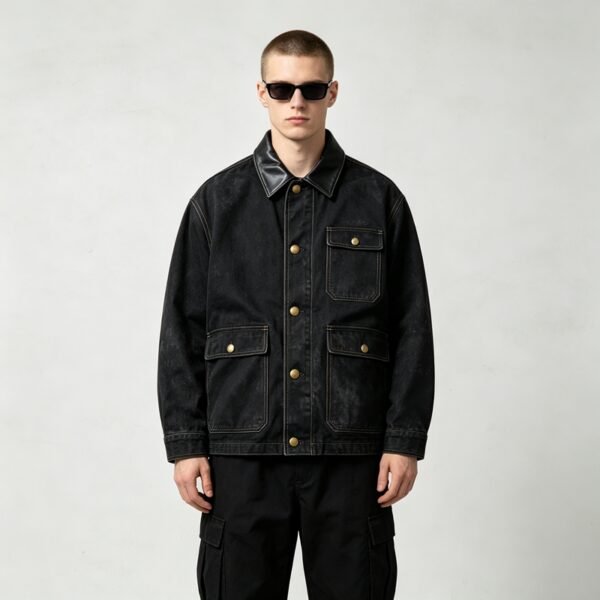



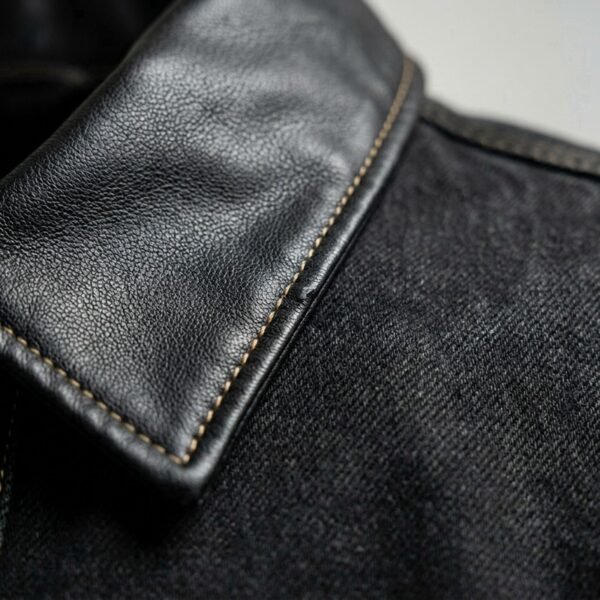









This utility jacket is built around controlled contrast: a dark structured body, leather-look collar, light topstitching, and warm metallic closures. Its development priority is not simply adding hardware, but matching plating appearance with the garment treatment so every surface reads as part of one intentional system.
Surface Contrast Sets the Product Direction
The jacket combines a dark body with a lighter stitched outline and a separate leather-look collar. That contrast makes every component legible, including snaps, pocket flaps, and front closure. A plating choice that is too bright or too dull can change the entire balance.
Because the body appears treated or coated, the surface may develop a different visual response from the collar and metal. The design therefore needs a controlled relationship between sheen, color depth, stitch exposure, and hardware reflectivity before the first approval is finalized.
Plating Must Work with Garment Treatment
Hardware plating determines how warm, reflective, or subdued each snap appears against black fabric. Garment treatment can alter the surrounding surface through fading, abrasion, coating variation, or tonal change, so a pristine metal reference may not remain balanced after finishing.
The correct test is a component panel or prototype carrying the proposed body treatment, collar material, thread, and snap finish together. Reviewing isolated buttons is insufficient because the buyer must judge the combined visual field under the same lighting and handling conditions.
Pocket Hardware and Repeated Consistency
The chest pocket and lower pockets create several repeated closure points, making inconsistency easy to notice. Slight variation in plating tone, snap seating, or flap alignment may read as manufacturing noise because the light topstitching draws attention to each pocket perimeter.
Pocket placement also affects practical operation. Snaps should engage cleanly through the flap layers without excessive force, while the hardware backing remains clear of the wearer's hand and pocket contents. Confirming this relationship protects both utility and the jacket's graphic front layout.
Development Workflow: Lock the Treatment Pairing
VeeWen's workflow should begin with a treatment and hardware matrix for this jacket: body surface direction, collar finish, thread contrast, snap plating, and pocket repetition. A focused sample can then expose whether the intended metal tone remains compatible after the selected garment treatment.
The buyer checkpoint is a matched approval set, not a single photograph. Review the treated body, collar, front snaps, pocket snaps, and topstitching together, then record the approved references and acceptable visual variation for production control.
Trade-Offs Between Patina and Uniformity
A stronger garment treatment can create depth and a worn utility attitude, but it may reduce uniformity across panels and soften contrast stitching. A restrained treatment keeps the jacket cleaner and hardware more predictable, although it may deliver less surface character.
Likewise, brighter plating increases immediate contrast and visibility, while a muted finish integrates more quietly with dark fabric. The decision should reflect the intended product story, expected handling, and tolerance for variation rather than treating hardware as a decorative afterthought.
Approval Gate: Evaluate the Complete System
The image supports a black utility jacket with gold-tone-looking snaps, multiple pockets, visible topstitching, and a leather-look collar. It does not verify plating chemistry, coating process, abrasion behavior, or exact collar material, so those points require documented development confirmation.
Approve the final direction after comparing treated samples under consistent light and inspecting snap engagement, pocket alignment, collar edge behavior, and surface continuity. The production record should identify the chosen hardware appearance and garment-treatment relationship before quantity approval.
Buyer Questions
Is the collar confirmed to be genuine leather?
The source wording says leather collar, while the image shows a leather-look surface. Exact material identity, composition, and backing require development confirmation.
Why review plating with garment treatment?
Treatment can change fabric depth and sheen, affecting how metallic hardware appears. Reviewing both together helps maintain a coherent finished appearance.
Which components need repeated checking?
Check front snaps, chest pocket closure, lower pocket closures, collar surface, topstitching, and treated body panels as one coordinated system.
What is the commercial minimum?
The commercial minimum is MOQ: 100 pieces per style, subject to the approved product specification and development direction.
Approve the Surface and Hardware Pairing
Share the preferred treatment intensity and hardware tone for a coordinated sample review covering plating appearance, pocket operation, collar contrast, and expected visual consistency.


Reviews
There are no reviews yet.