


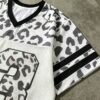
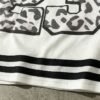


This oversized mesh T-shirt is visually driven by an uninterrupted pull-over body, a contrast rib collar, and a large back graphic. Its technical decision is closure readiness: if snaps or buttons are added, reinforcement must preserve drape while resisting concentrated pulling.
The Base Garment Has No Closure
The supplied back image shows a continuous pull-over body without visible snaps, buttons, or front opening. That absence is technically useful: the base style avoids concentrated hardware loads, allowing the mesh and graphic panel to remain visually uninterrupted through the main torso.
Because the assigned axis concerns pull resistance, the buyer must first decide whether closure functionality is actually required. A pull-over version needs collar recovery review; a customized version with hardware needs a separate reinforcement map and localized testing plan.
Where Added Hardware Would Load
If a placket is introduced, each snap or button transfers force into a small area of mesh. Without reinforcement, the opening may elongate, ladder, or pull the printed surface out of alignment. Support should sit behind the attachment zone while keeping the surrounding body flexible.
A pocket with a snap closure creates a different load path from a center-front placket. The pocket panel, opening edge, and backing must work together, especially because the oversized silhouette encourages movement and the graphic surface makes distortion easy to see.
Collar Recovery Sets the Pull-Over Standard
For the pictured pull-over version, the rib crew collar is the primary repeated-entry point. Its seam and rib construction should recover after dressing without dragging the mesh shoulder line. Review should focus on opening comfort, neckline symmetry, and whether the collar remains visually level.
The contrast collar also establishes scale against the large back graphic. If the neckline stretches during wear, the entire shirt can look less controlled even when the print remains intact. Collar reinforcement should therefore be judged as a silhouette decision, not only a durability detail.
Print and Reinforcement Must Coexist
The large centered back graphic occupies much of the visible panel, so any added closure or reinforcement near that area could alter drape or create a noticeable interruption. Placement should avoid critical lettering and preserve the intended graphic field after sewing and pressing.
The leopard-style pattern continues across the upper body and sleeves, while contrast bands frame the lower edges. This makes registration and seam transitions important during development. Hardware zones should be positioned where reinforcement can remain discreet and pattern alignment can still be checked.
VeeWen Development Checkpoint
Within VeeWen's workflow, the buyer can submit two construction routes for comparison: pull-over collar recovery, or closure-added reinforcement with specified snap or button locations. The sample review should identify the route, hardware size, backing method, and opening dimensions before grading.
Approval notes should record whether the mesh tears, stretches, or puckers around the proposed attachment. Where physical pull testing is required, define the method and acceptance threshold with the buyer rather than assuming an unverified performance level.
Lock the Closure Decision Before Bulk
A clean bulk decision begins by locking the architecture. If the style remains pull-over, approve collar recovery and shoulder stability. If closures are added, approve hardware placement, reinforcement, opening construction, and pull-resistance requirements as part of the same technical package.
The commercial specification should retain MOQ: 100 pieces per style alongside the final artwork, colorway, band dimensions, measurements, and closure route. This prevents a late hardware change from invalidating the approved mesh behavior or graphic placement.
Buyer Questions
Does the pictured T-shirt already include snaps or buttons?
No visible snaps or buttons appear in the supplied image. The shown garment reads as a pull-over tee, so closures would require a separate customization decision.
Why would mesh need reinforcement for hardware?
Snaps and buttons concentrate pulling force into small attachment points. A backing layer or stabilized zone can reduce elongation, laddering, puckering, and local distortion.
What should be tested on the pull-over version?
Review collar opening comfort, neckline recovery, shoulder stability, seam appearance, and graphic alignment after repeated dressing simulations agreed during development.
Can VeeWen add a closure later?
Potentially, but the pattern, reinforcement, artwork placement, and sampling route should be revised before approval so the added load is engineered intentionally.
Confirm the Closure Route
Share the artwork, mesh reference, and intended wear method so VeeWen can develop either a recovery-focused pull-over sample or a reinforced closure version.


Reviews
There are no reviews yet.