






This custom men's denim jacket is developed around fabric relaxation before cutting, because washed denim can shift after handling and finishing. The visible light-blue body, paired chest pockets, vertical seams, and button front create measurable alignment checkpoints for a reliable private-label sample.
Why Relaxation Comes Before the Marker
Denim is a tensioned woven fabric, and rolling, storage, moisture, or finishing preparation can influence its dimensions. Relaxation allows the development team to observe a more settled working width before placing pattern pieces and setting the marker.
That sequence matters here because the jacket presents broad front panels, long vertical seams, and a straight lower hem. If panels are cut from unstable width, small shifts can accumulate across the center front, pocket positions, sleeve openings, and side balance.
Reading the Supplied Visual Evidence
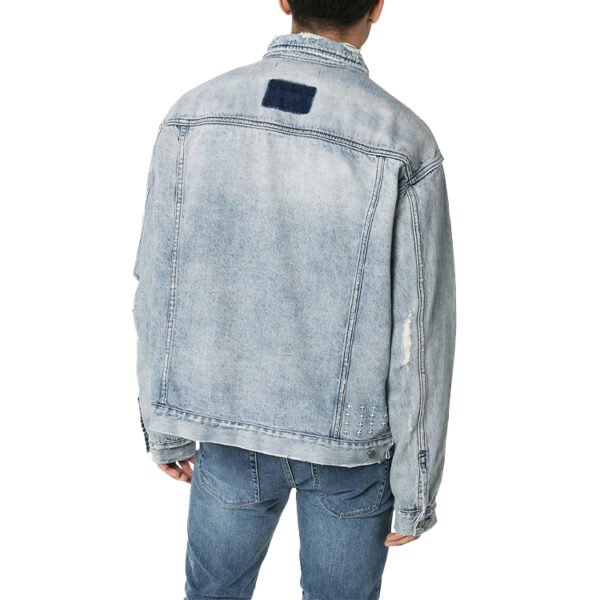
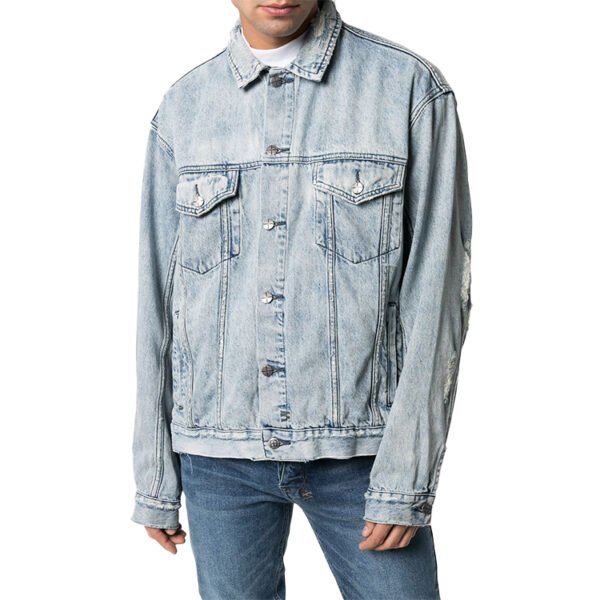
The supplied image shows a pale blue denim jacket with a pointed collar, button front, two flap chest pockets, lower welt-style pockets, cuffed sleeves, and pronounced vertical panel lines. These features provide practical reference points for checking symmetry during sample review.
The image supports a washed and softened visual direction, but it does not verify fiber percentages, fabric weight, shrinkage, or the exact distressing process. Those variables must remain open until VeeWen receives the selected fabric and approved wash reference.
Pattern Placement After Fabric Settles
Once the fabric has relaxed, the pattern should be placed against the confirmed usable width, with grain direction controlled through the body, sleeves, cuffs, and pocket components. Consistent grain reduces the risk of twisting or uneven visual falls after assembly.
Pocket templates deserve particular attention because the chest flaps and lower pockets are highly visible. The sample checkpoint should compare left and right spacing, flap angle, opening position, and distance from the button line before bulk cutting approval.
Wash Movement and Distress Control
A light washed appearance can amplify dimensional differences because surface contrast makes seam displacement easier to see. Development should therefore compare pre-wash and post-wash measurements at the body, sleeve length, chest width, hem, and pocket coordinates.
Distressing should be treated as a controlled visual treatment rather than a substitute for fit approval. Buyers should specify acceptable variation in fading and abrasion placement while keeping critical construction lines, cuffs, buttons, and pocket edges structurally consistent.
VeeWen Development Checkpoint
VeeWen can place this axis into a product-development sequence by recording the fabric relaxation condition, usable width, pattern measurements, and first sample measurements before washing. The purpose is to connect material behavior directly to the jacket's visible alignment requirements.
At the review stage, the buyer should inspect a washed sample on a flat table and on a fit form. Approval should cover body balance, pocket symmetry, sleeve alignment, hem level, surface direction, and the documented tolerance for later production.
Approval Criteria for Private Label Production
The final approval package should identify the denim reference, relaxation method, marker assumptions, wash recipe reference, distressing zones, measurement tolerances, trims, and accepted appearance range. Composition and fabric weight should be added only when confirmed by the chosen material.
The commercial decision is whether the sample retains its intended light-workwear character after washing without losing proportion or alignment. Approve production when measured results, visual balance, and finish tolerance are recorded together rather than judged from color alone.
Buyer Questions
Why relax denim before cutting this jacket?
Relaxation helps reveal the fabric's settled working dimensions before pattern placement, reducing avoidable changes that could disturb pocket spacing, sleeve balance, or hem alignment.
Does the image confirm the denim composition?
No. The image supports a denim appearance only; fiber content, weight, stretch, and recovery require a confirmed fabric reference or laboratory documentation.
What should the first sample review measure?
Review body width, length, sleeve length, hem level, chest-pocket coordinates, button spacing, cuff alignment, and post-wash changes against the approved measurement chart.
What is the commercial minimum?
MOQ: 100 pieces per style. Final feasibility remains dependent on the approved fabric, wash direction, trims, specifications, and production documentation.
Approve the Relaxed-Denim Development Route.
Send the target measurements, denim reference, wash direction, and private-label requirements so VeeWen can prepare a relaxation-led sample review with measurable approval checkpoints.


Reviews
There are no reviews yet.