





This cargo trouser is best developed as a placement-engineering project, because its loose volume, pocket interruptions, tonal panels, and hanging details change how artwork reads from size to size.
Placement Must Follow the Graded Silhouette
A loose trouser does not enlarge uniformly as sizes progress. Rise, thigh, knee, hem, and stacking each change at different rates, so a graphic positioned by flat measurement can drift visually when worn. The image's oversized legs make this grading problem central.
VeeWen should establish artwork anchors from construction landmarks rather than only waist measurements. Pocket openings, side seams, knee breaks, and hem edges provide repeatable reference points, allowing the placement to be reviewed on graded patterns before sampling or cutting.
Pocket Construction Creates Graphic Interruptions
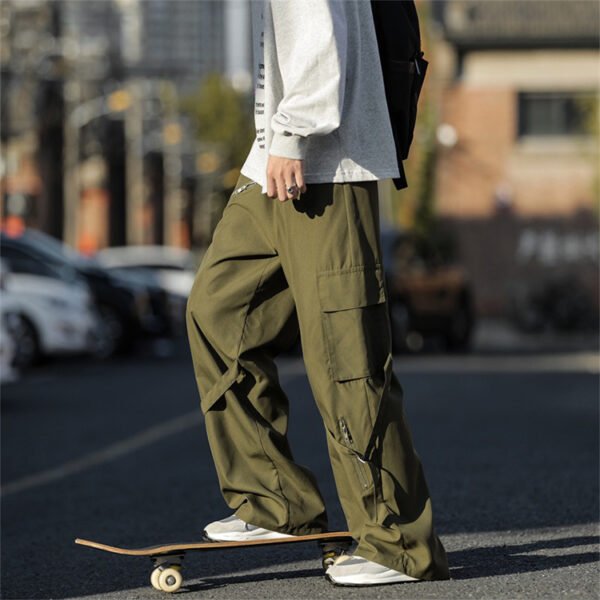
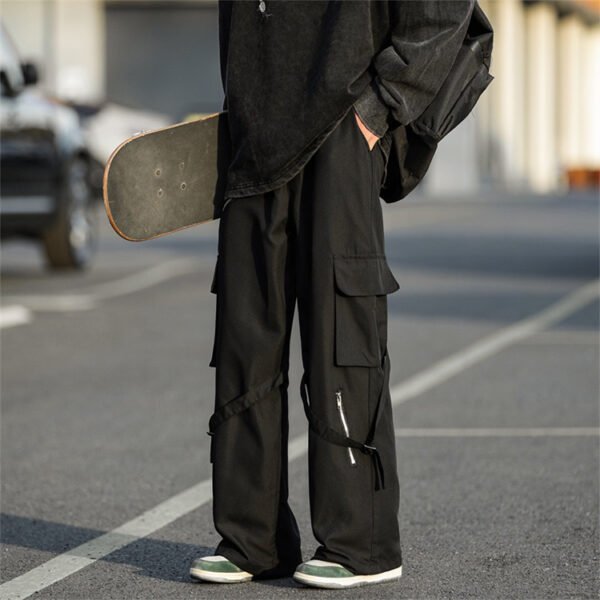
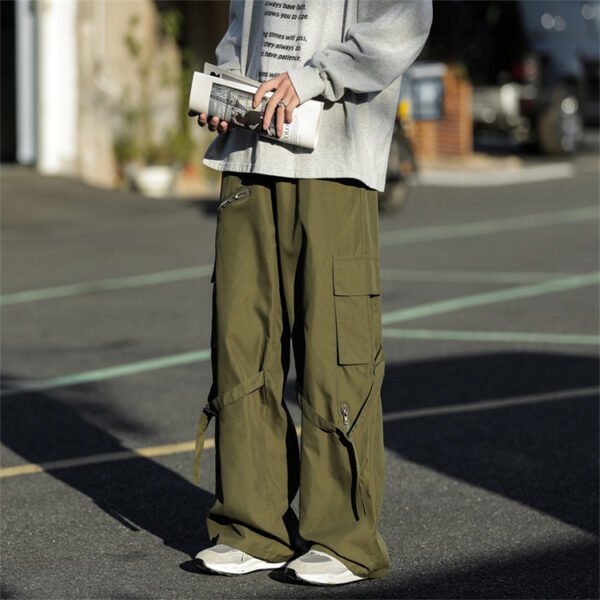
The supplied image clearly shows large cargo pockets layered over the outer legs, creating raised and recessed zones. Any print crossing those areas may split at pocket edges, lose registration, or become visually crowded when the pocket expands independently from the base panel.
Artwork should therefore be divided into body, pocket, and under-pocket zones, with tolerances documented for sewing movement. Buyers should decide whether continuity matters more than pocket visibility, because preserving a complete graphic can require simpler pocket shapes or a deliberately segmented composition.
Folds and Stacking Affect Readability
The full-length legs gather toward the footwear, while the relaxed cut creates folds through the thigh and calf. These folds compress lines and interrupt small details, especially when the wearer moves. The image supports using broad shapes, controlled spacing, and placement away from high-collapse zones.
During development, VeeWen can review the graphic on a dressed form or worn sample at standing and moving positions. This workflow exposes whether the print remains legible when fabric hangs naturally, rather than relying on a flat table view that hides volume and tension.
Color Blocking Can Organize the Artwork
The visible black trouser uses tonal changes and panel boundaries to create a structured surface despite its relaxed silhouette. Those boundaries can become useful artwork limits, separating front-leg graphics from pocket details and reducing the risk of uncontrolled visual overlap across construction lines.
The source wording also identifies a multi-color direction, but the exact palette is not supplied. Buyers should approve a color map with contrast priorities, print method, and shade references, then check whether each color remains distinct against the confirmed fabric before proceeding.
VeeWen Workflow for Placement Control
VeeWen's product-development workflow should begin with a graded pattern, construction map, and artwork overlay built around this cargo silhouette. The key deliverable is not a generic tech pack, but a size-by-size placement plan identifying panel ownership, seam clearances, pocket relationships, and tolerance limits.
Once the placement logic is documented, the buyer can review a development sample against the overlay and mark corrections by zone. The MOQ: 100 pieces per style applies after approval, while artwork scale, print behavior, and final color execution remain development decisions.
Approval Checkpoint Before Production
The approval decision should focus on the largest and smallest requested sizes first, because those extremes reveal whether artwork scale and negative space survive grading. Review front, side, seated, and walking views, paying special attention to pockets, lower-leg folds, and hanging details.
Approve production only when the placement map, print boundaries, color references, and tolerance allowances are mutually aligned. If the artwork becomes crowded or distorted, buyers should choose between reducing detail, relocating graphics, simplifying pockets, or accepting intentional segmentation before final sign-off.
Buyer Questions
Can the artwork cross the cargo pockets?
It can be evaluated, but pocket expansion and seam movement may interrupt registration; approve crossing only after a construction-aware placement sample demonstrates acceptable continuity.
Which sizes should receive the first placement review?
Review the smallest and largest requested sizes first, then inspect intermediate grading to confirm artwork scale, spacing, and landmark alignment remain commercially consistent.
Is the fabric composition confirmed?
No. The source wording indicates heavyweight construction, but fiber content, weave, finished GSM, and print compatibility require confirmation through the development specification.
What is the minimum order quantity?
The commercial minimum is MOQ: 100 pieces per style, subject to approved specifications, artwork, color references, and the final production-ready development package.
Approve the Cargo Placement Map
Send the target size range, artwork files, pocket pattern, and color references for a placement review that resolves grading, interruption, and readability decisions before production approval.


Reviews
There are no reviews yet.