



This custom graphic pullover hoodie is developed around print placement across a size range, keeping a large back composition centered, balanced, and protected from hood, seam, and rib interference.
The Back Graphic Defines the Product
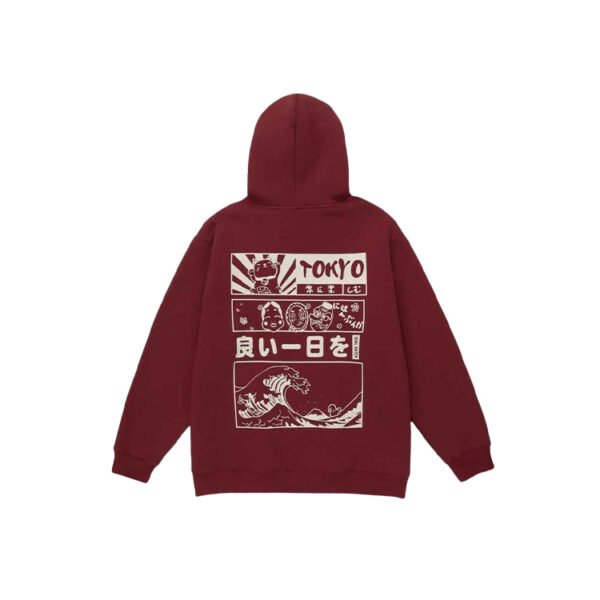
The supplied image presents a deep maroon pullover hoodie with one dominant cream graphic centered on the back. Its framed panels, lettering, and illustrated elements create hard visual edges, making placement measurable rather than dependent on general impressions.
Because the graphic occupies a substantial portion of the back, small shifts can change the design's balance. The development brief should therefore define centerline, top offset, total print height, total print width, and clearance from hood and bottom band.
Placement Must Follow the Size Range
A single artwork dimension cannot automatically suit every hoodie size. Larger bodies may need proportionate scaling or adjusted offsets, while smaller sizes can appear crowded if the same graphic remains oversized. Each graded size needs its own placement review against the back panel.
The buyer should compare the graphic's visual center with the garment center, not simply measure from one shoulder. Check the hood seam, armhole boundaries, side seams, and ribbed bottom band so the artwork remains balanced when the hoodie is worn.
Framed Artwork Creates Inspection Anchors
The cream design contains several rectangular and horizontal divisions that provide practical inspection anchors. Their edges can be measured from the center back and neckline, helping teams identify rotation, lateral drift, uneven margins, or inconsistent print height during sample and production review.
Those anchors also expose trade-offs. A tightly centered print may approach the hood or rib area, while generous clearance can reduce visual impact. The approved placement should reflect the intended hierarchy between graphic presence, garment proportions, and comfortable construction margins.
Print Area and Garment Construction
The hoodie structure surrounds the print with a hood above, sleeves at both sides, and a ribbed bottom band below. These components can distort perception when the garment is laid flat, so placement should be checked both flat and on a representative body form.
Confirm that the print does not cross hood attachment seams, sit too close to the neckline, or visually collide with the lower rib. Also review stretch, folding, and recovery around the back panel before approving the print location for production.
VeeWen Workflow Connection
VeeWen's product-development workflow can translate the image into a size-specific placement matrix: define the artwork file, map centerline and offsets, apply graded measurements, review physical samples, and record the approved dimensions for each required size.
This connects creative approval to manufacturing control. The buyer receives a practical checkpoint for artwork scale and position, while production receives measurable instructions that reduce ambiguity when the same hoodie style moves from sample review toward the commercial order.
Buyer Approval Gate
Approve this hoodie only after reviewing every required size on a flat garment and, where possible, on-body. Confirm graphic centering, panel proportions, hood clearance, bottom-band clearance, print edges, and the relationship between artwork scale and wearer silhouette.
The final approval record should identify the artwork version, print dimensions, placement coordinates, and acceptable visual tolerances. Any unconfirmed fabric or print performance detail should remain open until documented, rather than being treated as established by the image.
Buyer Questions
What is the main development control for this hoodie?
The main control is a size-specific placement matrix that keeps the large back graphic centered and balanced against each hoodie size's construction.
Does the image verify the printing method?
No. The image confirms a contrasting back graphic, but digital, screen, transfer, or other print methods require confirmation from technical source information.
What should be measured on each size?
Measure graphic width, height, centerline, top offset, side margins, hood clearance, seam clearance, and bottom-band clearance for every approved size.
What is the commercial minimum?
The commercial minimum is MOQ: 100 pieces per style, subject to confirmed artwork, specifications, approved samples, and final production requirements.
Approve the Placement Matrix
Share your artwork file, size range, and intended print hierarchy with VeeWen. We will map placement dimensions, review sample balance, and prepare approval checkpoints before production begins for your team.


Reviews
There are no reviews yet.