

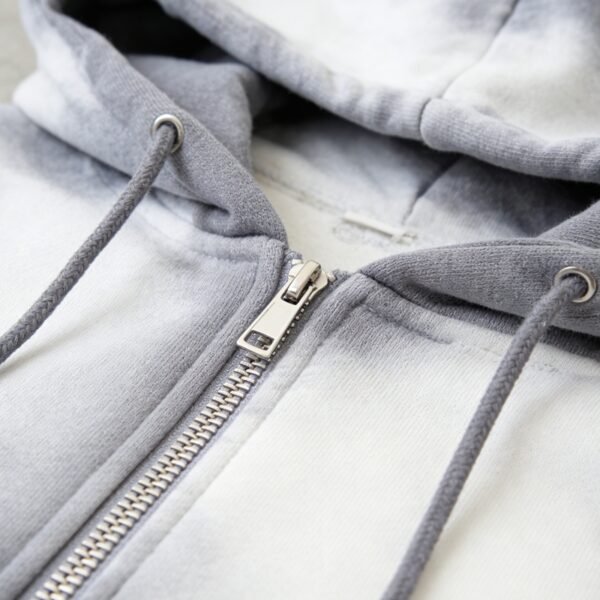
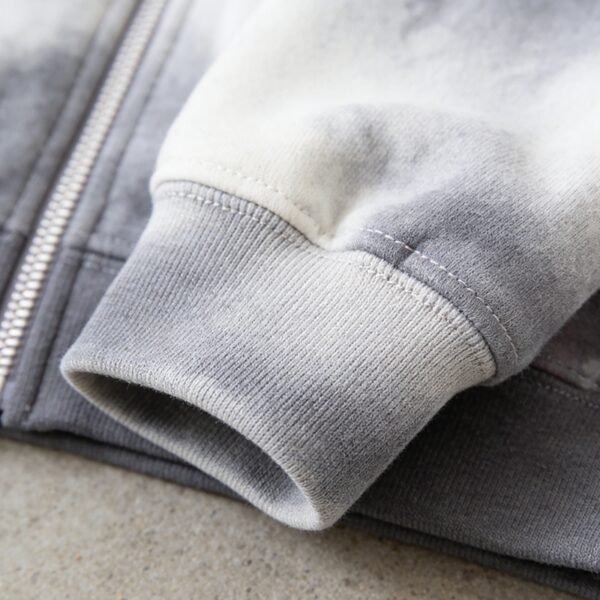

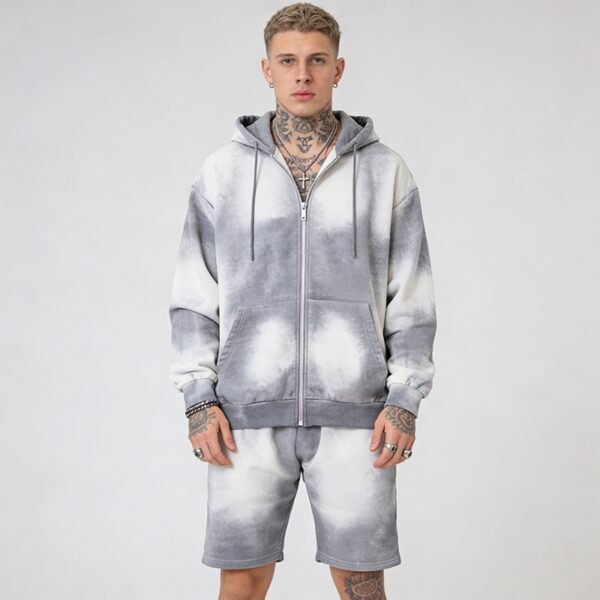
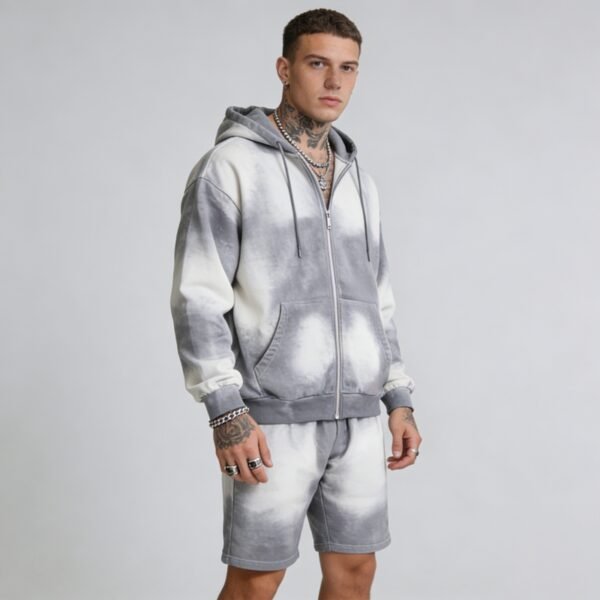
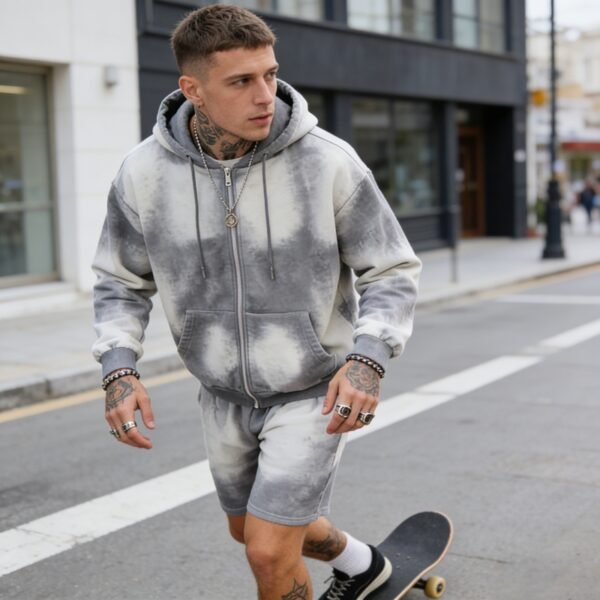


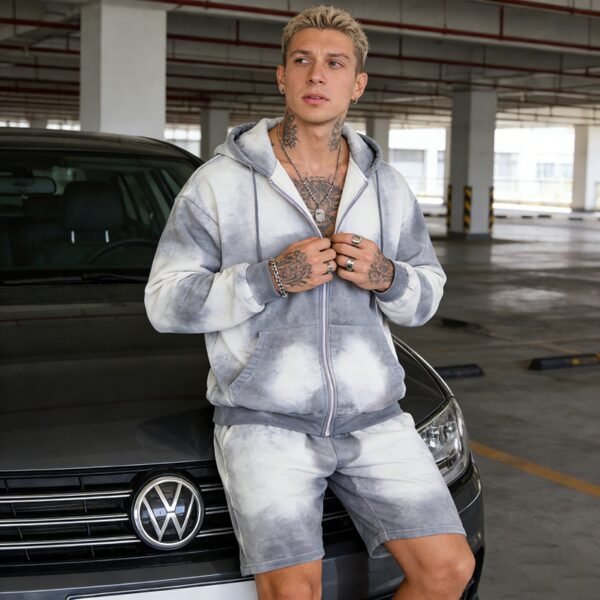



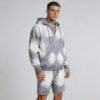




This custom men's tracksuit is built around seam-bulk management at high-layer intersections, where washed coloration makes construction changes easy to see. The supplied image shows a zip hoodie and matching shorts with hood, pocket, ribbed edges, gathered waistband, and tonal spray variation across both pieces.
Why Seam Bulk Shapes Washed Sets
Acid-wash coloration naturally highlights ridges, depressions, and folded areas, so seam thickness becomes part of the visible design. In the image, the hoodie pocket, hood join, cuffs, hem, and shorts waistband each create places where surface tone can change.
If allowances stack excessively, the garment may feel stiff and show darker or lighter bands after washing. If reduced too far, edges may lose stability. Development should balance comfort, seam security, wash appearance, and consistent bulk across both matching pieces.
Reading the Supplied Set Evidence
The supplied image presents a light gray hoodie and shorts laid flat, with tonal spray variation crossing sleeves, body panels, pocket edges, and leg openings. The broad color fields make seam placement visually legible, especially where folded construction interrupts the wash pattern.
The hoodie shows a front zipper, drawcord hood, kangaroo pocket, ribbed cuffs, and ribbed hem. The shorts show a gathered elastic waistband and relaxed legs. Together, these features create multiple layered intersections requiring one coordinated construction and finishing plan.
Hoodie Intersection Planning
The hood attachment, shoulder seam, neckline, zipper tape, and front pocket all influence local thickness around the upper body. Their order of assembly should be planned so seam allowances do not accumulate beneath the collar, zipper, or pocket corners.
A relaxed hoodie can accommodate some interior structure, but excessive bulk may change drape and make the washed surface look patchy. Prototype review should inspect the garment flat and worn, checking collar comfort, pocket flexibility, zipper smoothness, and wash contrast around joins.
Shorts and Waistband Balance
The shorts introduce a different bulk problem: elastic, folded waistband fabric, drawcord channels if used, and pocket or side-seam layers converge near the waist. The image visibly shows gathering, so waistband depth and elastic distribution will affect both comfort and surface consistency.
Matching the hoodie does not require identical construction, but the set should share a deliberate bulk language. VeeWen should compare waistband recovery, leg-opening behavior, seam flattening, and wash intensity against the hoodie before approving the complete coordinated look.
VeeWen Development Workflow Checkpoint
VeeWen should document seam allowances, overlock or coverstitch requirements, pocket-layer order, rib attachment, waistband fold, elastic width, and wash sequence assumptions in the set's development file. The source image guides visual direction, while measurable construction decisions control repeatability.
The buyer should review a joined hoodie-and-shorts sample after the chosen wash process, then assess bulk at every high-layer intersection. Approval should record accepted variation limits, because the wash effect and construction thickness will jointly define the finished appearance.
Buyer Approval and Trade-Offs
Thinner seam packages can improve softness and reduce stiffness, but may require stronger edge control or different stitch planning. Heavier construction can feel substantial and durable, yet it may exaggerate tonal ridges and restrict drape after washing.
Approve this set when pocket, hood, cuff, hem, waistband, and leg-opening intersections feel balanced and appear intentional. The final checkpoint is coordinated comfort and surface consistency across both garments, followed by confirmation of the MOQ: 100 pieces per style.
Buyer Questions
Which seam areas need the earliest review?
Review the hood join, zipper edge, kangaroo pocket corners, ribbed cuffs, hem, and elastic waistband first because these areas visibly combine multiple fabric layers.
Does the image verify a specific wash recipe?
No. It shows gray and off-white tonal variation, but the exact dye, spray, wash sequence, abrasion level, and repeatability requirements require technical confirmation.
How should the matching pieces be approved?
Approve the hoodie and shorts together after washing, comparing seam bulk, surface variation, waistband recovery, pocket behavior, and overall tonal balance across the complete set.
What is the minimum order for this tracksuit?
The commercial minimum is MOQ: 100 pieces per style, with production details, wash standards, measurements, and samples approved before order confirmation.
Approve the Washed Set Construction
Share your target handfeel, wash direction, size range, and artwork or label requirements with VeeWen for a coordinated seam-bulk review before confirming MOQ: 100 pieces per style.



Reviews
There are no reviews yet.