
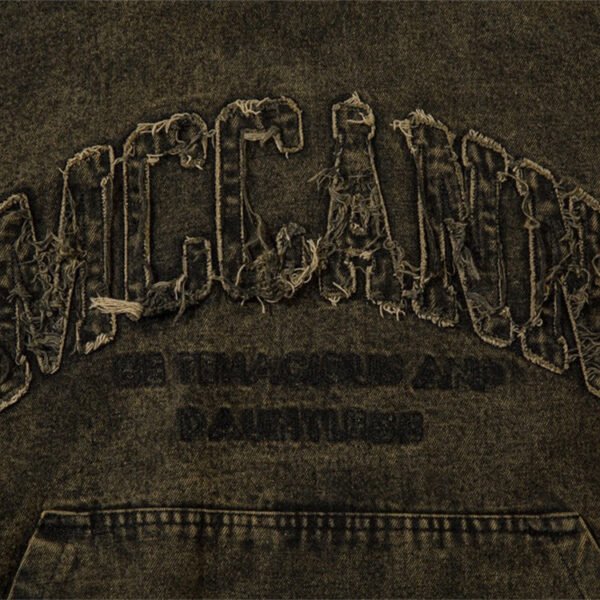


This washed pullover hoodie is developed around embellishment weight: layered pockets, sleeve utility detailing, and surface variation must remain visually purposeful without pulling the relaxed garment out of balance.
Visual Evidence Defines the Weight Distribution
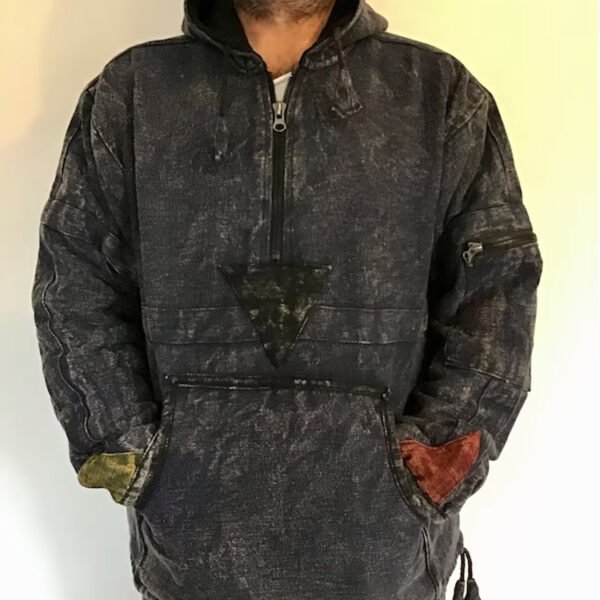
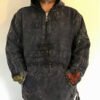
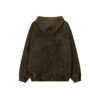
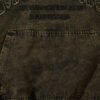
The supplied image shows a dark washed pullover hoodie with tonal variation across the body, a large kangaroo pocket, and layered sleeve utility detailing. Muted contrasting pocket openings add visual emphasis, making embellishment balance more important than a plain sweatshirt treatment.
Each added layer can influence drape through mass, stiffness, seam density, or wash response. The lower-front pocket already concentrates material near the abdomen, while the sleeve pocket introduces a separate weight point that must be coordinated rather than developed independently.
Pocket Layers Change Garment Drape
A kangaroo pocket can pull the front downward when its fabric, lining, reinforcement, or hardware becomes heavier than the surrounding body. The visible image makes this risk practical: the pocket is broad, central, and large enough to affect how the hoodie hangs during movement.
Development should evaluate pocket entry construction, layer count, and reinforcement against the confirmed base fabric. Reducing unnecessary overlap may protect softness, while carefully placed support can preserve shape around openings without creating a rigid panel across the lower front.
Sleeve Utility Detail Needs Counterbalance
The visible sleeve zip pocket adds a concentrated detail point on one arm, with adjacent panel lines increasing local construction density. If its components become too heavy, the sleeve may rotate, collapse unevenly, or feel disconnected from the relaxed body.
Balance does not require identical decoration on both sides; it requires controlled behavior during wear. Compare sleeve mobility, resting position, and cuff alignment with the pocket empty and filled, then adjust backing, zipper choice, or panel layering as needed.
Wash Effects Multiply Construction Variables
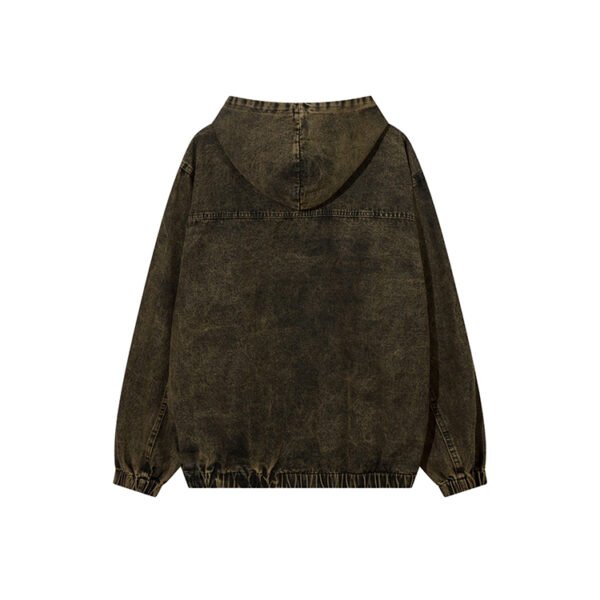
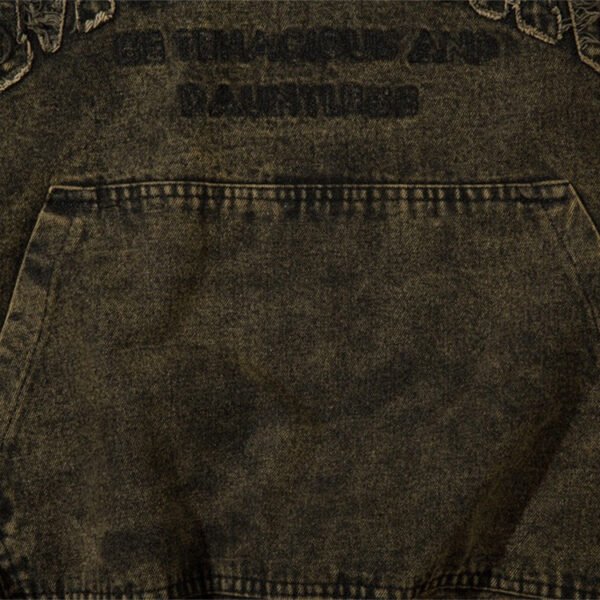
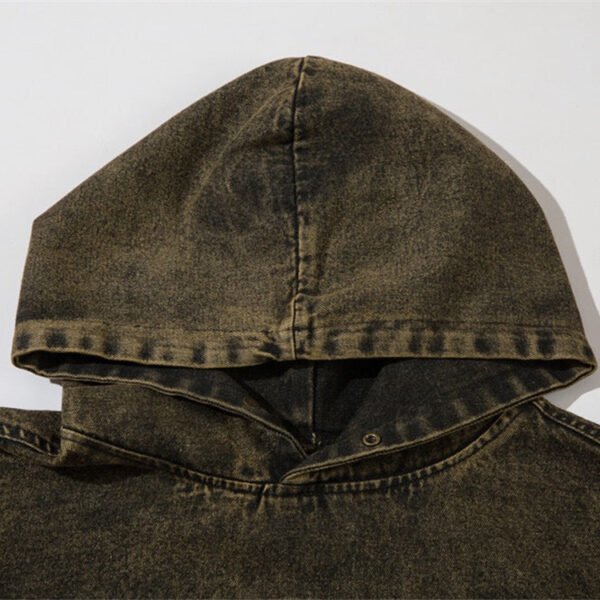
The charcoal surface appears irregularly washed, so the finish itself becomes part of the product argument. Wash exposure can alter softness, shrinkage, seam definition, and contrast between body panels, potentially changing how embellishment weight is perceived after finishing.
The buyer should assess decoration and wash together because a balanced pre-wash sample may become stiffer or more uneven afterward. Confirm the intended wash route, inspect pocket edges after treatment, and document acceptable tonal variation before locking the development direction.
VeeWen Workflow Checkpoint
VeeWen's workflow should organize this style around a weighted embellishment review: map every pocket layer, zipper, backing, panel, and wash effect before the prototype is approved. The purpose is to understand how each addition affects movement and visual balance.
At sample review, compare the hoodie on a hanger, flat table, and moving wearer. Check whether the kangaroo pocket pulls the body, whether the sleeve pocket twists the arm, and whether the washed finish supports the intended relaxed streetwear presentation.
Approve the Drape, Then Lock Details
The buyer's approval checkpoint is not simply whether the hoodie looks detailed. Confirm that embellishment remains proportionate when the garment is worn, lifted, seated, and layered, with pocket openings comfortable and the body falling without localized drag.
If the lower front feels heavy, first revise layer count or backing before changing the silhouette. If the sleeve rotates, rebalance its components. Finalize the decoration map only when appearance, movement, and wash response agree with the intended collection use.
Buyer Questions
Which embellishments most affect hoodie drape?
Pocket layers, heavy backing, metal hardware, dense patches, and thick trims can add localized mass. Evaluate them together with the confirmed base fabric and finishing route.
Why review pockets after the wash treatment?
Washing can change softness, shrinkage, seam definition, and contrast. Those changes may increase perceived weight or distort pocket edges, so post-wash review is essential.
Can a detailed hoodie still keep a relaxed fit?
Yes, when components are distributed and supported carefully. Control layer count, backing stiffness, hardware weight, and sleeve balance so decoration does not overpower the silhouette.
What is the commercial minimum for this style?
The exact commercial minimum is MOQ: 100 pieces per style, subject to approved specifications, sampling decisions, and final production arrangements.
Approve the Embellishment Balance
Share the target wash appearance, pocket map, artwork, hardware preferences, and fit intent so VeeWen can evaluate weight distribution before finalizing the development sample.



Reviews
There are no reviews yet.