
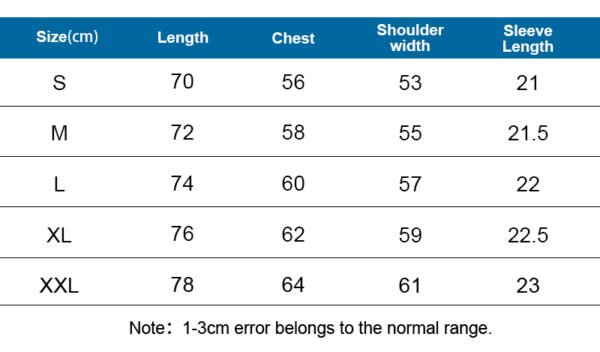
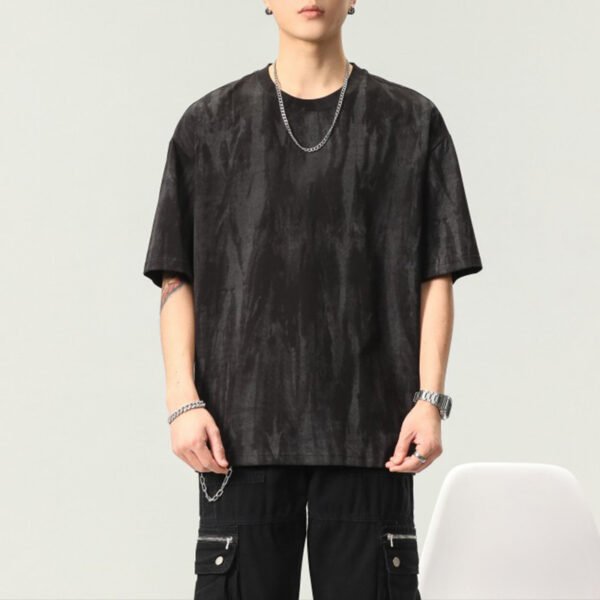
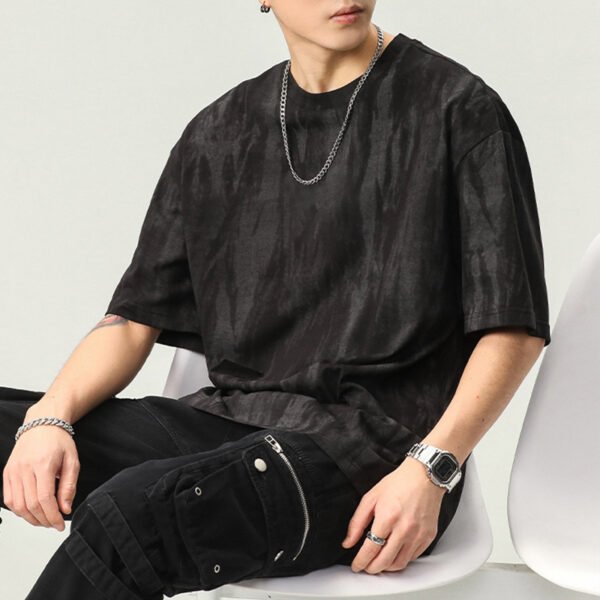
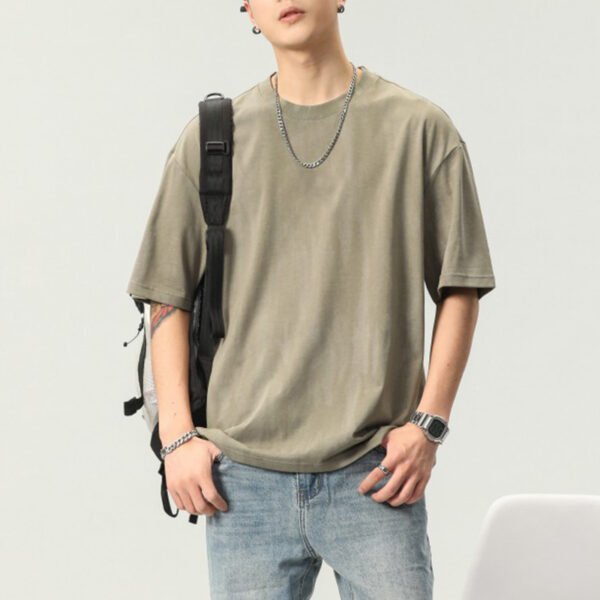
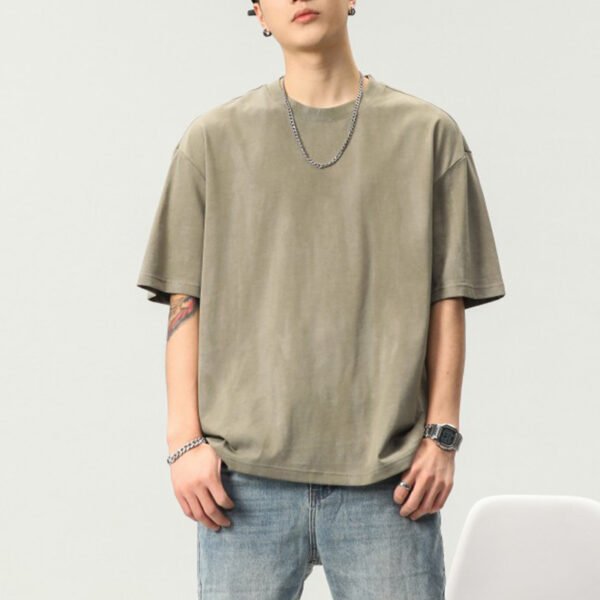
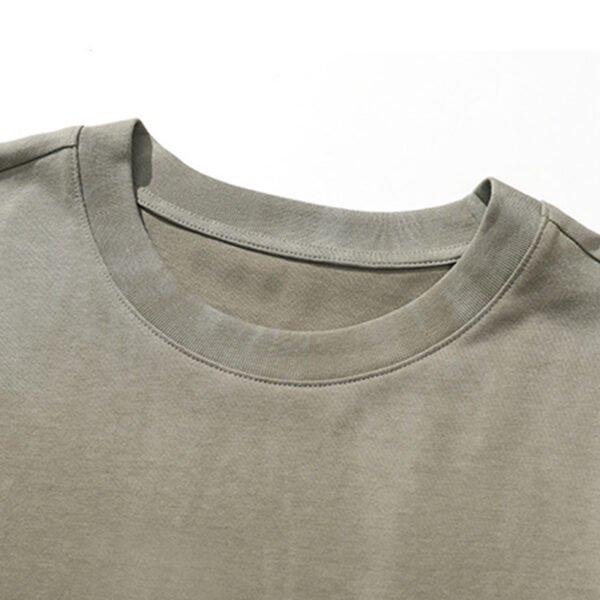
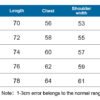
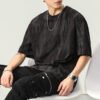
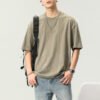
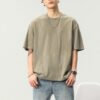
This custom men's longline T-shirt is developed around hem level as a visible fit decision. The supplied chart shows length, chest, shoulder, and sleeve measurements grading together, giving VeeWen a measurable basis for controlling drape, logo position, and proportion from S through XXL.
Hem Level as the Primary Fit Control
The defining development question is where the hem sits relative to the chest and shoulder width. The supplied chart increases length by two centimeters per size, creating a consistent longline direction instead of allowing the body to become disproportionately short or square.
That progression must be tested on a real graded set because measurements alone cannot predict hang. Fabric weight, shrinkage, sewing tension, and hem construction can pull the lower edge differently, changing whether the shirt reads fluid, straight, or overly extended.
Reading the Supplied Measurement Evidence
The chart records S through XXL, with lengths from 70 to 78 centimeters and chests from 56 to 64 centimeters. Shoulder widths move from 53 to 61 centimeters, while sleeves move from 21 to 23 centimeters, indicating coordinated grading rather than isolated length changes.
These figures are source references, not final VeeWen specifications. The buyer should confirm whether chest values represent a flat garment measurement, determine the intended body ease, and approve tolerance rules before the pattern is released for sampling.
Garment Hang and Surface Behavior
A longline T-shirt depends on uninterrupted vertical hang, so the lower body should remain visually stable when worn, layered, or photographed. The plain solid-color reference makes twisting, side imbalance, and hem waviness easier to see during fitting and inspection.
The source wording suggests an ice-silk-like cotton direction, but the actual fabric hand and recovery are unverified. A softer knit may create fluid movement, while a firmer structure may hold a cleaner edge; the commercial choice should follow the desired silhouette.
Logo Placement Around the Lower Body
Because the reference body is visually simple, logo placement can reinforce or disrupt the intended hem line. Artwork positioned too close to the lower edge may exaggerate length, while oversized chest graphics can visually shorten the body by concentrating attention upward.
VeeWen should map artwork boundaries against the approved pattern, not against a generic measurement sheet. The buyer should review placement on front, back, and side views, checking how grading changes the distance between the graphic, hem, and adjacent seams.
VeeWen Development Workflow for This Argument
VeeWen can translate the hem thesis into a development sequence by locking the base block, recording the reference measurements, and reviewing a physical sample on the intended size model. The next checkpoint is a graded review focused specifically on side balance and lower-edge behavior.
Once the hang is approved, the team can freeze artwork zones, labels, neckline details, and sewing instructions around that block. This keeps visual customization subordinate to the approved proportion, allowing later color or graphic decisions without reopening the core fit argument.
Approval Checkpoint Before Production Release
The buyer should approve a fit sample with the hem exposed and the shirt worn untucked, layered, and in motion. Review should cover front length, side drop, shoulder balance, sleeve position, and whether the lower edge stays level during ordinary movement.
Approval should be recorded by size, with any changes expressed as pattern or grading instructions rather than informal comments. Confirm composition, GSM, wash behavior, tolerances, artwork scale, and labeling after the silhouette is accepted and before commercial production planning.
Buyer Questions
What makes this T-shirt different from a standard basic?
Its development centers on the measured relationship between body length, chest, and shoulders, making controlled longline hang the commercial feature rather than decoration alone.
Are the chart measurements final production specifications?
No. They are source references showing S-XXL progression. VeeWen should verify measurement method, ease, tolerances, shrinkage, and grading through approved development samples.
Can artwork be added without changing the fit argument?
Yes, if artwork zones are mapped after the base block is approved. Placement, scale, and hem clearance should then be reviewed across the complete size range.
What is the minimum order for this style?
The commercial minimum is MOQ: 100 pieces per style. Final material, color, labeling, artwork, and size assortment should be confirmed during development.
Approve the Hem Direction
Send your target size range, artwork intentions, and fabric expectations to begin a controlled longline T-shirt review with VeeWen. The first decision is the graded hem and hang, supported by MOQ: 100 pieces per style.



Reviews
There are no reviews yet.