
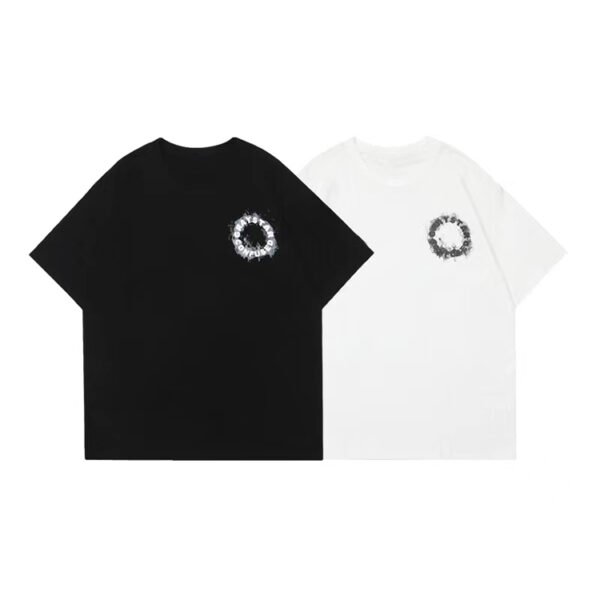


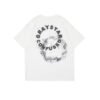


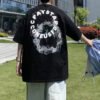
This men's loose graphic tee depends on a disciplined neckline to make relaxed volume look intentional. The supplied image shows a compact crew collar against broad shoulders, short sleeves, and a clean hanging body. VeeWen can develop the collar roll and stand height as the defining approval checkpoint.
Neckline Stability Defines the Relaxed Silhouette
A loose tee carries more visual width around the shoulders and chest, so a low or unstable collar can make the garment look stretched. The image's broad body makes stand height especially important for preserving a deliberate, structured entry point.
The collar should be evaluated flat and on-body, because roll changes when the garment hangs, is worn, or is folded. VeeWen's development checkpoint should record neckline circumference, rib width, seam allowance, and recovery behavior against the approved measurement sheet.
Collar Roll Controls Visual Weight
Collar roll describes how the rib turns from the neckline seam toward the wearer's neck. Too much roll can create a heavy, tubular appearance, while too little leaves the edge flat. This visual balance matters because the chest graphic begins near the collar zone.
A controlled roll can keep the neckline crisp without making the tee formal. The first sample should test rib tension against the loose body, then compare front appearance, back neck comfort, and collar symmetry after ordinary handling before artwork placement is finalized.
Stand Height Protects the Graphic Relationship
The supplied image places a small circular graphic beneath the crew neckline, leaving noticeable negative space between collar and print. If the collar stands too high, it crowds that artwork; if it collapses, the upper chest can appear visually empty and unbalanced.
VeeWen should lock the collar-to-artwork distance through a graded placement rule rather than relying on one-size positioning. Buyers should review the smallest and largest sizes together, checking whether stand height and graphic spacing retain the same intended relationship.
Loose Sleeves Need a Stable Neck Anchor
The image shows short sleeves extending from a broad shoulder line, reinforcing a casual, loose proportion. Such sleeves can amplify neckline movement when the wearer raises the arms. A stable collar anchor helps the garment recover visually after movement instead of appearing twisted.
Development should therefore assess collar behavior during arm elevation, forward reach, and relaxed standing. This is not a general fit review; it specifically tests whether stand height supports the sleeve and shoulder geometry without restricting comfort or changing the intended loose appearance.
Black and White Reveal Construction Differences
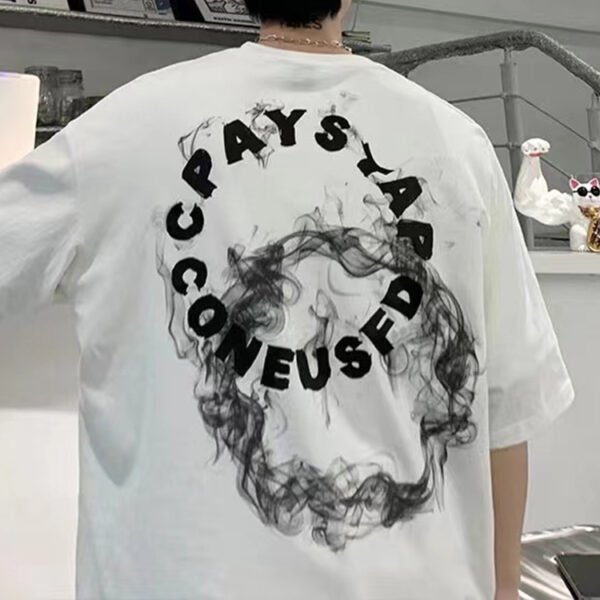
The paired black and white colorways provide a useful visual comparison for neckline review. On black, the collar edge can read as a sharp dark contour; on white, subtle roll, waviness, or seam distortion may become more noticeable under the same lighting.
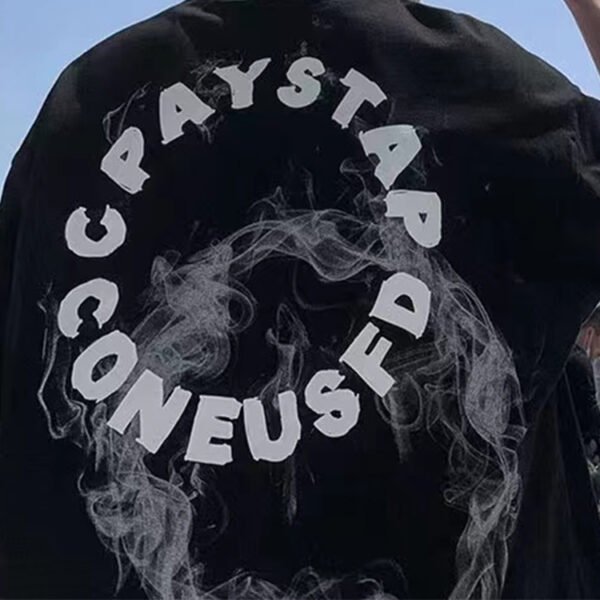
The sample process should inspect both colors using identical measurements and finishing conditions. Buyers should approve whether rib contrast, thread appearance, and collar definition remain consistent, especially where the distressed circular print creates additional attention near the neckline.
VeeWen Workflow Turns the Axis Into Approval Data
For this style, VeeWen's product-development workflow should begin with a collar measurement block tied to the loose body pattern, then translate that block into a sample with documented rib width, stand height, and roll intent.
After fitting, the buyer can approve the neckline through side-by-side size checks and color review before the order is released. The commercial checkpoint is clear: confirm the collar standard first, then approve artwork placement, grading, and MOQ: 100 pieces per style.
Buyer Questions
What should buyers approve first on this tee?
Approve neckline circumference, rib width, collar stand height, and roll appearance first, because these measurements establish whether the loose body looks intentional across sizes.
Is the heavyweight cotton composition verified?
No. The source wording references heavyweight cotton, but no composition percentage or GSM is supplied. VeeWen should confirm fiber content, weight, and hand feel during sampling.
Can the circular chest graphic be repositioned?
Yes, placement can be developed, but maintain a controlled collar-to-artwork distance. Review the smallest and largest sizes to preserve consistent negative space and visual balance.
What is the commercial minimum for this style?
The exact commercial minimum is MOQ: 100 pieces per style. Final color, size, artwork, and packaging requirements should be confirmed before production planning.
Approve the Collar Standard
Send the preferred neckline measurements, rib reference, artwork file, color direction, and size range so VeeWen can prepare a focused development review for MOQ: 100 pieces per style.


Reviews
There are no reviews yet.