

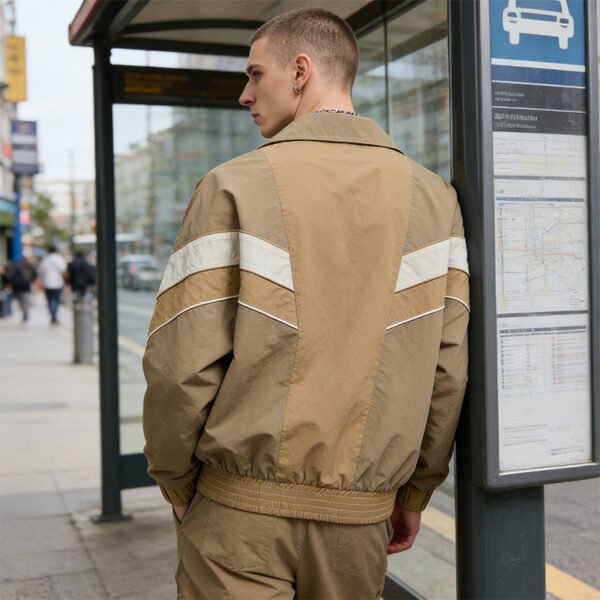
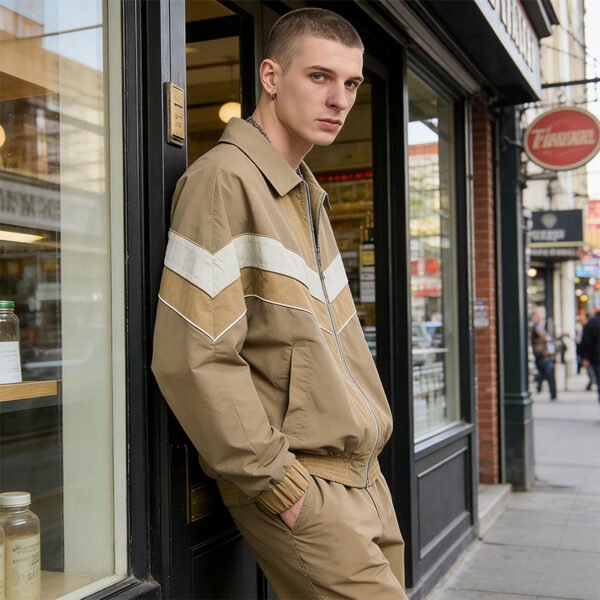






This custom jacket development record centers on patch placement and stitch containment: the visual design uses layered contrast bands across the upper sleeve and chest, so seam order, edge control, and secure thread paths determine whether the statement remains clean through sampling and production.
Patch Map Controls the Visual Identity
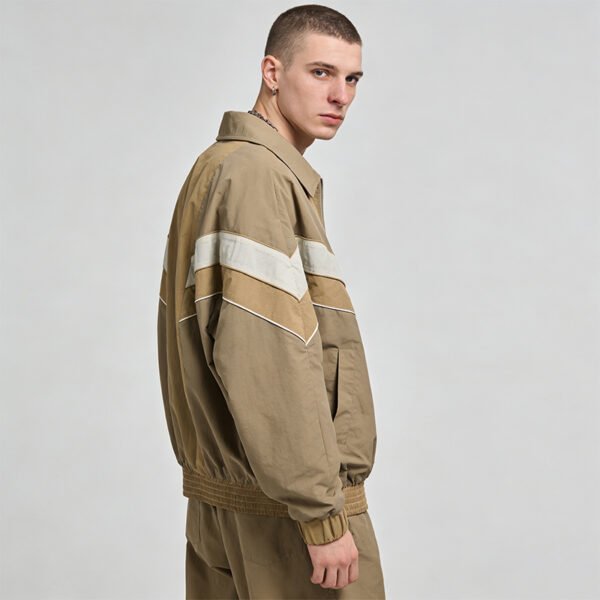
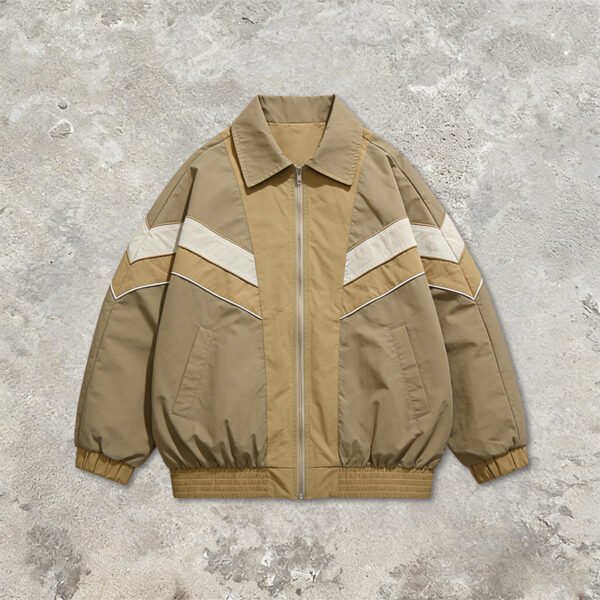
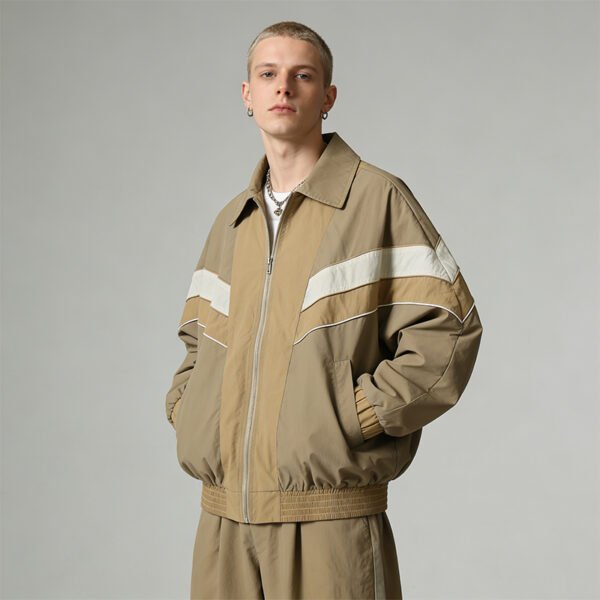
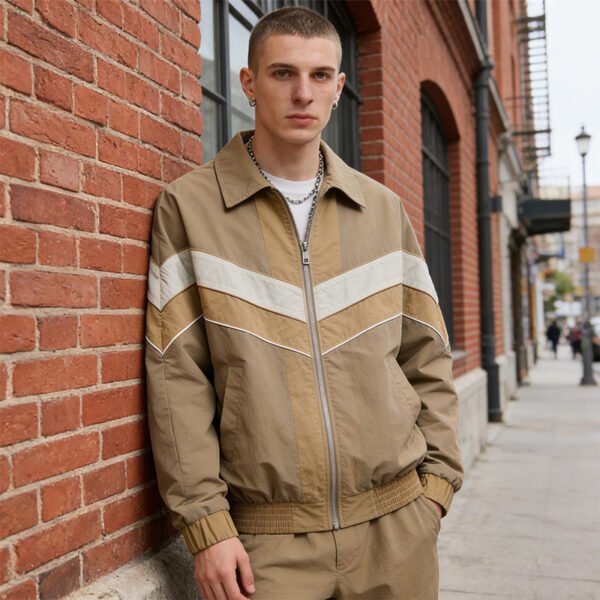
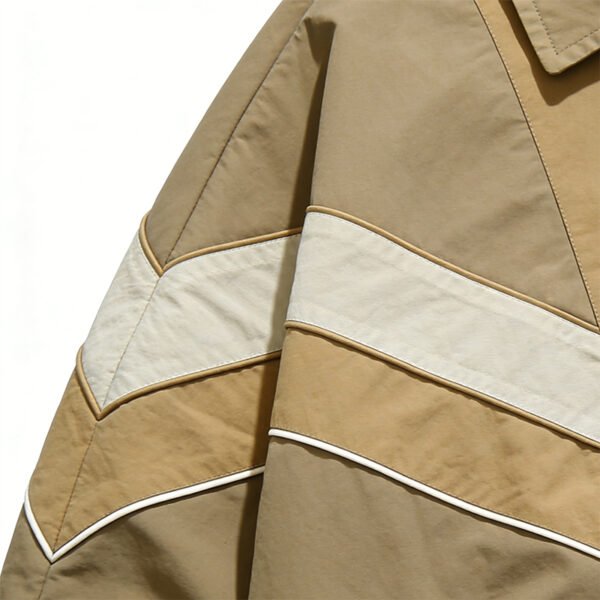
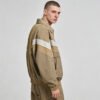
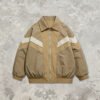
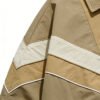
The main image shows a taupe jacket interrupted by a wide cream band and a darker taupe band across the upper sleeve and chest. Because these panels define recognition, the pattern must lock their widths, angles, and meeting points before cutting begins.
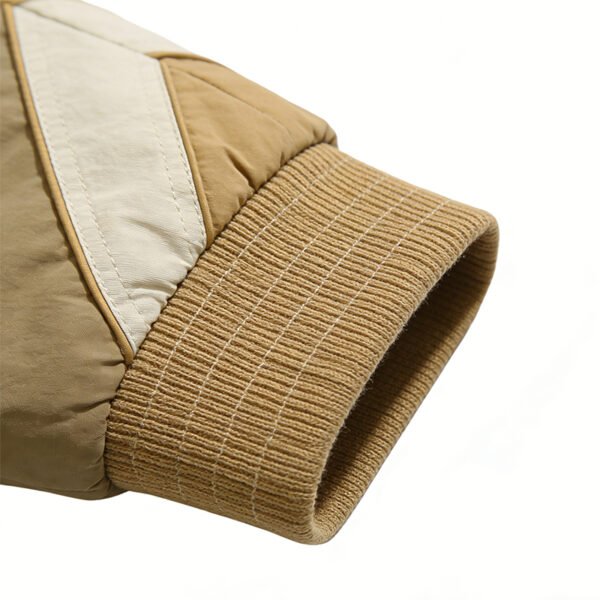
The lower band terminates in a pointed shape near the sleeve front, creating a visible registration challenge at the overlap. A small shift in panel length or seam allowance could distort the point, so the pattern should include notches and measured checkpoints.
Stitch Containment Protects Panel Edges
Patchwork introduces exposed perimeter seams, and the supplied image shows narrow light-colored lines bordering the contrast sections. The development decision is whether those edges use enclosed construction, controlled topstitching, or another approved treatment suited to the selected shell.
The containment method affects bulk, flexibility, and visual sharpness. Enclosing every edge may increase thickness at intersections, while minimal stitching may allow curling or uneven tension. Sampling should therefore compare edge stability with the intended lightweight hand and movement.
Collar and Openings Need Compatible Tension
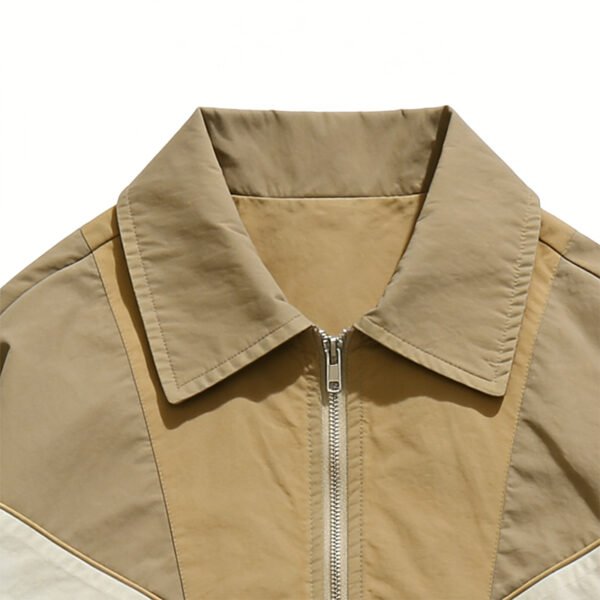
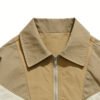
The raised collar, gathered cuffs, and gathered hem create a compact blouson frame around the patchwork body. Their tension must remain visually balanced with the sleeve bands; excessive gathering can pull the patch lines upward and change the approved proportion.
The image also shows a front opening and practical pocket areas integrated into the lower body. Pocket entry placement, zipper or snap selection, and reinforcement remain To Confirm, because each choice can add stress near the lower patch termination.
VeeWen Workflow Turns the Map into Checkpoints
VeeWen can translate the approved visual into a panel map that records color blocks, seam allowances, notches, and stitch visibility for the sample room. The useful checkpoint is not a generic approval; it is confirmation that every band intersection repeats from paper pattern to sewn shell.
During sample review, the buyer should inspect both sides of each visible junction, then mark any drift in width, angle, or edge tension. The approved comments can become a construction reference for the cut-and-sew team before the order advances at MOQ: 100 pieces per style.
Trade-Offs in Lightweight Shell Development
A lighter nylon reference may support easy layering and a crisp graphic surface, but lightweight fabric can reveal needle marks, seam rippling, or puckering around concentrated patch intersections. The final shell weight, backing, lining, and seam behavior must be selected through physical sample review.
More containment and reinforcement can improve durability at joins, yet may reduce drape or increase production complexity. The buyer should prioritize the intersections most exposed to movement, then decide where a simpler seam treatment preserves the silhouette without weakening the visual structure.
Approval Gate for Production Release
Before release, approve a physical sample against the supplied image for patch width, band angle, point alignment, collar proportion, and gathering density. These checks establish whether the jacket communicates the intended retro utility direction without relying on unverified performance claims.
The final technical pack should record confirmed shell details, component specifications, seam treatment, tolerance points, and artwork-free color references. Production approval should wait until the most visible sleeve and chest intersections remain stable after handling and the buyer accepts the agreed trade-offs.
Buyer Questions
What is the main development risk for this jacket?
The main risk is panel registration at the pointed sleeve-band junctions, where small cutting or sewing shifts can change the approved geometry and weaken the design's visual discipline.
Can the patchwork colors be changed?
Yes, color placement can be developed through an approved panel map, but each substitution should be checked for contrast, seam visibility, and consistent registration across the front and sleeves.
What material information is confirmed?
The source title identifies nylon, while the supplied evidence does not verify fiber percentage, GSM, lining, coating, breathability, or other performance specifications. Those details require confirmation.
What is the minimum order quantity?
The commercial minimum is MOQ: 100 pieces per style. Final acceptance remains subject to the approved technical pack, sample checkpoints, component decisions, and purchase-order specifications.
Approve the Patchwork Construction Map
Send the target measurements, color references, and preferred closure details so VeeWen can develop the patch map, contain the critical seams, and prepare the sample approval checkpoints for MOQ: 100 pieces per style.


Reviews
There are no reviews yet.