
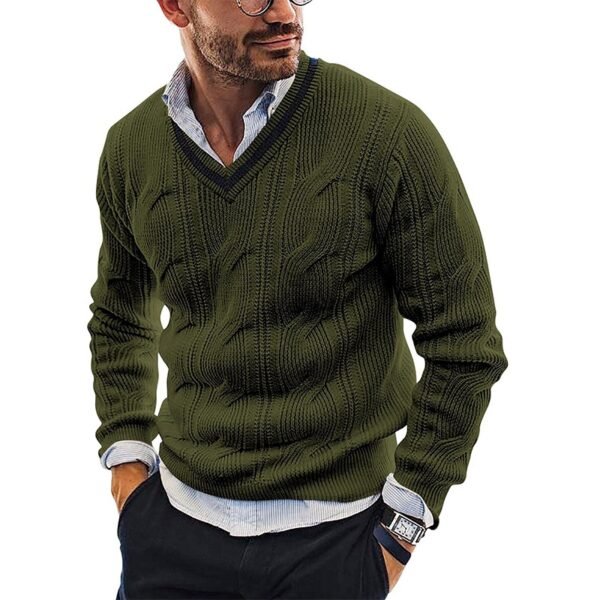


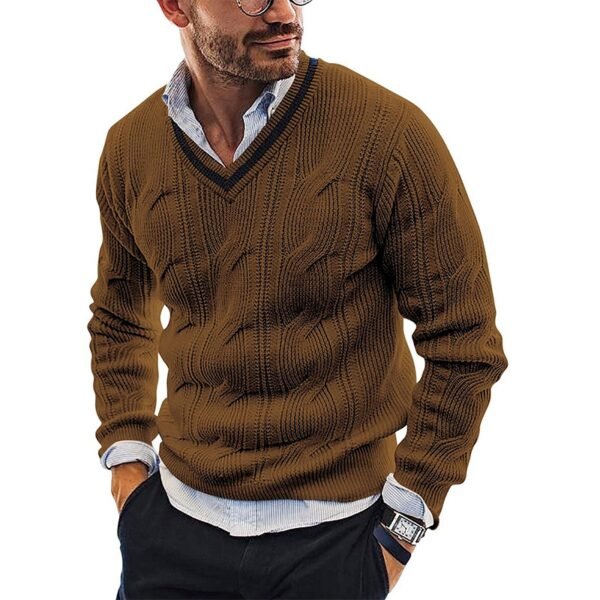


This men's V-neck sweater turns marker direction into a visible design control. Its olive cable surface, dark neckline, long sleeves, and ribbed boundaries require consistent vertical orientation, while the development target remains efficient material use and a controlled slim appearance.
Vertical Cable Rhythm Sets the Marker Direction
The supplied front view shows cable columns running predominantly from shoulder toward hem, creating a directional surface rather than an interchangeable texture. Marker planning should preserve that orientation across front, back, and sleeves so the finished sweater reads as one continuous visual system.
This direction creates a practical trade-off: rotating pieces may improve theoretical utilization, but it can reverse the cable flow or disturb sleeve-to-body continuity. The marker should therefore prioritize orientation-sensitive placement first, then measure the remaining consumption against the approved size range.
Material Consumption Requires Panel-Level Measurement
Because the cable texture appears raised and repetitive, consumption cannot be judged only by flat pattern area. Yarn behavior, knit structure, rib attachments, and orientation-sensitive panels should be measured together during development, with separate records for body, sleeve, neckline, cuff, and hem components.
A lower-consumption layout may reduce waste but can produce visibly inconsistent columns or tighter grading tolerance. The buyer should compare marker utilization with appearance at the largest and smallest sizes, confirming that efficiency does not create distortion around the V-neck or armhole.
V-Neck Geometry Changes Directional Risk
The V-neck interrupts the vertical field at the chest, while dark rib trim establishes a second directional boundary. Development should align the cable columns cleanly into the neckline transition and control the trim angle so the center point remains sharp, balanced, and repeatable.
The visual evidence also shows a shirt collar layered beneath the sweater, which changes how the opening is judged in styling. A deeper or wider V may improve layering room, but it increases the need to verify front balance, trim stability, and collar exposure together.
Sleeves Extend the Consumption Argument
Long sleeves visibly continue the textured structure from shoulder to cuff, making them important to both marker orientation and material planning. Sleeve pieces should maintain a coherent vertical flow while allowing the elbow and armhole shapes to grade without bunching or unexpected column breaks.
Narrower sleeves can support the slim visual direction and reduce material use, yet they may restrict layering or alter the cable scale through grading. Buyers should approve sleeve width, cuff depth, and directional continuity on a representative size before extending the specification to all sizes.
VeeWen Workflow Converts Evidence Into Controls
VeeWen's product-development workflow can translate this axis into a marked sample review: first annotate cable direction on the technical pack, then compare oriented panels, consumption estimates, and appearance across graded sizes before confirming the production marker.
The key checkpoint is not a generic sample approval. It is a joint review of the oriented marker, knit-panel map, neckline transition, and size-range photos, allowing revisions to happen while yarn, dimensions, and cutting instructions remain coordinated.
Approval Checkpoint: Efficiency With Visual Continuity
The buyer should request a development package showing the marker direction, panel consumption by size, and close views of the front cable-to-V-neck transition. These records make the manufacturing argument auditable without assuming unverified yarn content, GSM, or performance data.
Approve the style when the cable rhythm remains continuous, the neckline is centered, and consumption is acceptable against the commercial target. If those conditions conflict, decide whether visual orientation or material efficiency has priority before locking the size set and production instructions.
Buyer Questions
What material is this sweater made from?
The image confirms a knitted surface, but no fiber percentage, yarn count, or GSM is supplied. VeeWen should confirm composition and hand feel during material development.
Why does marker direction matter for knitwear?
Directional cable columns can appear reversed or misaligned when panels rotate. Preserving orientation protects visual continuity, although the approved layout may consume more material than unrestricted placement.
Can the V-neck be modified for layering?
Yes, the opening can be developed around the intended shirt exposure and trim width. Confirm the revised depth, center point, and collar interaction through a measured sample.
What is the minimum order quantity?
The commercial minimum is MOQ: 100 pieces per style. Final production remains subject to approved measurements, materials, color standards, construction details, and the confirmed development package.
Review the Directional Knit Development Pack
Send your target size range, yarn direction, and collection color references. VeeWen can organize the marker review, oriented sample checkpoints, and consumption discussion before production approval.


Reviews
There are no reviews yet.