


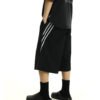


This custom short is developed around proportion control: a generous leg shape, extended hem, center drawcord, and directional graphics create a deliberate streetwear silhouette. The assigned shoulder-balance and sleeve-pitch axis is treated as a coordinated-set checkpoint, ensuring the shorts support the upper garment instead of overwhelming it visually.
Proportion Is the Primary Design Decision
The image presents a wide short that extends noticeably below the upper thigh, with side volume carried toward the hem. That proportion can create a strong relaxed attitude, but it also increases the importance of rise, inseam, and opening measurements.
A larger silhouette should be judged as a complete outfit relationship. If the accompanying top has broad shoulders or a dropped sleeve pitch, the shorts can reinforce the shape; if not, excessive lower-body volume may look disconnected.
Translating the Assigned Shoulder Axis
Shoulder balance and sleeve pitch are not shorts measurements, so the axis is applied through outfit coordination. The development review should compare the short's visual width and hem position against the selected top's shoulder line and sleeve angle.
This creates a practical approval method for buyers building a coordinated streetwear range. The shorts remain independently manufacturable, while the styling block records whether the lower silhouette complements, matches, or intentionally contrasts with the upper garment.
Graphic Pitch Controls Visual Movement
The black image shows pale diagonal motifs rising inward from the lower front areas, with an additional contrasting element visible on the side. Their angled direction adds movement and prevents the broad panels from reading as visually flat.
Placement should be measured from stable landmarks such as the side seam, hem, and front rise. A small shift can change symmetry, leg-length perception, and the relationship between both legs, making artwork positioning part of the fit approval.
Waist Adjustment Supports Range Testing
Two drawstring ends are visible at the center front, indicating an adjustable waist treatment suitable for a relaxed block. The image does not verify the waistband height, cord diameter, eyelet method, or internal finishing, so these remain development decisions.
During sampling, the waistband should be assessed at both relaxed and tightened settings. Buyers should check whether the gathered waist distorts the front rise, interrupts graphic alignment, or changes the intended balance between torso coverage and oversized lower volume.
VeeWen Workflow Checkpoint
VeeWen can translate this argument into a product-development sequence by locking the proportion block first, then mapping the graphic landmarks, and finally testing the short beside the target top. Each step isolates a different source of visual imbalance.
The approval package should record the chosen rise, inseam, leg opening, waistband behavior, and artwork offsets. For a coordinated range, the same review should include the top's shoulder balance and sleeve pitch before the buyer approves the final pattern direction.
Trade-Offs Before Bulk Approval
A generous cut offers visual presence and easier movement, yet it uses more panel area and can magnify inconsistency between sizes. Longer hems may strengthen the intended profile while reducing versatility for buyers seeking a shorter casual short.
The strongest commercial decision is therefore not simply selecting the largest block. Confirm the target wearer, complete-outfit balance, graphic tolerance, and grading behavior first, then approve the sample that preserves the visual argument across the size range.
Buyer Questions
Is the fabric confirmed as quick-drying polyester?
No. Polyester and quick-dry language appears in the source title, but exact composition, finishing method, and performance should be confirmed through development documentation.
Can the oversized proportion be adjusted?
Yes. Rise, inseam, leg opening, waistband dimensions, and grading can be developed as approval points, with the final block determined by the buyer's target silhouette.
Why review this short with a top?
The assigned axis concerns shoulder balance and sleeve pitch. Reviewing the complete outfit helps confirm that the substantial lower volume supports the intended upper-body proportion.
What is the minimum order quantity?
The exact commercial minimum is MOQ: 100 pieces per style. Final specifications, colorways, artwork, and approval requirements should be aligned before production commitment.
Approve the Proportion and Artwork Block
Send the target measurements, intended top reference, color direction, and artwork files so VeeWen can prepare a coordinated development review for this oversized short.


Reviews
There are no reviews yet.