


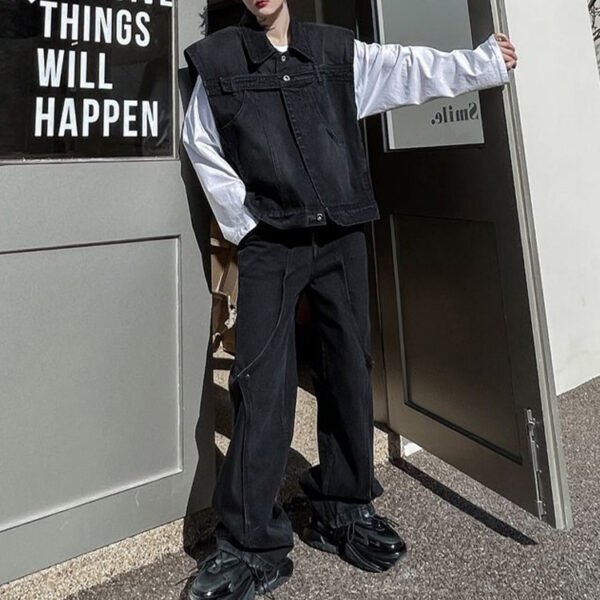




This custom men's jean develops oversized volume around a disciplined front opening. The supplied image shows a broad washed-blue body, generous legs, and a long hem over substantial footwear. VeeWen can use that visual balance to test zipper length, rise placement, and front-panel proportion before approval.
Front-Body Balance Starts at the Zipper
The image presents a wide, calm front surface rather than a hardware-led focal point. For an oversized jean, excessive zipper length can divide that surface, pull attention toward the fly, and make the rise appear visually narrow against the fuller legs.
VeeWen's development checkpoint should compare zipper lengths on the same front block, holding rise, waistband, and pocket geometry constant. The team can assess whether the opening supports dressing function while keeping the washed front visually continuous and proportionate.
Rise and Fly Extension Control the Visual Read
A longer zipper normally requires a longer fly extension, which can change the front rise angle and affect how the waistband meets the abdomen. On a generous jean block, that adjustment may create unwanted stacking or interrupt the intended relaxed fall.
Pattern review should therefore measure zipper tape, fly shield, button placement, and rise curve together. The supplied silhouette suggests volume is intentional, so the approval sample should confirm that the opening does not reduce comfort or distort the front balance.
Oversized Volume Needs Stable Hardware Placement
The photographed jeans carry broad leg volume from the upper thigh downward, with the front remaining visually open despite the relaxed scale. That combination makes zipper placement a structural coordination issue, not simply a trim-selection decision.
During product development, VeeWen can map the zipper against pocket bags, seam allowances, and waistband reinforcement before cutting the fit sample. This prevents hardware from drifting toward nearby construction lines and gives the buyer a clearer proportion comparison between sample revisions.
Wash Contrast Can Magnify Proportion Errors
The light-blue denim shows visible tonal variation across the front and legs. Such variation can emphasize seam direction, fly width, or uneven tension, making a zipper that is technically functional appear disproportionately prominent after washing or finishing.
The approved wash should be evaluated on a sewn sample with the final zipper specification. VeeWen's review should compare the front before and after treatment, checking whether shrinkage, shade movement, or localized abrasion changes the perceived relationship between opening and body width.
Hem Volume Completes the Front-Balance Argument
The image shows the jeans falling over dark, substantial footwear, with fabric gathering near the lower leg. That long, weighty hem reinforces the oversized concept and means the upper front should remain equally composed rather than becoming visually busy around the zipper.
A buyer fitting checkpoint should review the complete outfit proportion from waistband to shoe. VeeWen can record zipper length alongside inseam, hem opening, and stacking targets, ensuring the approved front detail belongs to the entire silhouette rather than the torso alone.
VeeWen Workflow and Approval Gate
VeeWen should translate the reference into a measurement brief covering zipper length, fly extension, front rise, pocket position, inseam, and hem opening. The first development sample should isolate these variables so the buyer can judge balance without unrelated fabric or wash changes.
Before bulk approval, the buyer should sign off the graded pattern, zipper specification, wash standard, and measured front photographs. The commercial checkpoint remains MOQ: 100 pieces per style, with final construction details confirmed in the approved technical package.
Buyer Questions
What zipper length should this oversized jean use?
The image supports a restrained front opening, but the exact length requires pattern testing against rise, fly extension, pocket placement, and the buyer's approved fit block.
Is the denim composition already verified?
No. The supplied evidence shows washed denim visually, while fiber composition, fabric weight, recovery, and treatment compatibility require confirmation from the selected mill reference.
How should the wash be approved?
Approve the wash on a sewn sample after zipper and pattern decisions, checking front-panel continuity, tonal movement, shrinkage, seam appearance, and hem stacking.
What is the minimum order quantity?
The exact commercial minimum is MOQ: 100 pieces per style, with quantities, grading, trims, packaging, and final specifications documented before production approval.
Approve the Zipper-to-Silhouette Test
Send VeeWen your target rise, inseam, wash direction, and zipper preference. We will prepare a focused proportion review so your buyer team can approve the front balance before grading and production.

Reviews
There are no reviews yet.