


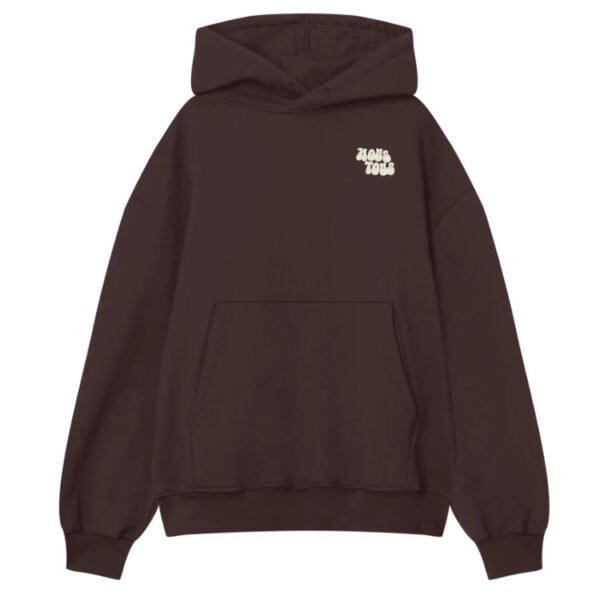
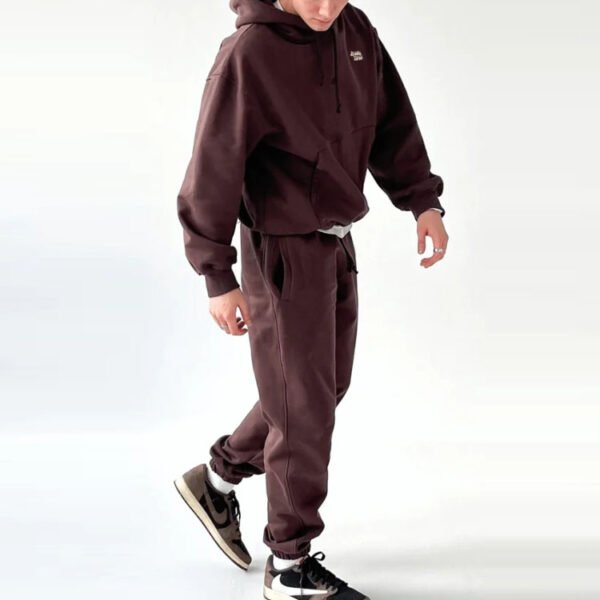


This pullover hoodie should be developed as a graded measurement system, not simply multiplied from one sample. Its centered raised back artwork, attached hood, broad torso, and ribbed edges make label consistency visible, measurable, and commercially important across the size range.
Why Grading Controls the Graphic
A raised back graphic magnifies small grading errors because its position is judged against the hood seam, shoulder balance, and hem. If the artwork remains fixed while the body expands, larger labels can appear crowded upward or undersized within the available back panel.
The practical control is a measured base size with explicit grade rules for chest, body length, shoulder, sleeve length, hood dimensions, and graphic coordinates. Each label should retain the same visual hierarchy while allowing the garment to fit its intended wearer proportionally.
Establishing the Base Size
Begin with one approved size that defines the commercial fit, rather than grading from an unexamined sample. The image suggests a roomy torso and substantial hood, but the intended ease, shoulder drop, sleeve volume, and body length still require buyer confirmation.
Record finished measurements at stable reference points, including half chest, front and back length, shoulder span, sleeve length, cuff opening, hem opening, and hood height. These measurements become the controlled source for labels, fit comments, pattern correction, and production inspection.
Label Logic Across the Range
Size labels should communicate a predictable progression, whether the range uses numeric, alpha, or market-specific naming. The important decision is not the label style alone; it is whether every label maps to a documented finished-measurement table and a consistent wearer profile.
For this hoodie, grading should protect shoulder and hood relationships as carefully as chest width. Excessive horizontal growth can distort the graphic field, while excessive vertical growth can change the balance between hood, artwork, pocket area, and ribbed hem.
Rib Recovery and Finished Measurements
Ribbed cuffs and hem are not passive trims; their recovery affects sleeve length, body stacking, and the point where the garment settles on the wearer. A tighter rib can shorten the visual body, while a looser rib can make the same pattern appear longer.
Approve rib width, relaxed opening, stretched opening, attachment tension, and finished return behavior as measurable development points. The final specification should state when measurements are taken, because relaxed and laid-flat readings can produce materially different fit interpretations.
Artwork Placement Through Production
The supplied image shows cream raised lettering centered across a dark brown back, with multiple lines and irregular contours. That composition makes vertical and horizontal registration easy to inspect, especially relative to the hood center, shoulder seams, and lower body balance.
VeeWen's workflow should lock the base pattern, artwork bounding box, placement coordinates, and decoration approval together before grading review. A size-set inspection can then confirm whether each label preserves the intended spacing without treating the graphic as an isolated print decision.
Approval Gate for Bulk Release
The buyer's approval checkpoint is a complete size-set review, not only a single decorated sample. Confirm labels, finished measurements, tolerances, hood proportion, rib behavior, and graphic placement on every planned size before issuing production instructions.
VeeWen can carry the approved measurement table into pattern grading, sample comments, decoration placement, and final inspection documents. This connects the manufacturing axis to a traceable development sequence, giving the buyer one reference point for resolving fit or registration questions.
Buyer Questions
Which size should become the grading base?
Choose the size representing your target customer and approved commercial fit, then document finished measurements before grading the remaining labels.
Does the artwork need separate placement rules by size?
Yes. Preserve its relationship to seams and body edges, using controlled coordinates or proportional adjustments validated through a complete size set.
Can rib dimensions affect the approved size chart?
They can. Rib width, tension, and recovery influence garment settling, so relaxed and finished measurements should appear in development specifications.
What is the production minimum for this hoodie?
The commercial minimum is MOQ: 100 pieces per style, subject to final specifications, color decisions, and approved production documentation.
Approve the Hoodie Size System
Send the target label range, base-size measurements, intended ease, and artwork placement requirements. VeeWen can then prepare a graded specification for review before sampling and production release.


Reviews
There are no reviews yet.