
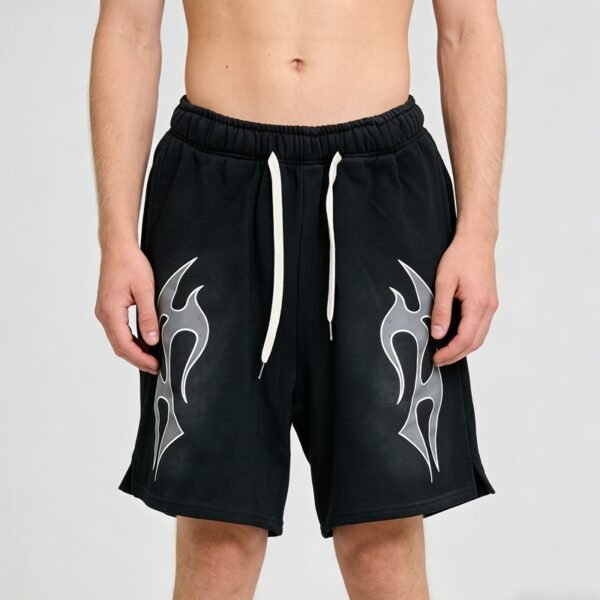


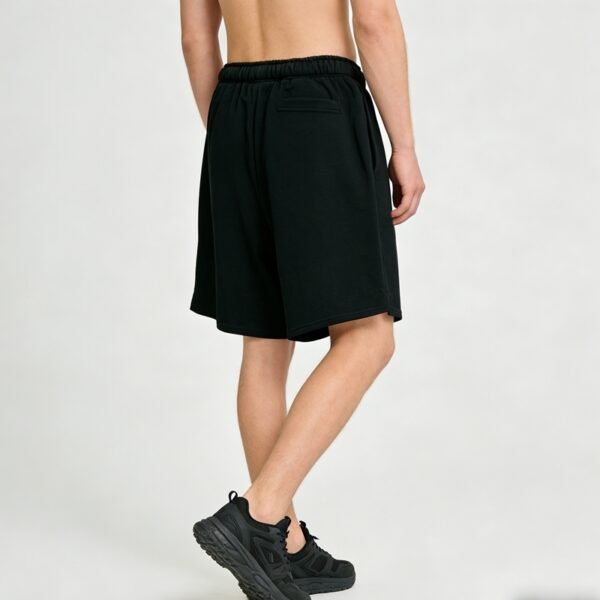












This custom men's short translates a bold flame graphic into a controlled development brief, with the supplied image clarifying waistband roll, drawcord emergence, leg proportion, and front-print symmetry. The assigned collar axis requires deliberate interpretation before sampling, making measurement governance part of the product decision.
Read the Upper Edge Correctly
The supplied image presents an elasticized waistband with a rounded, slightly raised roll rather than a flat tunnel. That edge controls visual proportion at the waist, while the centered drawcord openings create a clear reference for channel placement and symmetry during pattern review.
Since the garment has no collar, collar roll and stand height cannot be transferred literally. VeeWen should record the intended equivalent as waistband roll, finished upper-edge height, and rise relationship, preventing an inherited brief from generating irrelevant or contradictory measurements.
Graphic Placement Follows Body Movement
The front image shows flame motifs positioned on the outer front leg areas, with comparable visual scale on both sides. Their placement leaves the drawcord zone unobstructed, preserving the central waist adjustment and allowing the graphic to remain readable when the wearer moves.
A buyer should decide whether this bilateral placement is the production standard or merely a visual reference. Artwork files, panel grading, print registration, and tolerance limits must be approved together, because leg width changes can alter perceived graphic balance.
Silhouette and Wear Intent
Broad leg openings and a knee-length proportion create a relaxed short rather than a close athletic profile. The image also shows side-entry pocket openings and a straight lower edge, useful anchors for balancing comfort, utility, and front graphic visibility.
The source wording suggests casual, streetwear, and quick-dry positioning, but only the styling intent is established. VeeWen should confirm target inseam, rise, pocket depth, knit structure, and moisture-performance requirements before approving a pattern or material substitution.
Surface and Color Development
The black base appears visually deep, while subtle tonal variation supports the supplied spray-dye reference. The silver-gray flame artwork introduces a sharp contrast, so the final surface must preserve graphic definition without obscuring the intended dyed character.
Spray-dye effects can vary across panels and production lots, while screen-print coverage can change hand and reflectance. The buyer should approve a color standard, effect tolerance, print swatch, and wash-care direction before committing the appearance to a salesman sample.
Translate Evidence into VeeWen Workflow
VeeWen's product-development workflow should begin by reconciling the assigned collar axis with the shorts' actual waistband construction. The first technical package should identify upper-edge height, elastic width, drawcord exit spacing, rise, and graphic placement as linked control points.
A development sample can then test whether waistband roll remains intentional while the leg graphics stay balanced across the approved size range. Buyer review should record measurement changes, artwork tolerances, material confirmation, and wash expectations before the style advances toward production planning.
Approval Checkpoint and Trade-Offs
The central trade-off is visual attitude versus repeatability. Strong spray-dye variation and prominent flames create character, but broader tolerances may make paired legs look less identical; tighter controls improve consistency while potentially reducing the handmade appearance suggested by the reference.
Approve the style only after reviewing the corrected waistband specification, size-graded graphic placement, fabric hand, color variation, and print durability evidence. The commercial decision is whether controlled variation supports the collection or whether a cleaner repeat is required.
Buyer Questions
How should the collar-axis instruction be handled for these shorts?
Treat it as a brief-reconciliation checkpoint, documenting waistband roll and upper-edge height as the relevant equivalents before creating the technical specification.
Is the quick-dry claim verified for production?
No. Quick-dry appears in the supplied source wording, but fiber selection, testing method, performance threshold, and final approval remain To Confirm.
What graphic information should buyers approve?
Approve artwork scale, bilateral placement, registration tolerance, ink appearance, panel grading, and wash-care expectations so the flames remain balanced across sizes.
What is the minimum order for this style?
MOQ: 100 pieces per style. Final quantities, colorways, material choices, and development requirements should be confirmed within the commercial brief.
Approve the Waistband Interpretation
Send the target measurements, artwork files, color references, and material direction to VeeWen for a focused development review. Confirm the waistband axis first, then align sampling, grading, and production approval around the evidence.


Reviews
There are no reviews yet.