
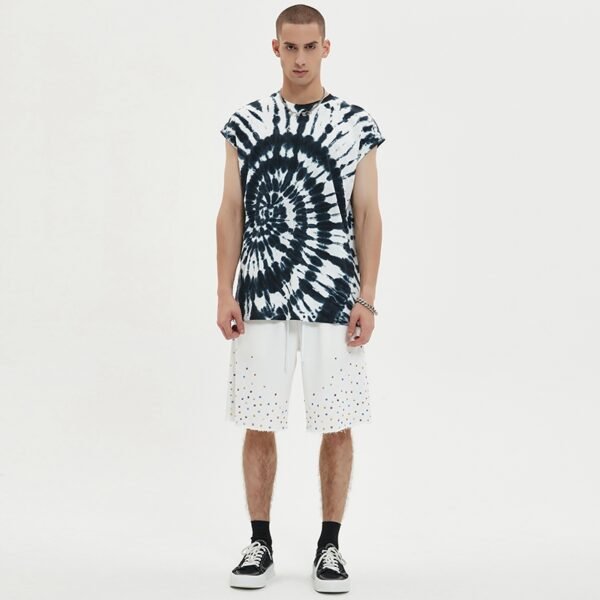
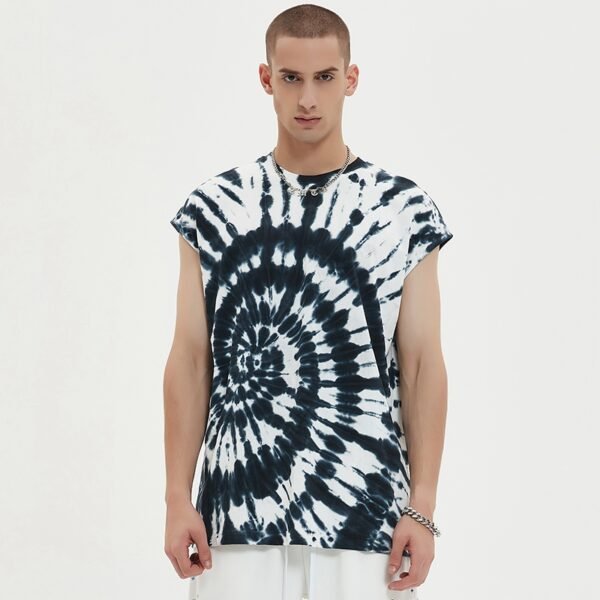
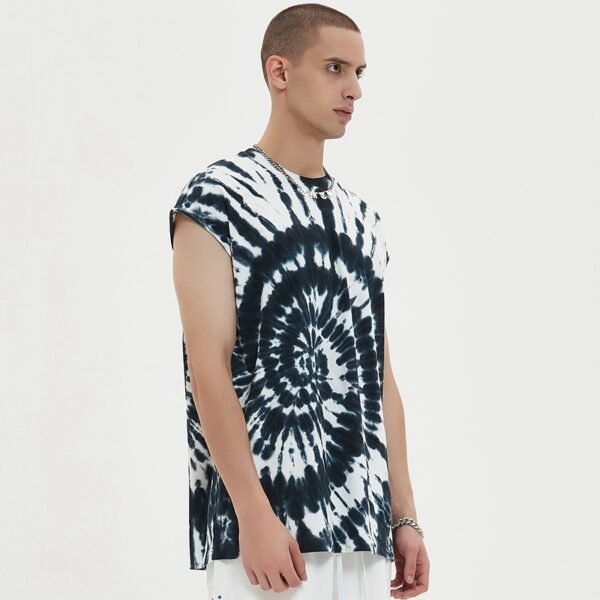
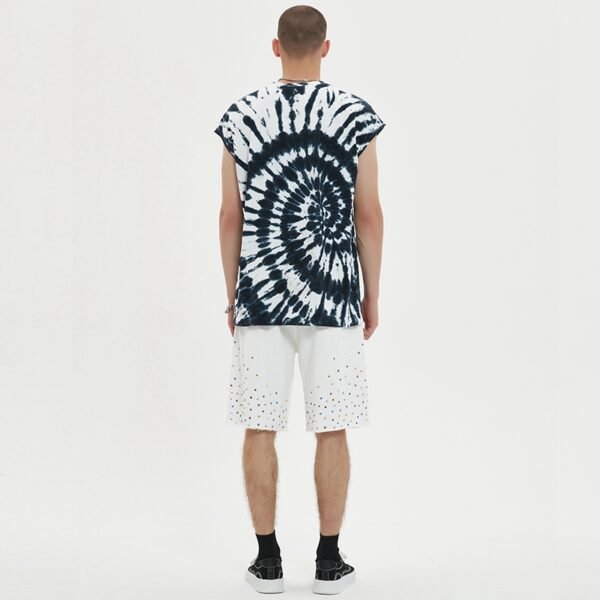


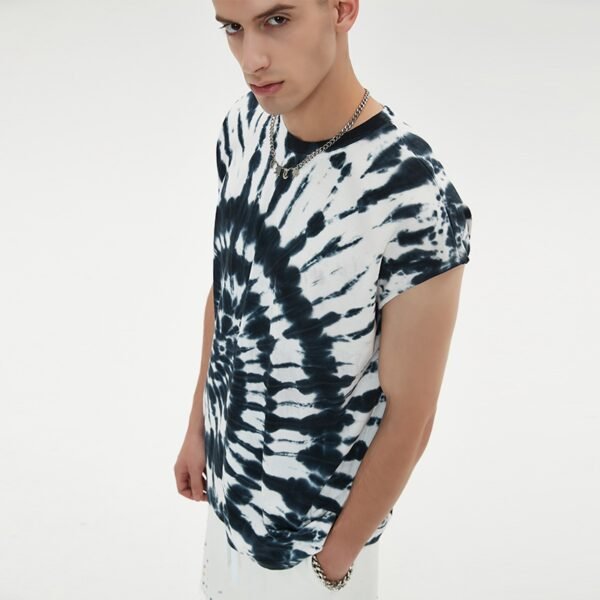
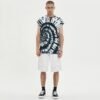
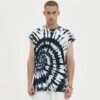

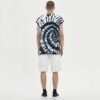
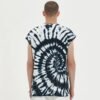

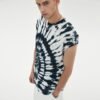
This tank top is a development study in balancing expressive garment treatment with disciplined trim decisions. The visible radial swirl supplies movement across a relaxed sleeveless body, so plating should remain deliberately quiet, comfortable, and compatible with repeated laundering and wholesale positioning.
Why Garment Treatment Leads The Product
The swirl is created by uneven dye concentration radiating from a visual center, producing a directional pattern rather than a flat all-over print. That treatment makes each panel placement important because seams, armholes, and hems interrupt the pattern's perceived flow.
A light ground gives the dark dye enough contrast to read immediately at distance, supporting showroom impact and collection recognition. The trade-off is greater sensitivity to treatment variation, so the approval process should define acceptable contrast, center drift, and edge density before cutting.
Hardware Plating Must Stay Secondary
Plated hardware can add a premium cue through metal tone, surface reflection, and tactile weight, but the supplied tank image contains no dominant hardware feature. Introducing conspicuous trims could compete with the swirl and make the sleeveless body feel visually crowded.
A restrained approach may use only approved low-profile components, with plating selected for skin comfort and resistance to finish change. VeeWen should confirm whether the design needs any hardware at all, then test placement around the neckline, side seams, or hem.
Sleeveless Geometry And Visual Balance
The image shows broad arm exposure, a relaxed shoulder transition, and a long body that keeps the pattern visible below the chest. These proportions make armhole depth, shoulder width, and side-seam alignment central to how the treatment frames the wearer.
Oversized volume can soften the intensity of a dark dye pattern by distributing it over more surface area, yet excessive opening depth may reduce layering flexibility. The sample should therefore assess movement, underlayer visibility, and whether the swirl remains centered during natural wear.
Wash Behavior Is A Design Variable
Garment treatment changes more than color; it can influence hand feel, dimensional stability, and the apparent sharpness of contrast. A process that softens the ground may improve comfort, while aggressive treatment can distort the radial impression or create unpredictable light areas.
VeeWen's development workflow should compare approved treatment recipes on representative fabric panels before committing to the full body. Reviewers can then judge color migration, shrinkage, seam response, and hardware surface changes against the intended commercial appearance.
Development Workflow For This Argument
VeeWen can translate the supplied image into a treatment map showing the swirl center, directional spokes, dark-density zones, and protected construction areas. That map gives the pattern a measurable placement reference instead of relying on a vague tie-dye resemblance.
The next checkpoint is a fit sample paired with treated panels and any proposed plated trims. Buyers should review the garment on-body, inspect armhole and hem transitions, and approve the relationship between visual intensity, comfort, and production tolerance before grading.
Approval Criteria Before Bulk Cutting
Approval should focus on whether the swirl reads as intentional across the front, back, and side transitions, while the oversized silhouette preserves a clean line. The buyer should also confirm the neckline finish, armhole binding, and hem behavior after the planned treatment.
If plating is included, require a separate trim approval covering tone, scale, attachment, and wearer contact. If the visual argument works without hardware, omitting unnecessary metal may simplify the product and protect the garment treatment as its clearest signature.
Buyer Questions
Is the cotton composition verified?
No. The source wording references cotton, but the supplied evidence does not independently verify fiber percentage, blend, or final fabric specification.
Can the swirl pattern be placed consistently?
Yes, placement can be developed through panel mapping and tolerance approval, although treatment variation should remain defined before production.
Does this design require plated hardware?
Not necessarily. The visual evidence is treatment-led, so hardware should be evaluated as an optional supporting detail rather than a mandatory feature.
What should buyers approve first?
Approve the treatment map, silhouette measurements, armhole comfort, neckline finish, and any trim direction before grading or bulk cutting begins.
Approve The Treatment Direction
Send your target measurements, color references, and trim preferences to VeeWen for a focused development review covering treatment placement, fit, hardware, and approval checkpoints.



Reviews
There are no reviews yet.