

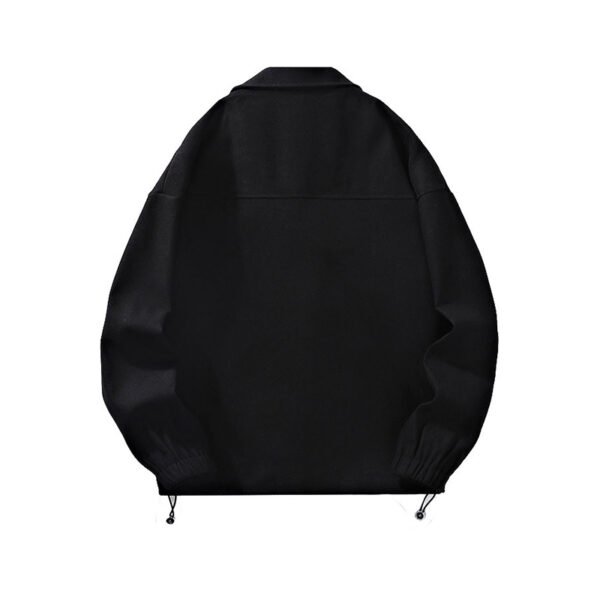


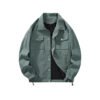


This men's utility jacket turns a clear pocket-and-closure layout into a controlled development problem: post-process measurement recovery. The sage shell, dark lining, elastic cuffs, and adjustable hem make finished-state dimensional review central to approving the production pattern across sizes and colorways before bulk release.
Why Finished Measurements Need Recovery
Post-process recovery begins after the selected finishing route, because handling, pressing, washing, or packing can alter measured length and width. The development team therefore records pre-process and post-process dimensions, then separates true pattern issues from recoverable finishing movement before approval.
That checkpoint matters here because the front closure, pocket placement, cuff opening, and hem drawcord create visible reference points. If the body recovers unevenly, those features can shift relative to one another, making a technically correct pattern appear unbalanced on the finished garment.
Reading the Jacket's Fixed Reference Points
The two chest flap pockets establish a horizontal alignment line, while the lower hand pockets extend the proportion downward. Snap positions continue that visual rhythm through the center front, so measurement recovery should examine spacing, levelness, and distance from each finished edge.
The sleeves add another dimensional relationship: elastic cuffs gather the openings, and the relaxed body connects them to the shoulder line. Review should compare sleeve length, cuff circumference, and armhole balance after finishing, because local recovery can change perceived utility fit.
Shell, Lining, and Layer Interaction
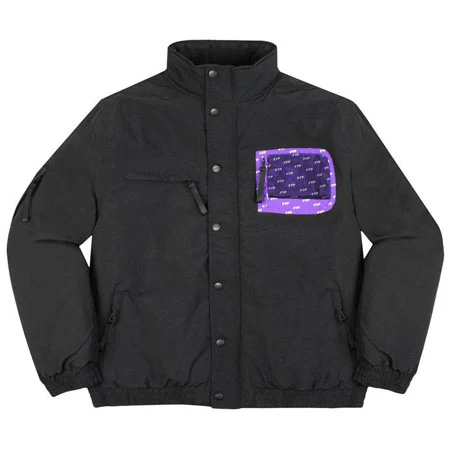
The image shows a substantial-looking outer layer over a dark interior lining, but exact composition and weight are not supplied. During development, both layers should be measured separately and together, ensuring the lining does not pull the shell, distort pocket mouths, or shorten the finished body.
Layer interaction also affects the front closure. The snap placket must remain flat when the jacket is open and closed, while the lining should follow the shell without visible drag. These observations belong in the post-process review alongside dimensional records and approval comments.
Balancing Adjustable Hem and Cuffs
A drawcord hem allows the buyer to tune the lower silhouette, but it can conceal dimensional drift if reviewers assess only the tightened position. Recovery checks should document the relaxed and adjusted states, including hem circumference, cord exit placement, and the relationship with the lining.
Elastic cuffs create a similar variable at the sleeve opening. The approved sample should establish the intended gathering level, recovery behavior, and opening measurement, then preserve those references through grading. The goal is controlled adjustability, not a substitute for accurate sleeve construction.
VeeWen Development Checkpoint
VeeWen can build this axis into the development workflow by defining measurement tables for the unfinished sample, finished sample, and approved post-process state. The review focuses on this jacket's pockets, snaps, cuffs, hem, and lining interaction rather than relying on a generic garment checklist.
After the fit sample is evaluated, the buyer can mark which dimensions are pattern-controlled and which reflect approved finishing recovery. VeeWen then carries those decisions into the production tech pack, helping the bulk team interpret tolerance priorities across the selected size range.
Approval Decision Before Bulk Cutting
The buyer should approve the recovered measurement table together with a front-view review of pocket symmetry, snap spacing, cuff openings, and hem control. Any unresolved difference between the visual target and finished sample should return to pattern or process review before cutting authorization.
Color approval should remain separate from dimensional approval. The supplied image supports sage green as a visual direction, while final shade, shell composition, lining specification, and finishing route require confirmation. This separation keeps aesthetic decisions from masking technical recovery concerns.
Buyer Questions
What does post-process measurement recovery mean for this jacket?
It means comparing dimensions before and after approved finishing, then updating pattern or tolerance decisions when measurable movement changes the intended finished silhouette.
Which details should the buyer inspect first?
Inspect pocket alignment, snap spacing, sleeve balance, cuff openings, hem circumference, and lining behavior because each provides a visible checkpoint for finished-state dimensional approval.
Is the sage color confirmed for production?
No. Sage green is the supplied visual reference; production shade should be confirmed through the buyer's approved color standard, lab dip, and signed sample.
What is the minimum order for this style?
The commercial minimum is MOQ: 100 pieces per style. Final color assortment, size breakdown, materials, and packaging requirements should be confirmed during quotation and development.
Approve the Finished-State Measurement Route
Send the target measurement chart, color reference, and intended finishing route so VeeWen can prepare a review sample focused on recovery across the jacket's critical visual checkpoints.


Reviews
There are no reviews yet.