


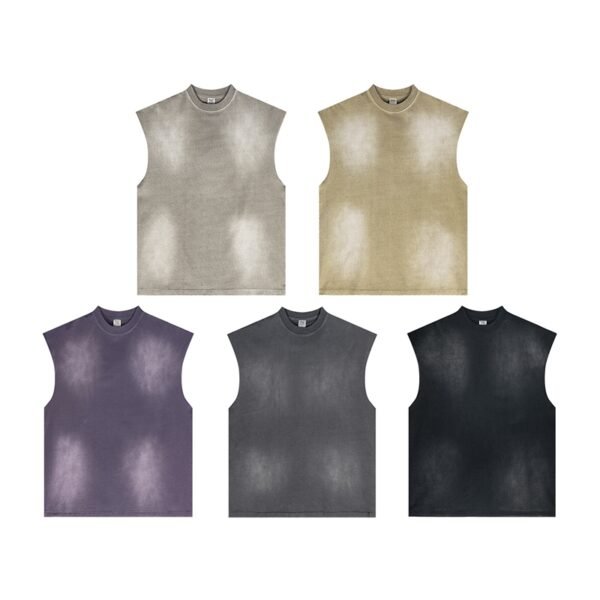

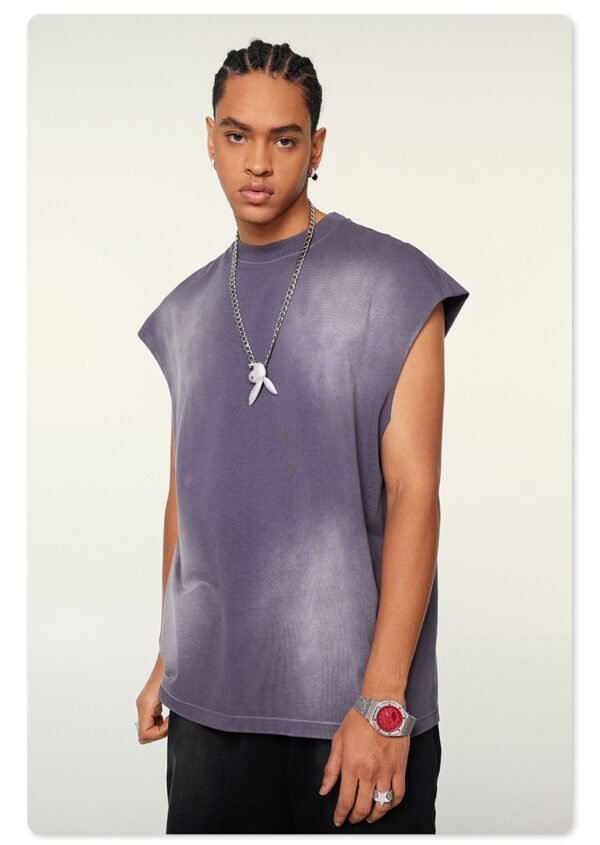








This custom men's vintage-washed tank top is built around marker direction: the way pattern pieces are oriented before cutting affects material consumption, visual grain, and how the wash reads across a broad body. The image's wide sleeveless shape makes that planning visible in both cost and character.
Why Marker Direction Matters
Marker direction determines how efficiently the front, back, and binding-related pieces occupy usable fabric width. On a wide tank, rotating a large body piece may increase nesting efficiency, but it can also change surface direction, wash behavior, or the perceived fall of the garment.
The supplied image presents a broad body with generous arm openings, so the main pieces are visually dominant. Their orientation should be selected with both yield and appearance in mind, especially when a washed surface makes tonal differences easier to notice across large panels.
Reading the Supplied Image
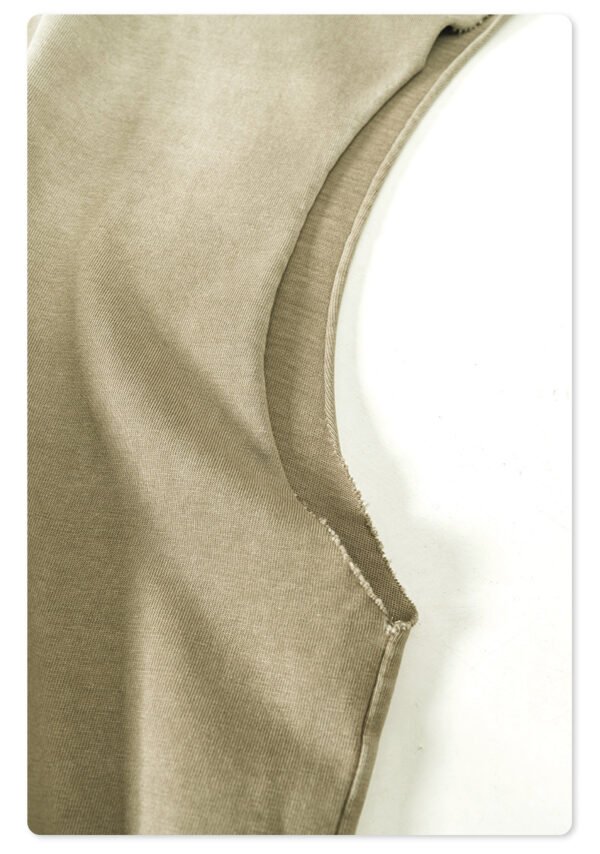
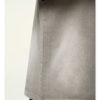
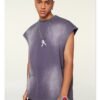
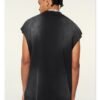
The image shows a sleeveless garment with a muted olive-gray, softly varied surface, a broad crew neckline, and wide shoulder coverage. The armhole edges appear intentionally unfinished, supporting the source wording's frayed-edge direction without proving a particular unraveling method.
The body hangs loosely over black trousers and extends below the hip area, indicating a relaxed, elongated proportion. That silhouette consumes meaningful panel area, making marker efficiency relevant while requiring enough width to preserve side coverage and avoid an unintentionally narrow tank.
Material Use Versus Visual Grain
A lengthwise marker may preserve consistent visual direction and simplify review of the washed surface, but it can leave more unused margins when fabric width is limited. A crosswise arrangement may improve nesting while introducing a different fall or tonal reading after finishing.
The correct choice depends on confirmed fabric width, shrinkage behavior, usable edge allowance, and whether the surface has directional characteristics. These variables are not verified in the supplied evidence, so the marker decision should remain provisional until material and wash trials are reviewed together.
Raw Edges Increase the Need for Control
Raw or frayed armholes make cutting accuracy more visible because the edge itself becomes part of the design language. Inconsistent seam allowances or uneven shaping can make one side appear heavier, particularly on a loose garment with open armholes and minimal visual restraint.
Marker planning should therefore protect stable armhole curves and sufficient panel integrity around the shoulders. After washing, compare edge appearance across sizes and panels, confirming that the chosen edge treatment remains deliberate rather than reading as accidental damage.
VeeWen Development Workflow
VeeWen can organize this product around paired marker trials: one prioritizing lengthwise visual consistency and another testing improved nesting within the confirmed fabric width. Both should use the same graded pattern, wash route, and measurement checkpoints for an accountable comparison.
The development record should capture marker orientation, fabric width, estimated utilization, panel direction, wash observations, and armhole tolerance. That evidence gives the buyer a practical approval gate before confirming the production-ready tank and MOQ: 100 pieces per style.
Approval Decision for Buyers
Approve the marker direction only when the material saving is visible in the cutting review and the finished tank still preserves the intended width, length, and washed surface character. A cheaper layout is not useful if it changes the garment's identity.
Review front and back panels after washing, then inspect armhole symmetry, neckline shape, side coverage, and tonal continuity. Confirm the selected marker once those visual checkpoints remain acceptable across the intended size range and final material reference.
Buyer Questions
Does marker direction always reduce material consumption?
Not always. Orientation interacts with fabric width, pattern geometry, grain requirements, and usable margins, so efficiency must be verified through a specific marker review.
Is the fabric composition confirmed?
No. The supplied evidence identifies a vintage-washed sleeveless vest, but it does not verify fiber percentage, GSM, or performance characteristics.
Are the armhole edges intentionally frayed?
The image shows unfinished-looking edges and the source wording mentions frayed edges. The exact edge process, tolerance, and wash response require approval.
What is the minimum order quantity?
The exact commercial minimum is MOQ: 100 pieces per style, subject to final specifications, approved sample details, and production planning.
Approve the Marker and Wash Review
Share the confirmed material width, wash target, and acceptable edge tolerance so VeeWen can compare marker direction with finished visual results at MOQ: 100 pieces per style.


Reviews
There are no reviews yet.