



This development record treats the garment as a surface-engineering problem: its visual value comes from the contrast between a dark upper field, a faded lower body, and raised graphic treatment. VeeWen should therefore approve finish intensity and abrasion behavior as one coordinated package.
Why the Surface Finish Leads the Product
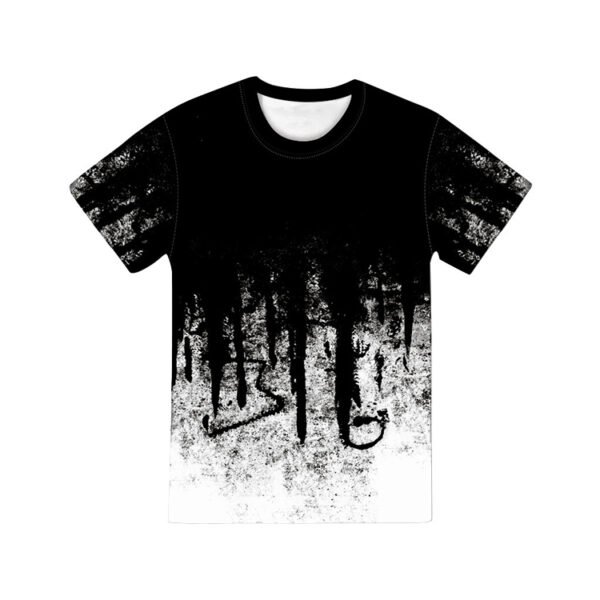
The supplied main image is dominated by a dark upper body that descends into a lighter gray field. This creates an immediate vertical reading, while uneven marks across the lower section prevent the garment from appearing like a uniform dip-dye basic.
That visual effect depends on controlled variation rather than a perfectly repeatable solid shade. Buyers should define an approved tonal range, placement boundaries, and acceptable irregularity before sampling, because each decision directly affects perceived authenticity and production consistency.
Where Abrasion Can Change the Appearance
A washed surface is vulnerable to appearance shifts where repeated rubbing affects darker pigment, exposed fibers, seams, or raised decoration. The image's light lower field already emphasizes contrast, so additional wear may make localized fading appear stronger than expected in bulk.
The development checkpoint is not simply whether the shirt looks distressed after washing. It is whether the gradient remains legible after agreed handling, whether the lower marks retain their intended character, and whether the upper dark area avoids unwanted patchiness.
Puff Print and Surface Relief
Source wording identifies puff print, while the image presents a heavily textured visual direction. Raised ink changes the hand feel and can become a focal point against the washed ground, but excessive height may catch during abrasion or flatten unevenly under laundering.
VeeWen should establish print height, artwork coverage, edge tolerance, and curing conditions through a physical strike-off. The buyer's approval should compare the decoration against the actual washed body, since a clean laboratory print may read differently on an irregular surface.
Fit and Wear Context
The short sleeves, crew neckline, and relaxed body shown in the supplied image support a casual streetwear proportion. A loose silhouette gives the wash room to read across the torso, but excessive volume can weaken shoulder balance and make the garment appear less intentional.
Measurement approval should focus on chest ease, body length, sleeve opening, and neckline recovery after finishing. These points determine how the surface artwork sits during wear and whether the garment maintains a structured product impression despite its deliberately aged appearance.
VeeWen Development Workflow
VeeWen's product-development workflow should begin with a wash swatch, a blank-body fit sample, and a separate puff-print strike-off. The team can then combine approved elements in one prototype, isolating whether tonal changes or decoration are responsible for any visual mismatch.
The buyer checkpoint follows side-by-side review of prewash and postwash samples under consistent lighting. Record the approved shade range, print relief, rub observations, and measurement tolerances as the style's production brief before releasing the 100-piece-per-style minimum.
Approval Risks and Commercial Use
This style is suited to buyers seeking a visibly developed surface rather than a plain seasonal T-shirt. Its trade-off is that a stronger wash and taller print may increase visual impact while narrowing tolerance for abrasion, shade variation, and repeatability.
Approve the style when the commercial story justifies those controls and the sample survives the agreed appearance review. If the finish becomes more important than dependable decoration, reduce relief or contrast before confirming artwork, grading, and bulk execution.
Buyer Questions
Is the fabric definitely 100% cotton?
No. Cotton appears in the source wording, but the supplied evidence does not verify a percentage. Confirm fiber composition, fabric weight, and applicable labeling requirements before approval.
Can the distressed wash be made identical on every piece?
A controlled range can be specified, but washed effects naturally show variation. Approve master standards, tolerance limits, placement boundaries, and lighting conditions for bulk inspection.
How should puff print durability be evaluated?
Evaluate height retention, edge integrity, hand feel, and surface change after the agreed wash and rub sequence. Confirm the exact protocol during sampling because no test result is supplied.
What is the minimum commercial quantity?
The exact commercial minimum is MOQ: 100 pieces per style. Final color, size breakdown, artwork, packaging, and development approvals should be confirmed before production planning.
Approve the Washed Surface Direction
Send the artwork, target measurements, preferred tonal range, and wash tolerance to begin a coordinated sample review. VeeWen can then align print relief, abrasion checkpoints, labeling details, and the 100-piece style minimum.


Reviews
There are no reviews yet.